10 Things to Do Now to Reduce Your Alzheimer’s Risk Later

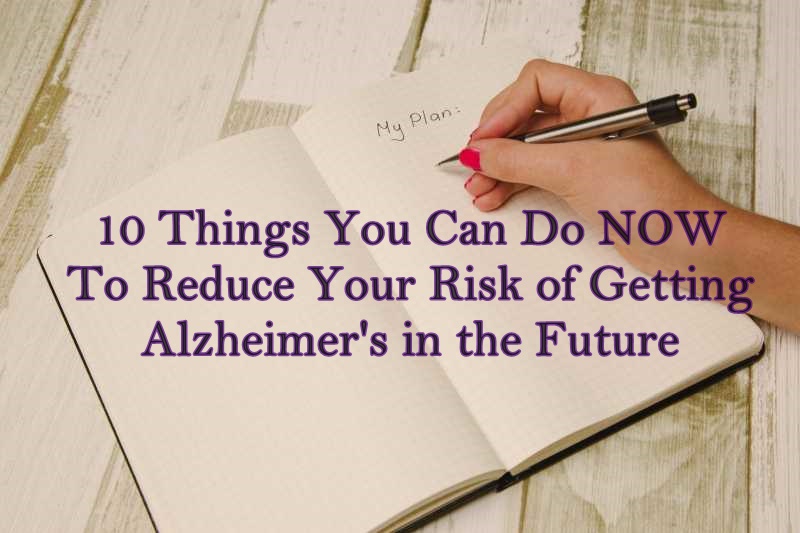
10 Things to Do Now to Reduce Your Alzheimer’s Risk Later in Life

A diagnosis of Alzheimer’s – or of another form of dementia – is a scary thing for a person and his or her family. It is literally lifechanging. We went through the rollercoaster of emotions when my dad, Jim, was diagnosed around 2008. (Read “Jim’s Story,” HERE.)

Much of this website is devoted to things that caretakers can do to better safeguard the home environment.[1] But you don’t want to neglect those things that you yourself can do to minimize the risk of developing Alzheimer’s in the first place. This will include basic tips like these: Get regular exercise; Drink purified water; Reduce your alcohol intake; Make sure you get your nutrients; Sit less; Turn off the TV; Boost your brain activity; Improve your memory; Supplement with herbs and spices; and Get adequate amounts of sleep.

Caveats

Despite researchers’ best efforts, Alzheimer’s Disease remains largely a mystery in many ways. This means that there are no agreed upon – let alone “guaranteed” – ways of avoiding or treating Alzheimer’s. And, presently, there is no cure. This means that, relatedly, there can be no definitive list of “things you can do” to avoid Alzheimer’s.

But this last fact by no means rules out the idea that, based upon our current state of knowledge, some lifestyles changes seem to hold out the promise of improving our odds. (It also gives me an incentive to try to stack the deck in my favor, health-wise. After all, I don’t want any disease; but I especially don’t want a disease about which little is known.) So, even though I am not a doctor and none of what is written in this post constitutes medical advice (for which, see your local healthcare professional), what is included is a bit of what I have done for myself. Even though these suggestions are speculative, there are some indications in the relevant literature that a few of these tips might be effective. Do what you will with the information; employ suggestions at your own risk.

Top Ten List

1. Exercise More

Regular exercise is routinely touted as valuable for health. Even if it’s not quite the fabled panacea, there is no denying the litany of positive benefits associated with it.

For example, exercise strengthens and tones muscles. It can therefore help you to feel – and look – better. This, in turn, can decrease your risk of certain illnesses (e.g., diabetes and heart disease).

But, getting into an exercise routine can also improve the health and vitality of your brain.

One doctor, Jonathan Graff-Radford, writing for the celebrated Mayo Clinic, explains: “Physical activity seems to help your brain not only by keeping the blood flowing but also by increasing chemicals that protect the brain.”[2]

An article published on the website of the prestigious Harvard Medical School stated that: “Regular exercise changes the brain in ways to improve memory and thinking skills…”.[3] This is partly because exercise has anti-inflammatory effects on various parts of the body and it also helps ensure that body internal body chemistry (including insulin and “growth factors”) are optimal.”[4]

Scientific American even published a tantalizing article that claimed exercise might be able to “clean up” the “hostile environments in the brains of Alzheimer’s mice, allowing new nerve cells …to enable cognitive improvements, such as [for] learning and memory.”[5]

Whether you bike, dance, walk, or weight lift, getting at least some exercise every day is repeatedly emphasized as a boon to your overall health.

2. Drink Filtered Water

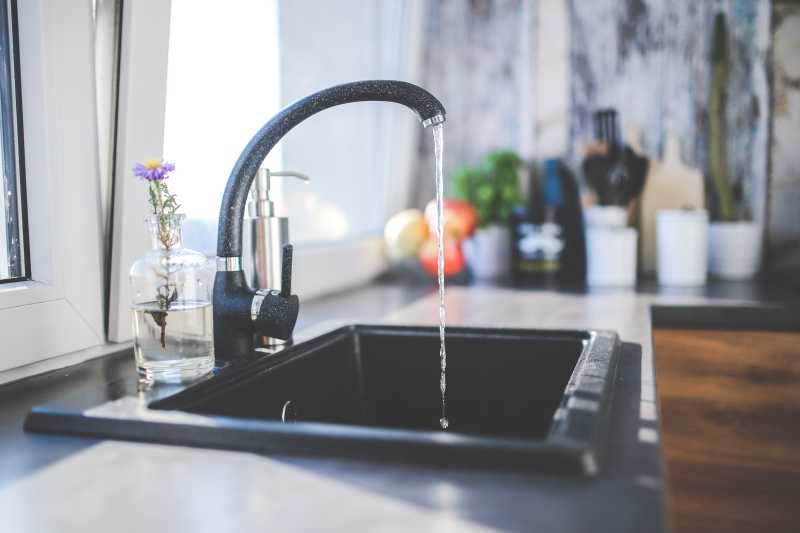
Do you have any idea how much crud can potentially be in your tap water? Municipal water supplies are contaminated with many chemicals and other substances. These range from herbicides, pesticides and industrial byproducts, to metals like aluminum, lead, and mercury. There are even detectable levels of various microorganisms, pharmaceuticals, and other toxins – in the water that comes out of your faucet!

Numerous of these compounds have been linked to cancer, inflammation, and an assortment of other health problems. For much more detail on these, and related, water-contamination issues, see HERE.

While a definite causal mechanism for Alzheimer’s Disease still has not been pinned down, the condition is often characterized by brain degeneration, inflammation, and toxicity.

Could all the crap floating around in America’s water supplies be at least a contributing cause?

The fact that this seems to be a live possibility leads me to one practical conclusion: To raise the probability that I will escape my dad’s fate, I want to drink the cleanest water available. And my research (which again, is summarized HERE) leads me to think that this means I need to filter my own water.

So, get yourself a good quality filter. Keep it serviced. And stop imbibing chemical-laced tap water!

For my specific filter-related product recommendations, click HERE.

3. Reduce Alcohol Consumption

I’ll admit: This is a tough one for me. I do love a good whiskey. (Sometimes, I’ll even love a bad one.)

Alcohol, especially red wine, is associated with various health improvements. For example, it is reputed to reduce the risk of stroke and to improve general health.

On the other hand, some argue that the component bringing the actual benefits (resveratrol) may be better consumed through other sources, because of the potential dangers of alcohol.

For instance, alcohol can have adverse effects on many of the body’s parts, including the circulatory system and heart (from raising blood pressure to causing irregular heart rhythms) as well as the liver (including cirrhosis, “fatty” liver, and inflammation).

But, most pertinently, alcohol has links to brain problems, including – you guessed it – Alzheimer’s and other forms of dementia.

For a more in-depth discussion of the pros and cons of drinking alcohol, as well as for more related information, see my article, HERE.

Like so many other things in life (not to mention on the present list), perhaps the best advice is this: moderation. “Moderation,” of course, has to do with the avoidance of extremes – that of deficiency on the one hand and overindulgence on the other.[6]

4. Get Your Nutrients

Some observers suggest that Alzheimer’s Disease comes in different varieties. (For more on this intriguing idea, see HERE.)

Relevantly, one of the sub-varieties (“Type 2,” in the idiom of Dr. Dale Bredesen) is believed to be precipitated by nutrient deficiencies of one sort or other.

The basic notion is that our cognitive faculties – things like our abilities to remember and to think – depend on hormonal, nutritional, or other “trophic” support.

In my research, some vitamin deficiencies are possibly important to note.

Vitamin B12. For one thing, there is a bit of literature on the subject of B12 deficiency. B12, also known as cobalamin, plays an essential role ensuring the body’s health at a cellular level. B12 is especially important for blood cells as well as nerve cells. There is some dispute over whether a lack of B12 causes Alzheimer’s per se[7] or whether B12 deficiency is simply Alzheimer’s-like.[8] Honestly though, it’s good advice to keep up your levels of B12 regardless of which is the case.[9]

Vitamin D. Another notable entrant on this list has to be vitamin D. HERE I go more in depth on what vitamin D actually is and why it’s important. For the time being, let’s just say that the august Mayo Clinic has noticed that “people with very low levels of vitamin D …are more likely to develop Alzheimer’s disease and other forms of dementia” than are people whose vitamin-D levels are normal.[10]

Copper. Copper is a further substance that sometimes crops up in articles on possible links between dementia and nutrient deficiencies. A lack of copper might bring about the onset of Alzheimer’s Disease. Or so says one school of thought on the matter.[11] However, others maintain that copper actually precipitates Alzheimer’s![12] Although the jury’s still out on this issue, it seems reasonable to try to keep your copper intake to within the Food and Drug Administration’s so-called “recommended daily allowances.” Currently, this is supposedly 900 micrograms per day.

Since copper may end up in our bodies via the pipes that carry water into our homes, it may be advisable to invest in a good-quality filter. (For more on this, see the relevant section in this article, above. For specific water-purification recommendations, see HERE.)

Of course, at the most basic level, you want to ensure that you’re eating a balanced diet. Some nutritionists even speak of specialized diet plans such as those geared towards reducing inflammation. For more on dietary tweaks, click HERE, HERE, and HERE.

5. Boost Brain Activity

Earlier, I mentioned the importance of physical exercise for brain health. But, there are also such things as “brain exercises.” To put it slightly differently, there are any of a number of ways to build and strengthen neural connections, as well as to sharpen your reason, and bolster your memory. Improving memory is so important I’m giving it its own separate section, below. Presently, I’ll just sort of dash off a few quick tips for giving your gray matter a bit of a workout.

Do some puzzles or ‘brain teasers.’ Okay: admit it. This is the tip that you’ve been expecting. Many people have heard this one. A good way to keep your brain active is to do crossword (or other) puzzles. And it’s certainly worth considering. Solving (or attempting to solve) puzzles activate brain connections that may have been dormant for some time. In other words, they tax our brains. Besides crosswords, there are brain teasers, checkers and chess problems, logic puzzles, sudokus, and so on. There’s practically something for everyone. So, think about trying one of these the next time you reach for your television remote.

Get creative. Write a poem. Write in a journal. Draw a picture. (Or paint one.) Turn on a piece of music. Sing along – trying to memorize the words. Sculpt. Act in a play (and memorize those lines). Alternatively, go to your local art museum and make a study of some of the pieces.

Learn something new. This could be something large and involved – like a new language or a musical instrument – or it could be something smaller – like a memorizable passage from a book or a word-of-the-day. You could take an actual class, or just read a book. (But, maybe try to avoid watching courses on tv. For the reason, see further on.) Keep challenging your brain, the thinking goes, and you’ll keep building neuronal pathways. And that’s a good thing.

Rely less on artificial and ‘external’ helps. What do I mean? Well, how much change are you owed as giving the cashier a $20 bill on a total of $17.23? Don’t just do nothing and assume that she knows the answer (or, more likely, that her register computer will tell her). Don’t turn immediately for your calculator (or, more likely, the “calc app” on your smartphone). Instead, try to work it out in your head.  (Okay… maybe you’re allowed a pencil and paper.) Scary, right? I realize. But think of it this way: you’re not being graded! Even if you get the answer wrong, at least you gave your brain a mini workout. And we’re surrounded with similar opportunities.

6. Work on Your Memory

One interesting and (I think) neglected area is memory development. This is in addition to giving your brain nutritional support as well as a “workout.” (For more on these, see the relevant sections, above.)

It seems that every day, we rely more and more heavily on cell phones and other electronic devices as memory aids. Part of our reliance pertains to maintenance of our daily calendars and schedules. And phone numbers? Who knows those any longer?!

But of late this over-reliance seems to have extended even to basic facts – which we can have told to us by the virtual voices of Alexa, Google Assistant, Siri, etc.

This might appear to be a great help. And, there’s no denying the “convenience” of it. However, it is possible that our dependence on these sorts of artificial helps has a negative impact on our natural capacity to remember things. So, here’s one quick suggestion that I have been taking to heart, lately.

Don’t (over-)rely on memory aids. If you have a list of things to purchase from the store, try to remember it. Of course, you should write it down – both as a backup and as a means of memorizing the list. But don’t be so quick to turn to the list for that next item. Put a little effort into trying to bring it to mind without any outside help. Make a game out of it.

Not scoring so well in this game? Take heart! For, believe it or not, there are ways of enhancing our memories.

(For more detailed explanations of these various techniques, see my companion article: “How to Boost Memory & Possibly Avoid Alzheimer’s.”)

Use the ‘major system.’ This system uses letter combinations as an assist to remembering numbers. To start with, you actually have to memorize the substitution list. (Sorry!) But after you have the short list down, it becomes a lot easier. It’s beyond the scope of the present article to explain the workings of the system. (For that stuff, click HERE!) Suffice it to say that this fairly straightforward mnemonic allows for the memorization of things like birthdates, social-security numbers, telephone numbers and the like. Impress your friends! But, more importantly, enhance your memory.

Build yourself a mind palace. The precise goings on are too nuanced to expound upon, here. At present, I will simply note that there are memory procedures involving the creation of mnemonic devices along with the construction (within the mind) of something termed a “memory palace”[13] – popularized on such television shows as the BBC’s Sherlock (airing in four seasons from 2010 to 2017 and starring Benedict Cumberbatch and Martin Freeman) as well as figuring in several performances by the British “mentalist” Derren Brown.[14]

While there is no word (that I have seen) regarding whether these techniques shield their user from dementias, as I have stated elsewhere, my concern is just stacking the odds in my favor. And, my guess is that it’s better to have a robust and healthy memory than, well… not.

Again, for the more detailed discussion of these memory-building techniques, see HERE.

7. Add Some Spice to Your Life

We have already discussed the fact that some vitamin (and other) supplements can usefully augment your diet, thus (possibly) stacking the odds of avoiding dementia more in your favor. But it turns out that some of the ingredients on your kitchen spice rack might actually reduce some of your Alzheimer risks as well.

I have also touched upon some of these elsewhere. (So check that out, HERE.) Suffice it to say, here, that several everyday seasonings also are reputed to have some potent health effects.

Here are just a few examples.

Cinnamon. Take cinnamon, for instance. According to an article just published in the academic journal Pharmacological Research, “[c]innamon …[is] a promising prospect towards Alzheimer’s disease.”[15] “[T]wo compounds found in cinnamon – cinnamaldehyde and epicatechin – are showing some promise in the effort to fight the disease. …[T]he compounds have been shown to prevent the development of the filamentous ‘tangles’ found in the brain cells that characterize Alzheimer’s.”[16]

Turmeric. One study suggests that turmeric (curcumin) may reduce Alzheimer’s-related brain inflammation and, consequently, improve patient’s memory. On the flip side, taking it before onset might stave off the Alzheimer’s Disease (AD). Here’s an excerpt from the article’s abstract. “Curcumin …has a potential role in the prevention and treatment of AD. Curcumin as an …anti-inflammatory …improves the cognitive functions in patients with AD. A growing body of evidence indicates that oxidative stress, free radicals, beta amyloid, cerebral deregulation caused by bio-metal toxicity and abnormal inflammatory reactions contribute to the key event in Alzheimer’s disease pathology. Due to various effects of curcumin, such as decreased Beta-amyloid plaques, delayed degradation of neurons, metal-chelation, anti-inflammatory, antioxidant and decreased microglia formation, the overall memory in patients with AD has improved.”[17]

Ginger. I should also mention ginger. Though, admittedly, in this case research suggests that ginger is useful not so much for Alzheimer’s prevention as for symptom management. The idea is that “traditional Chinese medicinal ginger root extract (GRE)” might help “to prevent behavioral dysfunction in the Alzheimer disease…”.[18]

8. Sit Less (and Stand More)

According to a scholarly article published in 2015: “Prolonged sedentary time was …associated with deleterious health outcomes regardless of physical activity.”[19] Got that? Regardless of physical activity!

That means that if you sit a lot – and “more than half of the average person’s waking hours are spent sitting”[20] doing one activity of other – then you are increasing your risk for numerous conditions and diseases.

I’ve gone into this elsewhere. (For more, see HERE.) But, in general terms, “too much sitting …increases the risk of heart disease, diabetes and premature death.”[21]

And wouldn’t you know it? Sitting is also bad for the brain, specifically. Too much sitting can cause a “[t]hinning in brain regions [that are] important for memory…”.[22]

One study suggested to the writers at Medical News Today that the effects of a sedentary lifestyle were so pronounced as to raise a person’s level of risk to that which he or she would have if there were a genetic predisposition. Citing a 2017 article in the Journal of Alzheimer’s Disease,[23] one reporter observed that a “lack of exercise” – typical of people who sit all day long – “may be …as risky for dementia development …[as is] carrying the APOE e4 gene,”[24] for more on which gene, see HERE and HERE. To put some numbers to it, we’re talking in the neighborhood of three to twelve times higher risk.

That’s a huge and significant increase. So, get off your duff!

Stand More. A simple “fix” for sitting too much is, well… standing more often. There are a number of ways to do this, including getting standing desks for work. But, straightforwardly, just try to take every opportunity that you have to be a little more active. For some ideas to get you going – both literally and metaphorically – see HERE.

9. Turn off the Television

You might be thinking, “Some kinds of sitting are arguably worse than other others.” And this is doubtless true.

For instance, you can sit and work a crossword puzzle or read a Shakespearean sonnet. On the other hand, you could sit and “binge watch” your latest guilty pleasure on Netflix.

It turns out, then, not so much that extended sitting can be made better, but that its negative effects can be compounded with the introduction of television.

Indeed, the culprit, here, isn’t just “television” (full stop). It’s any related form of electronic-video viewing.

According to a 2015 article in America Magazine: “[T]he more TV you watch, the more likely you are to get Alzheimer’s disease.”[25]

This conclusion was based on a twenty-five-year study carried out by the San Francisco-based Northern California Institute for Research and Education. Commenting on the same research, one Washington Post writer explained that “too much TV might damage your brain and also raise the risk of developing Alzheimer’s disease.”[26]

In fact, a link between dementia and television had been suggested nearly fifteen years earlier.

In 2001, a Dr. Robert Friedland and his team declared that tv viewing was potentially deleterious to brain and cognitive health.[27] In their findings, watching television was highly correlated with Alzheimer’s. To put it another way, those who developed Alzheimer’s later in life had been observed to have been (or reported having been) “heavy” tv viewers.[28]

I go into greater depth on this, HERE. Suffice it to say that you might want to consider turning off – or, at least limiting your time in front of – the tube. (And I’ll certainly be considering the same thing!)

10. Relax – and Get Your Sleep

Now that you’re all good and worked up over your risk of developing Alzheimer’s, just try to settle down. What’s the saying? Worrying doesn’t add any days to your life. In fact, it might even subtract a few of them. So, cool it.

Seriously, though, this is important. I have elsewhere written about the necessity of getting optimal (or at least adequate) amounts of sleep. (It’s so crucial, it has two articles – and counting. Get started HERE and HERE.)

But a corollary of this advice is that we all (you and me both) need to stop worrying so much.

One article on the popular WebMD website relates that high levels of “…stress” might predispose us “for the kind of thinking difficulties that can lead to Alzheimer’s disease…”.[29]

The Mayo Clinic explains that stress prompts our bodies to release the hormone cortisol. In turn, chronically high cortisol levels can precipitate all sorts of health problems, including: emotional difficulties (e.g., anxiety and depression) as well as physical troubles. These latter can come in the form of so-called “stress” headaches, stomach troubles, and – yes – “[m]emory and concentration impairment.”[30]

Stress is also known to disrupt sleep. And this lack of proper rest and restoration can further increase stress – as well as put us at greater risk for Alzheimer’s.

Here are some things to try to minimize (or deal with) the stressors in your life.

Avoid drugs. This variously sounds absurd and obvious. But as I am reading over some of the things that can cause stress, what appears on the list? We’re talking about alcohol (which I addressed above), caffeine, cigarettes and nicotine, and so on. (I’m tempted to add sugar to that list. Ahem.) It sometimes seems that nothing good comes from these except addiction. Of course, we often hear platitudes like “all things in moderation.” (I even used it myself, above, regarding that chimerical beast, “moderate drinking.”) And if you do really have the ability to be moderate then… good for you! Sincerely! For the rest of us, maybe we should just lay off (as best we can). (Oh, my precious whiskey…)

Exercise. This stress-reduction list has a lot of similarities to the present article, n’est-ce pas? Coincidence? So, get out and move around a little – or a lot. It can do your body a lot of good just to go for a walk. Jog or run if you can manage. Do some yoga. Learn some breathing techniques. Lift weights. Cycle. You get the idea. Just do something.

Seek counseling. This may or may not require the hiring of a professional (and licensed) therapist of one kind or other. It may be as simple as just having good friends to lean on. Alternatively, it might necessitate engaging a “life coach,” personal assistant, or someone who can help make your daily tasks more controllable, predictable, and organized. Time management is a key, here.

Get more sleep! But this can be difficult (or practically impossible) when you’re already stressed out. It begins a proverbial vicious cycle. What can be done?

Well, here are a few herbs (and other things) that can take the edge off enough to help you get those Zs.

I’m focused on things that are, according to my untutored reading, not as habit-forming as alcohol (or even some of the prescription or OTC concoctions that people go in for these days).

My top herbal picks would include the following:

  • Hops (Humulus lupulus).
  • Lemon Balm (Melissa officinalis).
  • Passion Flower (Passiflora incarnata).
  • Valerian (Valerian officinalis).

For the a non-herbal sleep assist, it’s hard to do better than the amino acid:

  • L-Tryptophan.

For more in-depth information on these supplements – and for several other recommendations (e.g., GABA and melatonin) – click HERE.

A final suggestion is to regulate your light and sunlight exposure. Here’s what I mean. It can be extremely beneficial to get some sunlight during the day. For instance, natural light helps your body produce vitamin D naturally. (For more on this, see above as well as HERE and HERE.)

Equally and oppositely, limiting light exposure at night can be vital for your ability to sleep. For most people (who don’t work nights), limiting sunlight isn’t a problem during their scheduled sleeping period. But, here, it is essential to reduce your exposure to artificial lights – including electronic displays. (Read additional tips HERE.)

Summary

10 Things You Can Do to Lessen Your Alzheimer’s Risk:

  1. Exercise
  2. Drink Purified Water
  3. Cut Back on Alcohol
  4. Eat Well & Take Your Vitamins
  5. Give Your Brain a Workout
  6. Enhance Your Memory
  7. Reach for Your Kitchen Spices
  8. Sit Less/Stand More
  9. Watch Less TV
  10. Get Enough Rest

Notes:

[1] See the five-part guide to Alzheimer’s-proofing a home: Part 1 – Master ListPart 2 – Senior SafetyPart 3 – Alzheimer’s TipsPart 4 – Kitchens & BathsPart 5 – Indoors & Outdoors..

[2] Jonathan Graff-Radford, “Alzheimer’s Disease: Can Exercise Prevent Memory Loss?” Mayo Clinic, <https://www.mayoclinic.org/diseases-conditions/alzheimers-disease/expert-answers/alzheimers-disease/faq-20057881>.

[3] Heidi Godman, “Regular Exercise Changes the Brain to Improve Memory, Thinking Skills,” Harvard Medical School, Apr. 9, 2014; updated Apr. 5, 2018, <https://www.health.harvard.edu/blog/regular-exercise-changes-brain-improve-memory-thinking-skills-201404097110>.

[4] “[G]rowth factors …[are] chemicals in the brain that affect the health of brain cells, the growth of new blood vessels in the brain, and even the abundance and survival of new brain cells.” Ibid.

[5] Jonathan Grinstein, “How Exercise Might ‘Clean’ the Alzheimer’s Brain: Hints at Potential Treatments for Age-Related Dementia and Memory Loss,” Scientific American, Oct. 16, 2018, <https://www.scientificamerican.com/article/how-exercise-might-clean-the-alzheimers-brain1/>.

[6] It’s something like an application of Aristotle’s famous “golden mean.” A commonly cited example is that of courage that, properly construed is “midway” (so to speak) between cowardice and recklessness abandon.

[7] But see Jennifer Warner, “Vitamin B12 Linked to Lower Alzheimer’s Risk,” WebMD, Oct. 18, 2010, <https://www.webmd.com/alzheimers/news/20101018/vitamin-b12-linked-to-lower-alzheimers-risk>.

[8] See, e.g., “What’s Causing Your Memory Loss? It’s Not Necessarily Alzheimer’s,” HelpGuide, n.d., <https://www.helpguide.org/harvard/whats-causing-your-memory-loss.htm>.

[9] For more reading, see A. Osimani, A. Berger, J. Friedman, B. Porat-Katz, and J. Abarbanel, “Neuropsychology of Vitamin B12 Deficiency in Elderly Dementia Patients and Control Subjects,” Journal of Geriatric Psychiatry and Neurology, vol. 18, no. 1, Mar. 2005, pp. 33-8, <https://www.ncbi.nlm.nih.gov/pubmed/15681626>.

[10] Jonathan Graff-Radford, “Can Taking Vitamin D Supplements or Spending More Time in the Sun Help Prevent Alzheimer’s and Other Forms of Dementia?” Mayo Clinic, May 30, 2018, <https://www.mayoclinic.org/diseases-conditions/alzheimers-disease/expert-answers/vitamin-d-alzheimers/faq-20111272>.

[11] See, for instance, J. Xu, S. Church, S. Patassini, P. Begley, H. Waldvogel, M. Curtis, R. Faull, R. Unwin, and G. Cooper, “Evidence for Widespread, Severe Brain Copper Deficiency in Alzheimer’s Dementia,” Metallomics, Aug 16, 2017, vol. 9, no. 8, pp. 1106-1119, <https://www.ncbi.nlm.nih.gov/pubmed/28654115> and L. Klevay, “Alzheimer’s Disease as Copper Deficiency,” Medical Hypotheses, vol. 70, no. 4, Oct. 24, 2007, pp. 802-807, <https://www.ncbi.nlm.nih.gov/pubmed/17928161>.

[12] For the Cliff’s Notes’s version, take a look at Andrew Weil, “Does Copper Lead to Alzheimer’s?” Dr. Weil (dot) com, Nov. 11, 2013, <https://www.drweil.com/health-wellness/health-centers/aging-gracefully/does-copper-lead-to-alzheimers/>.

[13] This is also sometimes called the method of places

[14] For an entertaining illustration of which, see HERE.

[15] “Various cinnamon species and their biologically active ingredients have renewed the interest towards the treatment of patients with mild-to-moderate A[lzheimer’s]D[isease] through the inhibition of tau protein aggregation and prevention of the formation and accumulation of amyloid-β peptides into the neurotoxic oligomeric inclusions, both of which are considered to be the AD trademarks.” according to S. Momtaz, S. Hassani, F. Khan, M. Ziaee, and M. Abdollahi, “Cinnamon, a Promising Prospect Towards Alzheimer’s Disease,” Pharmacological Research, vol. 130, Dec. 2017 (online); Apr. 2018 (in print), pp. 241-258, <https://www.ncbi.nlm.nih.gov/pubmed/29258915>.

[16] “Cinnamon Compound Has Potential Ability to Prevent Alzheimer’s,” Science Daily, May 23, 2013, <https://www.sciencedaily.com/releases/2013/05/130523143737.htm>; citing Roshni George, John Lew, and Donald Graves, “Interaction of Cinnamaldehyde and Epicatechin with Tau: Implications of Beneficial Effects in Modulating Alzheimer’s Disease Pathogenesis,” Charles Ramassamy, ed., Journal of Alzheimer’s Disease, vol. 36, no. 1, Jun. 2013, pp. 21-41, <https://www.j-alz.com/vol36-1>.

[17] Shrikant Mishra and Kalpana Palanivelu, “The Effect of Curcumin (Turmeric) on Alzheimer’s Disease: An Overview,” Annals of Indian Academy of Neurology, vol. 11, no. 1, Jan.-Mar. 2008, pp. 13-19, <https://www.ncbi.nlm.nih.gov/pmc/articles/PMC2781139/>.

[18] G. Zeng, Z. Zhang, L. Lu, D. Xiao, S. Zong, and J. He, “Protective Effects of Ginger Root Extract on Alzheimer Disease-Induced Behavioral Dysfunction in Rats,” Rejuvenation Research, Apr. 2013, vol. 16, no. 2, pp. 124-33, <https://www.ncbi.nlm.nih.gov/pubmed/23374025>.

[19] Aviroop Biswas, Paul Oh, Guy Faulkner, Ravi Bajaj, Michael Silver, Marc Mitchell, David Alter, “Sedentary Time and Its Association With Risk for Disease Incidence, Mortality, and Hospitalization in Adults: A Systematic Review and Meta-Analysis,” Annals of Internal Medicine, vol. 162, no. 2, Jan. 20, 2015, pp. 123-132, <http://annals.org/aim/article-abstract/2091327/sedentary-time-its-association-risk-disease-incidence-mortality-hospitalization-adults>.

[20] Julie Corliss, “Too Much Sitting Linked to Heart Disease, Diabetes, Premature Death,” Harvard Heart Letter, Jan. 22, 2015, online at <https://www.health.harvard.edu/blog/much-sitting-linked-heart-disease-diabetes-premature-death-201501227618>.

[21] Leigh Hopper, “Sitting Is Bad for Your Brain – Not Just Your Metabolism or Heart,” Univ. of Cal. – Los Angeles, press release, Apr. 12, 2018, <https://eurekalert.org/pub_releases/2018-04/uoc–sib041118.php>. See, also, Laurie Tarkan, “The Connection Between Sitting and Diabetes,” On-Track Diabetes, Jul. 27, 2017, <https://www.ontrackdiabetes.com/get-fit/motivation/connection-between-sitting-diabetes> and Earl Ford and Carl Caspersen, “Sedentary Behaviour and Cardiovascular Disease: A Review of Prospective Studies,” International Journal of Epidemiology, vol. 41, no. 5, Oct. 2012, pp. 1338-1353, <https://www.ncbi.nlm.nih.gov/pmc/articles/PMC4582407/>.

[22] Hopper, op. cit. Cf. Prabha Siddarth, Alison Burggren, Harris Eyre, Gary Small, and David Merrill, “Sedentary Behavior Associated With Reduced Medial Temporal Lobe Thickness in Middle-Aged and Older Adults,” PLoS ONE (Public Library of Science), vol. 13, no. 4, Apr. 12, 2018, <https://journals.plos.org/plosone/article?id=10.1371/journal.pone.0195549>.

[23] Barbara Fenesi, Hanna Fang, Ana Kovacevic, Mark Oremus, Parminder Raina, and Jennifer Heisz, “Physical Exercise Moderates the Relationship of Apolipoprotein E (APOE) Genotype and Dementia Risk: A Population-Based Study,” Journal of Alzheimer’s Disease, vol. 56, no. 1, Jan. 2017, pp. 297-303. Relatedly, it is also the case that the dementia sufferers tend to be more sedentary than comparable non-dementia individuals. See Y. Hartman, E. Karssemeijer, L. van Diepen, M. Rikkert, and D. Thijssen, “Dementia Patients Are More Sedentary and Less Physically Active than Age- and Sex-Matched Cognitively Healthy Older Adults,” Dementia and Geriatric Cognitive Disorders, vol. 46, nos. 1-2, Aug. 24, 2018, pp. 81-89, <https://www.ncbi.nlm.nih.gov/pubmed/30145584>.

[24] Honor Whiteman, “Sedentary Behavior Raises Dementia Risk as Much as Genetic Factors,” Medical News Today, Jan. 15, 2017, <https://www.medicalnewstoday.com/articles/315173.php>.

[25] Mark Pattison, “New Study Shows Link Between TV Viewing and Alzheimer’s,” America; via Catholic News Service, Jul. 31, 2015, <https://www.americamagazine.org/content/all-things/tv-viewing-linked-alzheimers>.

[26] Fredrick Kunkle, “Too Much TV Could Raise the Risk of Alzheimer’s, Study Suggests,” Washington Post, Jul. 20, 2015, <https://www.washingtonpost.com/local/social-issues/too-much-tv-can-raise-the-risk-of-alzheimers-new-study-suggests/2015/07/20/7dcdc4cc-2eea-11e5-97ae-30a30cca95d7_story.html>.

[27] See, e.g., Roger Highfield, “Scientists Hint at Link Between TV and Alzheimer’s,” Telegraph (British newspaper), Mar. 6, 2001, <https://www.telegraph.co.uk/news/health/1325216/Scientists-hint-at-link-between-TV-and-Alzheimers.html>.

[28] Cf. David Wilkes, “Can TV Lead to Alzheimer’s?” Daily Mail (British newspaper), n.d., <https://www.dailymail.co.uk/health/article-28720/Can-TV-lead-Alzheimers.html>.

[29] Tara Haelle, “Stress and Alzheimer’s-Linked Thinking Problems,” HealthDay via WedMD, Dec. 11, 2015, <https://www.webmd.com/alzheimers/news/20151211/stress-may-boost-risk-for-alzheimers-linked-thinking-problems>.

[30] Staff writers, “Chronic Stress Puts Your Health at Risk,” Mayo Clinic, Apr. 21, 2016, <https://www.mayoclinic.org/healthy-lifestyle/stress-management/in-depth/stress/art-20046037>.
Can Contaminated/Dirty Tap Water Cause Alzheimer’s Disease?

Current research suggests that Alzheimer’s-Disease susceptibility roughly corresponds to a 70-30 formula. To be specific, around 70% of your risk will be inherited risk. This is the risk that’s built into your family health history, and it may be measurable with a genetic test. (For more on such a genetic test, see HERE.) That leaves 30% of your risk to fall on non-genetic factors. This is the portion of your risk that comes from your behaviors, your environment, and so on.

Although it has not been definitively established by scientists, it is reasonable to think that exposure to contaminated drinking water can constitute a significant risk to our health. Even in first-world countries, water contamination is a serious problem. From naturally occurring compounds like bacteria and heavy metals to industrial waste products like pesticides and pharmaceuticals, the junk in our drinking water could be – at least partly – responsible for the brain inflammation and toxicity that is characteristic of Alzheimer’s.

Background

As General Jack Ripper (played by Sterling Hayden) put it in Stanley Kubrick’s 1964 film, Dr. Strangelove: “Water. That’s what I’m getting at: water. …Why, do you realize that 70 percent of you is water?” That may be overstating things a bit. Figures vary. But, indeed, human beings are arguably upwards of 50% water.

To put it another way, our bodies are literally saturated with water, and we require clean, fresh water to live. General Ripper, as kooky as he may have been, got that bit right. Even a broken clock is correct twice a day!

The sad – and somewhat shocking – fact is, however, that our drinking water isn’t as clean as we might hope. And it’s a lot, well… dirtier than many people are aware.

According to one article, in the U.S. alone, “…29 million people [are] drinking water that missed the mark on either health or reporting standards.”[1] And that just means that their drinking water isn’t as clean as the bare minimum required by governing regulations.

But, regulations sometimes allow quite a bit to get through.[2] And, in other cases, polluting materials can work their way into the water between the processing facility and your drinking glass.

The contaminants found in drinking water could lead to cell and tissue damage in almost any part of our body. But perhaps the scariest thing to consider – and our present focus – is the potential for damage to our brains and nervous systems.

The brain is somewhat insulated from run-of-the-mill contaminants by something called the “blood-brain barrier.” Without getting into the physiological details, this barrier is a byproduct of the function of brain and spinal blood vessels. It effectively blocks many, but not all, harmful substances from getting to our master control center.

There is little question but that we are daily exposed to environmental toxins. To get a fix on the scope of the problem, look at a list of some of the things that might show up in drinking water. Bear in mind that not every area will be equally polluted. Not all these chemicals (or other compounds) are found in every water sample. But this list – although it is not exhaustive – can give you an idea of why this may very well be a problem.

List of Some Contaminants Possibly Found in Municipal Water

Inorganic Materials

To flash back to high school chemistry, I note that “inorganic” matter is that which does not contain carbon. That clears it right up, doesn’t it? Take heart, the actual chemical properties are of secondary importance in the present context. The basic point that I am making is that there is a lot of crud in our water supply.

Contaminants include the following.

Heavy Metals

Heavy metals run the gamut in terms both of effects on health as well as of source. Take aluminum, for instance. In 1989, the vaunted Chicago Tribune reported: “Fact No. 1: High levels of aluminum have been found in the brains of victims of Alzheimer’s disease… Fact No. 2: An aluminum compound is commonly used to purify public drinking water supplies. Fact No. 3: Neither the federal nor the state government has set standards for the amount of aluminum that is allowed in drinking water.”[3]

Even if the water coming into your home is clean – and, chance are, it isn’t – the fact is that it can become contaminated by your own pipes. “…Low levels of lead exposure are linked to damage to a child’s blood cells and nervous system, as well as learning disabilities, poor hearing, impaired growth and more. …Lead ‘bio-accumulates’ in the body, which means it stays and builds up over time, so ongoing exposure, even at extremely low levels, can become toxic. …[L]ead can enter your home when lead plumbing materials, which can include faucets, pipes, fittings and the solder that holds them all together, become corroded and begin to release lead into the water.”[4]

Well water is by no means perfect, either. Another example? Iron, which is mostly found at low levels, can harbor bacteria (on which, see more, below). “…[I]ron sediments may contain trace impurities or harbor bacteria that can be harmful. Iron bacteria are naturally occurring organisms that can dissolve iron and some other minerals. These bacteria also form a brown slime that can build up in water pipes. Iron bacteria are most commonly problematic in wells, where water has not been chlorinated.”[5] (But on the health risks of chlorination, see further down.)

Or, again, according to the United States Environment Protection Agency (EPA), inorganic mercury usually comes from “erosion of natural deposits; discharge from refineries and factories; runoff from landfills; and runoff from croplands.”[6] “High exposure to inorganic mercury may result in damage to …the nervous system… Symptoms of high exposures to inorganic mercury include: …memory loss …[and] mental disturbances…”.[7]

Heavy Metals at a Glance:

  • Aluminum
  • Antimony
  • Barium
  • Beryllium
  • Bismuth
  • Cadmium
  • Cobalt
  • Chromium
  • Copper
  • Iron
  • Lead
  • Mercury
  • Molybdenum
  • Nickel
  • Silver[8]
  • Vanadium
  • Zinc

Medical Compounds

“A vast array of pharmaceuticals including antibiotics, anti-convulsants, mood stabilizers and sex hormones have been found in the drinking water supplies of at least 41 million Americans… [T]he concentrations of these pharmaceuticals are tiny, …[b]ut the presence of so many prescription drugs and over-the-counter medicines like acetaminophen and ibuprofen in so much of our drinking water is heightening worries among scientists of long-term consequences to human health.”[9]

One upsetting aspect of this is the fact that the Environmental Protection Agency does not officially track the presence of pharmaceuticals in drinking water. Peruse the list of 90 or so chemicals that it does monitor, and you won’t find any mention of either prescription or over-the-counter medications.[10]


Pharmaceuticals at a Glance:

  • Analgesics or NSAIDs (Acetaminophen, Aspirin, Carbamazepine, Diclofenac, Fentanyl, Hydrocodone, Ibuprofen, Naproxen, Oxycodone, etc.)
  • Antibiotics (Ciprofloxacin, Erythromycin, Penicillin, Sulfamethoxazole, Trimethoprim), Barbiturates (Clonazepam, Phenobarbital, Primidone, etc.)
  • Disinfectants (Chloramine, Formaldehyde, Triclosan, etc.)
  • Hormones (Estrogen, Progesterone/Progestin, Testosterone, etc.)
  • Simulants (Amphetamine [Adderall], Caffeine, methylphenidate [Ritalin], etc.)

Metalloids

In 2013, the New York Times, America’s “newspaper of record,” reported on a “a toxic element common in drinking water.”[11] The element in question? The well-known slow-acting poison arsenic!

“It seeps into groundwater[.] …[F]or many years its presence was mostly noted and dismissed by public health researchers. They’ve changed their minds. Long famed for its homicidal toxicity at high doses, a number of studies suggest that arsenic is …able to do damage even at low doses.”

Metalloids at a Glance:

  • Arsenic
  • Selenium

Potentially Harmful Gases

An article in Scientific American reported on the fact that “[a]lthough chlorine is widely used as an effective way to disinfect drinking water, researchers are concerned that it can lead to bladder, rectal and breast cancers.”[12]

Gases at a Glance:

  • Ammonia
  • Chlorine

Miscellaneous Chemicals

This category could be wide-ranging. But I will simply note that a few chemicals – like haloacetic acids and trihalomethanes – are formed as by-products of the chlorination process. Basically, hazardous chemicals can be formed in attempts to disinfect the water supply.

“[C]hlorine [see above] …interacts with organic compounds to create trihalomethanes (THMs)—which when ingested encourage the growth of free radicals that can destroy or damage vital cells in the body.”[13] “The trihalomethanes and haloacetic acids have demonstrated carcinogenic activity in laboratory animals.”[14]

Miscellaneous Chemicals at a Glance:

  • Haloacetic Acids
  • Octylphenols
  • Nonylphenols
  • Trihalomethanes

Radioactive Compounds

“Does your tap water contain the radioactive element radium? You might be surprised to hear that tap water for more than 170 million Americans contains the compound…”.[15] “Radium in water may pose a hazard to human health when the water is used for drinking or cooking. …Absorbed radium …is deposited in the tissues of the body, especially bone …[,] emits alpha particles[,] …[and] may …damage surrounding tissue.”[16]

Although not as widespread of a risk, uranium is also found in some U.S. drinking-water samples. One recent headline declared: “6 million U.S. residents are drinking uranium-contaminated water…”.[17]

Radioactive Compounds at a Glance:

  • Radium (Ra-226, Ra-228)[18]
  • Uranium[19]

Organic Materials

“Organic” materials are those that do contain carbon. Usually, these are the things that are “associated” with living matter. But, again, even if my taxonomies are a bit off, the underlying purpose of this list is simply to help readers get a handle on the scope of the possible contamination.

Potentially Harmful Salts

“[N]itrate …[is] a common groundwater contaminant …that stems from chemical and animal waste fertilizers. …Nitrate has …adverse health effects on humans…”.[20]

Salts at a Glance:

  • Chloride
  • Fluoride
  • Nitrate
  • Nitrite
  • Perchlorate

Viruses & Bacteria

Let’s start off with an example that really shocked me when I found out about it. Ever heard of Salmonella? That’s exclusive to raw eggs, right? Anyway, that’s what I thought; but, no!

In 2008, residents of one Colorado town were sickened by Salmonella – in their tap water. “State health officials warned residents of a southern Colorado town Wednesday to stop drinking and cooking with tap water because they said it might be linked to a salmonella outbreak.”[21]

The presence in drinking water – and even municipal tap water – of various viruses and bacteria has been documented in several peer-reviewed scientific journals.[22] Most of these critters have scary names, like Legionella pneumophila.[23]

Bacteria & Viruses at a Glance:

  • Adenovirus
  • Anabaena circinalis
  • Astrovirus
  • Bacillus atrophaues
  • Bacteriophage MS2
  • Calicivirus (Norwalk)
  • Coliform bacteria (e.g., e. Coli)
  • Cytomegalovirus[24]
  • Enterovirus (e.g., Coxsackie A & B, ECHO, Poliovirus)
  • Giardia lamblia (“Beaver Fever”)
  • Hepatitis A and E
  • Legionella pneumophila (“Legionnaires’ Disease”)
  • Norovirus, Polyomavirus[25]
  • Raoultella terrigena
  • Rotavirus
  • Salmonella Enterica.

Fungi

“Tap water is a potential site of pathogenic fungal contamination and may be a particular concern even in urban areas of developing nations. …In the United States, …drinking water is considered ‘among the safest in the world’… . Nevertheless, pathogenic fungi can still enter drinking water in developed nations, including all types of treated tap and bottled water.”

Fungi at a Glance:

  • Acremonium
  • Aspergillus
  • Candida (albicans, parapsilosis)
  • Chaetomium
  • Cladosporium
  • Exophiala dermatitidis
  • Fusarium
  • Microsporidia
  • Mycelia
  • Paecilomyces
  • Penicillium
  • Trichoderma

Parasites

Parasites are some of the creepiest things on my list. They may or may not be the most damaging among the other tap-water difficulties that we’ve surveyed. But they certainly have a high “ick factor.”

Could it be a problem? The Minnesota Department of Health once reported: “In April 1993, an intestinal parasite called Cryptosporidium was responsible for a major outbreak of illness in the city of Milwaukee, Wisconsin. More than 400,000 people became ill after drinking contaminated water from the city water supply system.”[26]

Parasites at a Glance:

  • Cryptosporidium parvum
  • Rotifera

Pesticides

Is this really a concern? Here’s what the Washington Post revealed under the title ““First Evidence Found of Popular Farm Pesticides in Drinking Water”: “…[S]cientists studying the country’s waterways [have] started to detect neonicotinoid pollutants. In 2015, the U.S. Geological Survey collected water samples from streams throughout the United States and discovered neonicotinoids in more than half of the samples. …[More recently,] …chemists and engineers at the USGS and University of Iowa reported that they found neonicotinoids in treated drinking water.”[27]

There are a million pesticides and other volatile compounds. Virtually all of them have ponderous chemical names. I will not try to make an exhaustive list but will satisfy myself with hitting a few of the highlights.

Pesticides at a Glance:

  • Acenaphthylenes
  • Bromofluorobenzenes
  • Bromomethanes
  • Chlorobenzenes
  • Chloroethanes
  • Chlorotoluenes
  • Dichloroethanes
  • Dichloroethylenes
  • Dichloropropanes
  • Ethylbenzenes
  • Glyphosates
  • Hexachlorobenzenes
  • Hexachlorobutadiene
  • Isopropylbenzenes
  • Isopropyltoluenes
  • Monochlorobenzenes
  • Pentachlorophenols
  • Naphthalenes
  • Tetrachloroethanes
  • Trichlorobenzenes
  • Trichloroethanes
  • Trichlorofluoromethanes
  • Trichlorotrifluoroethanes

Is Bottled Water a Viable Alternative?

Possibly. It may be much better than certain municipal water supplies. But consider a couple of things.

First, various water-bottling facilities get their source water from municipal water. Thus, in cases like this, unless there is considerable secondary purification at the bottling facility, it is likely that your bottled water is only as good as the run-of-the-mill tap water.

This might be why one journalist disclosed that she was told by an EPA employee: “with bottled water ‘it’s a crapshoot what you’re getting.’”[28]

Another writer stated flat-out: “don’t think that buying bottled water is any solution.”[29]

Sometimes bottled water can introduce new hazards. For example, “…bottled water is tested at the plant, not after it’s been sitting in plastic for up to two years. Chemicals from bottles have been shown to leach into water over time.”[30]

So, second, chemicals like Bisphenol A (also called BPA) – which may not be in tap water – can get into your bottled water. According to an article on the website of the prestigious Mayo Clinic: “BPA is an industrial chemical that has been used to make …polycarbonate plastics… . Polycarbonate plastics are often used in …water bottles.”[31]

One recent “study show[ed] that BPA is a ubiquitous contaminant in surface, tap and bottled mineral water.”[32]

True, it is usually present in “[l]ow levels.”[33] But, according to some sources, “BPA is a micropollutant, a type of everyday chemical that can affect people even in low doses. Most of our exposure comes from canned food and plastic food and drink containers. Studies have also shown that the chemical is found in …drinking water.”[34]

“…BPA [is] detect[able] in most …drinking water samples. BPA in tap water …[is worst] in samples collected from taps connected to PVC pipes and water filter devices. Bottled mineral water had lower levels of BPA …[,] although samples stored in poor storage condition had significantly higher levels… .”[35]

How Can You Protect Yourself From Contaminated Water?

The really disturbing part is that our water-treatment facilities seem to be inadequate in many ways.

For example, some contaminants are allegedly traceable “to the water treatment process” itself.[36] We’ve already seen (above) that the primary means of disinfection – water chlorination – can actually precipitate chemicals (like trihalomethanes) that are (probably) carcinogenic. Even some carbon-element filters can harbor bacteria. This is why, once upon a time, water-filter elements were impregnated with silver. (For more on silver – including its alleged antibiotic properties – and how it can possibly make sense to include it in your diet, see HERE.)

And if, as we just mentioned in the previous section, bottled water leaves something to be desired. What is there left to do?

It turns out that, even if you have access to it, the “raw” water right out of a stream may not be the best choice either. It can be teeming with all sorts of environmental toxins, parasites, and pollutants.[37] Is there anything that we can safely drink?

Hope is not lost. But it may be wise to implement a multi-layered strategy. For instance, you’ll definitely want to employ some sort of water filter in your home.

Purification Methods

“[A] variety of methods may be used to remove potentially harmful microorganisms from the water supply. …[T]he most common methods to treat community water supplies (particularly when the source is surface water, which is generally more prone to significant contamination then groundwater) include coagulation and flocculation (positively charged chemicals are added to bind with negatively charged dirt and other particulate matter), sedimentation of these now larger particles, filtration using natural and artificial filters, and disinfection with chemicals such as chlorine or chloramine (often done as the final step in water purification).”[38]

Boiling

Boiling is a highly effective way to kill pathogenic (and other) microorganisms. Most microorganisms are unable to survive in water temperatures between 160° and 185° Fahrenheit (70°-85° Celsius). Therefore, bringing a water sample to a full boil – usually, at 212° F (100° C) – will more or less completely eradicate pathogens. Boiling for a few minutes virtually ensures that the sample will be clean.[39]

However, boiling will not remove (all) chemical pollutants. (Although, possibly, some may evaporate.) Other processes are required for total water purification.

Coagulation

The process of water coagulation involves the introduction of a chemical (e.g., alum) that causes microscopic contaminants to “clump,” allowing them to be more easily filtered out of the water.

BPA removal:

A sort of coagulation process is used in the removal of Bisphenol A, or “BPA.” “Terrence Collins at Carnegie Mellon University in Pennsylvania and his colleagues set out to find a cheap way to remove BPA from water. After 15 years of work, the team came up with a solution: first, they add a group of catalysts called TAML activators to contaminated water, next they add hydrogen peroxide.

“The TAML activators work much like the enzymes in our bodies do, speeding up chemical reactions. In combination with the hydrogen peroxide, the TAML activators cause the BPA in pH-neutral water – the typical pH of wastewater – to assemble into larger clumps called oligomers within 30 minutes. These clumps aren’t harmful, and can be easily filtered out of the water.”[40] (On filtration, see below.)

Disinfection

“Disinfection” has several, possible meanings. Most generally, it simply refers to the counteraction of an “infection” – which, in this case, basically amount to the presence of some kind of microorganism (perhaps pathogenic) in the water supply. Now the “infection” of a water sample could be countered by removing the relevant microorganism. In this sense, purification methods such as filtration could be considered “disinfection” methods.

Chlorine

However, on most common usage of the word, what is in view is the deactivation or killing of a pathogen by chemical means. Under this definition, the primary method of disinfection at the municipal level is chlorination.

“Chlorination is the process of adding chlorine to drinking water to disinfect it and kill germs. Different processes can be used to achieve safe levels of chlorine in drinking water. Chlorine is available as compressed elemental gas, sodium hypochlorite solution (NaOCl) or solid calcium hypochlorite (Ca(OCl)2. While the chemicals could be harmful in high doses, when they are added to water, they all mix in and spread out, resulting in low levels that kill germs but are still safe to drink.”[41]

Iodine

“Iodine has been shown to be more effect than chlorine-based treatments in inactivating Giardia cysts. Be aware that some people are allergic to iodine and cannot use it as a form of water purification. Persons with thyroid problems or on lithium, women over fifty, and pregnant women should consult their physician prior to using iodine for purification. Also, some people who are allergic to shellfish are also allergic to iodine. If someone cannot use iodine, use either a chlorine-based product or a non-iodine-based filter… Iodine is light sensitive and must always be stored in a dark bottle.”[42]

Flocculation

Coagulation is employed in conjunction with a process known as “flocculation.” In this process, the water is stirred in such a way as to prompt the smaller clumps to group together.

Sedimentation

In the sedimentation process, suspended particles basically “fall” in the water and come to rest at the bottom of the containing vessel where, in principal, they can be readily removed.

Letting Your Water ‘Sit’

Some people will pour a glass or pitcher of water and then it sit. The idea is to allow chlorine to “vent” – or “off gas” – out of the water. Online, I have seen various time recommendations. But a few that recur involve letting the water sit overnight or for 24 hours.

Whether this method is effective or not is unclear. And, in any case, it will probably only remove gaseous chlorine. You will still need a method to address other chemicals and pathogens, if they are issues in your area.

Filtration

Oftentimes, water can be “filtered.” This means that the water is made to pass through a porous piece of material – called the filter or filter element. The idea is that the pores in the material are small enough that fine particles are unable to pass through and are thus removed from the water sample.

This is probably the most widespread and accessible method for home water purification. (For our specific product suggestions, see below.)

Conclusion

While there is certainly nothing like a scientific consensus that Alzheimer’s Disease or any other form of dementia is caused by dirty, contaminated, or otherwise polluted drinking water, there are genuine concerns. Chemical and pathogenic biological materials find their ways into the water supply – and, often, our drinking cups. Some of these contaminants are suspected of having negative effects upon the human nervous system and brain. Others are known to cause inflammation of body tissues, or even are thought to be contributing causes to various cancers.

Thus, I would put my tentative conclusion like this. From a theoretical perspective, I don’t know whether to worry about my tap water putting me at risk of Alzheimer’s. But, from a practical point of view, that is because I have gotten into the habit of purifying my water before I drink it. I suggest that you think about doing the same thing.

I See the Problem! What’s the Solution?

There are a number things that you can do, today, to improve the quality of your water. One thing that I recommend is obtaining a good quality filter system and water-disinfecting tablets (as backups).

For Alzheimer’sProof’s recommended water-purification products, see HERE.

Notes

[1] Elizabeth Royte, “Tap Water’s Dirty Little Secret,” Huffington Post, Sept. 18, 2008, updated May 25, 2011, <https://www.huffingtonpost.com/elizabeth-royte/tap-waters-dirty-little-s_b_119590.html>.

[2] According to (my reading of) a post on the Environmental Protection Agency’s (EPA’s) website, many unregulated chemicals include fuel additives, herbicides, and pesticides such as: “1,2-diphenylhydrazine; 2,4,6-trichlorophenol; 2,4-dichlorophenol; 2,4-dinitrophenol; 2,4-dinitrotoluene; 2,6-dinitrotoluene; 2-methyl-phenol; 4,4′-DDE; Acetochlor; Aeromonas; DCPA di-acid degradate; DCPA mono-acid degradate; Diazinon; Disulfoton; Diuron; EPTC; Fonofos; Linuron; MTBE; Molinate; Nitrobenzene; Nitrobenzene; Perchlorate; Prometon; Terbacil; and Terbufos. And these are just the ones that the EPA required water facilities to monitor.

[3] Stevenson Swanson, “Aluminum in Tap Water Worries Experts,” Chicago Tribune, Dec. 10, 1989, <https://www.chicagotribune.com/news/ct-xpm-1989-12-10-8903160868-story.html>.

[4] Sandee LaMotte, “How to Test for Lead in Your Home Water Supply,” CNN, Feb. 10, 2016, <https://www.cnn.com/2016/01/21/health/lead-testing-home-drinking-water/index.html>.

[5] Karen Garvin, “Health Effects of Iron in Drinking Water, LiveStrong, Oct. 3, 2017, <https://www.livestrong.com/article/158629-health-effects-of-sulfur-in-water/>.

[6] “How Does Mercury Get Into My Drinking Water?” Ground Water and Drinking Water Fact Sheets, EPA, <https://safewater.zendesk.com/hc/en-us/articles/212076067-5-How-does-mercury-get-into-my-drinking-water>.

[7] “Health Effects of Exposures to Mercury,” (EPA), Feb. 16, 2018, <https://www.epa.gov/mercury/health-effects-exposures-mercury>.

[8] Silver can have salubrious effects.

[9] Jeff Donn, Martha Mendoza, and Justin Pritchard, “Pharmawater I: Pharmaceuticals Found in Drinking Water, Affecting Wildlife and Maybe Humans,” Associated Press, <http://hosted.ap.org/specials/interactives/pharmawater_site/day1_01.html>.

[10] Things Tested for by the EPA include: Microorganisms [Cryptosporidium; Giardia lamblia; Heterotrophic plate count HPC]; Legionella [Legionnaire’s Disease]; Coliforms [including fecal coliform and E. Coli]; Turbidity; Viruses [enteric]), Disinfection Byproducts (Bromate; Chlorite; Haloacetic acids [HAA5]; Trihalomethanes), Disinfectants (Chloramines [as Cl2]; Chlorine [as Cl2]; Chlorine dioxide [as ClO2]), Inorganic Chemicals (Antimony; Arsenic; Asbestos; Barium; Beryllium; Cadmium; Chromium; Copper; Cyanide [free]; Fluoride; Lead; Mercury [inorganic]; Nitrate; Nitrite; Selenium; Thallium), Organic Chemicals (Acrylamide; Alachlor; Atrazine; Benzene; Benzo[a]pyrene [PAHs]; Carbofuran; Carbon tetrachloride; Chlordane; Chlorobenzene; 2,4-D; Dalapon; 1,2-Dibromo-3-chloropropane [DBCP]; o-Dichlorobenzene; p-Dichlorobenzene; 1,2-Dichloroethane; 1,1-Dichloroethylene; cis-1,2-Dichloroethylene; trans-1,2-Dichloroethylene; Dichloromethane; 1,2-Dichloropropane; Di[2-ethylhexyl] adipate; Di[2-ethylhexyl] phthalate; Dinoseb; Dioxin [2,3,7,8-TCDD]; Diquat; Endothall; Endrin; Epichlorohydrin; Ethylbenzene; Ethylene dibromide; Glyphosate; Heptachlor; Heptachlor epoxide; Hexachlorobenzene; Hexachlorocyclopentadiene; Lindane; Methoxychlor; Oxamyl [Vydate]; Polychlorinated biphenyls [PCBs]; Pentachlorophenol; Picloram; Simazine; Styrene; Tetrachloroethylene; Toluene; Toxaphene; 2,4,5-TP [Silvex]; 1,2,4-Trichlorobenzene; 1,1,1-Trichloroethane; 1,1,2-Trichloroethane   ; Trichloroethylene; Vinyl chloride; Xylenes), and Radionuclides (Alpha particles; Beta particles; photon emitters; Radium 226, Radium 228, Uranium). “National Primary Drinking Water Regulations,” Environmental Protection Agency (EPA), Mar. 22, 2018, <https://www.epa.gov/ground-water-and-drinking-water/national-primary-drinking-water-regulations>.

[11] Deborah Blum, “The Arsenic in Our Drinking Water,” New York Times, Sept. 20, 2013, <https://well.blogs.nytimes.com/2013/09/20/the-arsenic-in-our-drinking-water/>.

[12] “Tapped Out?: Are Chlorine’s Beneficial Effects in Drinking Water Offset by Its Links to Cancer?” n.d., <https://www.scientificamerican.com/article/earth-talks-tapped-out/>.

[13] “Tapped Out?: Are Chlorine’s Beneficial Effects in Drinking Water Offset by Its Links to Cancer?” n.d., <https://www.scientificamerican.com/article/earth-talks-tapped-out/>.

[14] Michael Hiscock and Michael Pereira “Health Risk of the Trihalomethanes Found in Drinking Water Carcinogenic Activity and Interactions,” Medical College of Ohio in conjunction with the U.S. Environmental Protection Agency, Jan. 8, 2000; updated online Nov. 29, 2018 <https://cfpub.epa.gov/ncer_abstracts/index.cfm/fuseaction/display.highlight/abstract/22>.

[15] Rachael Rettner, “Is There Radium in Your Tap Water? New Map Can Show You,” Live Science, Jan. 11, 2018, <https://www.livescience.com/61397-tap-water-radium.html>.

[16] “Radium in Drinking Water,” Illinois Department of Public Health, Jan. 2008, <http://www.idph.state.il.us/envhealth/factsheets/radium.htm>.

[17] Barbara Tasch, “6 Million U.S. Residents Are Drinking Uranium-Contaminated Water That Could Increase Risk of Liver Damage,” Business Insider, Aug. 18, 2015, <https://www.businessinsider.com/high-uranium-levels-of-drinking-water-in-the-central-us-2015-8>.

[18] To see a map of areas with tap water containing detectable levels of radium, click HERE.

[19] See a map, HERE.

[20] Barbara Tasch, “6 Million U.S. Residents Are Drinking Uranium-Contaminated Water That Could Increase Risk of Liver Damage,” Business Insider, Aug. 18, 2015, <https://www.businessinsider.com/high-uranium-levels-of-drinking-water-in-the-central-us-2015-8>. Nitrate also exacerbates the uranium problem (on which, see above), as it can render the compound water soluble. Ibid.

[21] “Salmonella Outbreak Linked to Tap Water: Illness Has Sickened Dozens in Colorado Town, Officials Say,” NBCNews.com, Mar. 20, 2008, <http://www.nbcnews.com/id/23726402/>.

[22] K. Botzenhart, “Viren im Trinkwasser” [“Viruses in Drinking Water”], Bundesgesundheitsblatt Gesundheitsforschung Gesundheitsschutz [“Federal Gazette for Health Research”], vol. 50, no. 3, Mar. 2007, pp. 296-301, German <https://link.springer.com/article/10.1007/s00103-007-0155-4>, English: <https://www.ncbi.nlm.nih.gov/pubmed/17334891>.; and Aimee Gall, Benito Mariñas, Yi Lu, and Joanna Shisler, “Waterborne Viruses: A Barrier to Safe Drinking Water,” Pathogens, Public Library of Science (PLoS), vol. 11, no. 6, Jun. 25, 2015, <https://journals.plos.org/plospathogens/article?id=10.1371/journal.ppat.1004867>.

[23] See p. 33, <https://digitalrepository.aurorahealthcare.org/cgi/viewcontent.cgi?article=1262&context=jpcrr>.

[24] The body gets rid of this virus in the urine. It can contaminate water in this way.

[25] The body also excretes this virus the urine. It can contaminate water in this way.

[26] “Cryptosporidium,” Minnesota Department of Health, Drinking Water Protection Section, n.d., <http://www.health.state.mn.us/divs/eh/water/factsheet/com/cryptosporidium.html>.

[27] Ben Guarino, “First Evidence Found of Popular Farm Pesticides in Drinking Water,” Washington Post, Apr. 5, 2017, <https://www.washingtonpost.com/news/speaking-of-science/wp/2017/04/05/iowa-scientists-find-first-evidence-of-popular-farm-pesticides-in-drinking-water/>.

[28] Elizabeth Royte, “Tap Water’s Dirty Little Secret,” Huffington Post, Sept. 18, 2008, updated May 25, 2011, <https://www.huffingtonpost.com/elizabeth-royte/tap-waters-dirty-little-s_b_119590.html>.

[29] “Tapped Out?: Are Chlorine’s Beneficial Effects in Drinking Water Offset by Its Links to Cancer?” n.d., <https://www.scientificamerican.com/article/earth-talks-tapped-out/>. The author was talking about the health dangers of chlorine (on which, see above), and continued by noting that you may not avoid the dangers of chlorinated tap water by switching to bottled. “Much of the bottled water for sale in the U.S. comes from public municipal water sources that are often treated with, you guessed it, chlorine.”

[30] Ibid.

[31] Brent Bauer, “What Is BPA, and What Are the Concerns About BPA?” Mayo Clinic, Mar. 11, 2016, <https://www.mayoclinic.org/healthy-lifestyle/nutrition-and-healthy-eating/expert-answers/bpa/faq-20058331>.

[32] V. Santhia, N. Sakaiab, E. Ahmada, A. Mustafaa, “Occurrence of Bisphenol A in Surface Water, Drinking Water and Plasma from Malaysia with Exposure Assessment from Consumption of Drinking Water,” Science of The Total Environment, vols 427 & 428, Jun. 15, 2012, pp. 332-338, <https://www.sciencedirect.com/science/article/pii/S0048969712005736>. True, this study was conducted in Malaysia. Given this, some readers may worry that the results are inapplicable to people living in places – e.g., the E.U., U.S., Canada, U.K., etc. – where BPA is being “phased out.” However, number one, BPA’s “…replacements, like fluorene-9-bisphenol, might be just as harmful. …BPA replacements haven’t been adequately tested.” According to Aylin Woodward, “How to Strip 99 Per Cent of Harmful BPA From Water in 30 Minutes,” New Scientist, Aug. 2, 2017, <https://www.newscientist.com/article/2142662-how-to-strip-99-per-cent-of-harmful-bpa-from-water-in-30-minutes/>. Number two, BPA-containing bottles are still used in the U.S., etc. – even though their use is (supposedly) being phased out.

[33] Ibid.

[34] Aylin Woodward, “How to Strip 99 Per Cent of Harmful BPA From Water in 30 Minutes,” New Scientist, Aug. 2, 2017, <https://www.newscientist.com/article/2142662-how-to-strip-99-per-cent-of-harmful-bpa-from-water-in-30-minutes/>.

[35] V. Santhia, N. Sakaiab, E. Ahmada, A. Mustafaa, “Occurrence of Bisphenol A in Surface Water, Drinking Water and Plasma from Malaysia with Exposure Assessment from Consumption of Drinking Water,” Science of The Total Environment, vols 427 & 428, Jun. 15, 2012, pp. 332-338, <https://www.sciencedirect.com/science/article/pii/S0048969712005736>.

[36] “Bacteria in Tap Water Can Be Traced to the Water Treatment Process,” Phys.org, University of Michigan, Aug. 20, 2012, <https://phys.org/news/2012-08-bacteria-treatment.html>.

[37] See, e.g., Tara C. Smith, “‘Raw Water’ Isn’t Better for You—but It Could Definitely Hurt You,” Self, Jan. 11, 2018, <https://www.self.com/story/raw-water-isnt-better-for-youbut-it-could-definitely-hurt-you>.

[38] See Dennis Baumgardner, “Freshwater Fungal Infections,” article 5, Journal of Patient-Centered

Research and Reviews, vol. 4, no. 1, Jan. 31, 2017, p. 33, <https://digitalrepository.aurorahealthcare.org/cgi/viewcontent.cgi?article=1262&context=jpcrr>.

[39] Rick Curtis, The Backpacker’s Field Manual, New York: Random House, 1998; online as “OA Guide to Water Purification,” Princeton Univ., n.d., <http://www.princeton.edu/~oa/manual/water.shtml>.

[40] Aylin Woodward, “How to Strip 99 Per Cent of Harmful BPA From Water in 30 Minutes,” New Scientist, Aug. 2, 2017, <https://www.newscientist.com/article/2142662-how-to-strip-99-per-cent-of-harmful-bpa-from-water-in-30-minutes/>.

[41] “Disinfection with Chlorine,” Centers for Disease Control and Prevention, Jun. 22, 2015, <https://www.cdc.gov/healthywater/drinking/public/chlorine-disinfection.html>.

[42] Rick Curtis, The Backpacker’s Field Manual, New York: Random House, 1998; online as “OA Guide to Water Purification,” Princeton Univ., n.d., <http://www.princeton.edu/~oa/manual/water.shtml>.

Alzheimer’s Proofing a House Part 5: Indoors and Outdoors

How to Alzheimer’s-Proof Your House

Part Five: Indoors and Outdoors

Five-Part Complete Guide to Alzheimer’s Proofing Your House

Part 1 | Part 2 | Part 3 | Part 4 | Part 5

Alzheimer’sProofing Indoors

Attics / Basements / Garages / Sheds / Storage Lockers

Attics, basements, garages, sheds, storage lockers are especially dangerous because, in general, they are repositories for chemicals, machinery, tools, and other items that often require special safe-handling protocols. If you permit your Alzheimer’s-afflicted loved one to enter these areas, it should be only under your careful supervision. Moreover, all of AlzheimersProof’s general safety tips are applicable. To be specific, you need to ensure that walking paths are clutter-free, the accessible areas are appropriately lit, and that dangerous items are beyond your loved one’s reach.

Attic fans. See Fans.

Bicycles. Bicycles should be secured – preferably out of sight. A stationary bike might be a good way for the Alzheimer’s-afflicted individual to exercise, but it must be used only under careful supervision. Regular bicycles are likely to prompt your loved one to leave the premises.

Fans. Fans should be secured. As mentioned for other items, I favor electrical-plug locks that prevent appliances from being plugged into outlets. However, if the fan is functional (or hardwired – as are attic, or whole-house, fans) then access to it must be restricted. At the least, the fan blades need to be inaccessible so that they cannot be touched or bumped into (whether accidentally or on purpose).

House fans. See Fans.

Lawnmowers. Lawnmowers and other lawncare equipment – such as edgers (“weed eaters”), hoes, pickaxes, post-hole diggers, rakes, shears, shovels, spades, etc. – should be placed out of reach. Additionally, mowers (and other machines with engines) should be properly stored. This might involve having to drain them of fuel (e.g., gasoline) and oil. When in doubt, call in a lawn-and-garden specialist or handyman.

Locks, garage. The garage needs to be locked. Actually, it should be secured in several ways. Firstly, if there is an access door from the house, this should be locked with a double-keyed deadbolt. Secondly, I recommend installing a Guardian latch high up on the door for additional security. Thirdly, the motorized garage door should be restricted. You may need to confiscate and control access to remote controls. Additionally, it may be necessary to recode or replace them if confiscation is not an option. Consider purchasing a “dummy” opener to give to your loved one, so that your loved one will not continue to look for the operational remote.

Paints. Enamels, latexes, and oil-based liquid paints should either be properly discarded or else locked securely in cabinets. The same goes for aerosol spray paints except, in this case, there is an additional and more pronounced danger of fire or explosion. Paints must be stored according to manufacturers’ warnings about temperature and pressure.

Sporting equipment. Keep sporting goods locked away. Baseballs and bats, gold clubs, and the like should be put away. In the first place, these items could be used – whether innocently or not – to cause damage indoors. In the second place, they can give rise to desires to “elope.” For instance, my dad would look at his golf clubs and then try to leave the house to get to a golf course. It’s good to give Alzheimer’s sufferers physical activities to do. However, these need to be carefully arranged and scheduled and should not involve pieces of equipment that might put the patient or others at risk.

Tools, garage. Restrict access to electrical tools and hand tools. Locking tool boxes and storage chests are available from hardware and home-improvement stores.

Weight equipment. This equipment needs to be gotten rid of or else kept well out of reach. Like other Sporting equipment, barbells, dumbbells, free weights, and other weight equipment can be dangerous for a person with dementia. Number one, safe-lifting practices may be neglected. Number two, the individual may no longer have any clear idea of his or her own strengths (or weaknesses).

Whole-house fans. See Fans.

RETURN TO PART ONE: THE MASTER LIST.

Bathrooms

SEE PART FOUR: KITCHENS AND BATHROOMS

RETURN TO PART ONE: THE MASTER LIST.

Bedrooms

Assist bars. Remember that one of the “Activities of Daily Living” is being able to transfer (e.g., in and out of bed) by oneself. If this is getting to be difficult, you can place “assist” bars or rails next to the bed. These devices provide the afflicted person with something to grab onto for greater leverage.

Baby monitors. This is highly effective for keeping track of a napping or sleeping dementia patient. It can also be used in other rooms of the house, and for other occasions.

Bed monitors. This pressure-sensitive device can be placed under the mattress. It will alert you whenever a person’s bodyweight is removed.

Bed rails. If your loved one frequently falls out of bed, install bed rails along the sides. Mats or pillows can also be placed on the floor. However, if left in place, these can create a tripping hazard.

Fans. Some people like fans to sleep. However, as electrical appliance, a fan is not without danger. For one thing, you need to make sure the cover is secure so that fingers and objects cannot come into contact with the blades. For another thing, you want to see that the fan is placed somewhere well clear or any water (especially if your loved one likes to sleep with a glass of water on the night table).

Furniture. Ensure that furniture is “anchored” so that it cannot be knocked or tipped over easily. Heavy furniture can cause severe injury or death if it falls on a person.

Lighting, bedroom. Install a low-light detecting nightlight.

Medicines. See Specific Tips for middle-stage Alzheimer’s: Pharmaceuticals.

Prescriptions. See Specific Tips for middle-stage Alzheimer’s: Pharmaceuticals.

Rugs, bedroom. As previously discussed, and just like in other applications, rugs should be removed from the bedroom floor, or tacked down. Properly installed carpeting is superior, since it is less likely to bunch up, slide, or otherwise contribute to a person tripping.

Space heaters. These are dangerous since they must be placed correctly, operated carefully, and switched off while not being monitored. A space heater constitutes a burn and fire hazard. Similar warnings extend to things like electric blankets and heating pads. Central heating and cooling – properly controlled – is a better option.

RETURN TO PART ONE: THE MASTER LIST.

Entrances & Miscellaneous

Chair lifts. Install as needed, if affordable. Also called “stair lifts,” these are basically chairs that run on motorized rails and can transport physically impaired individuals up and down staircases without their having to walk.

Mats. Nonslip mats can be placed in on hardwood or linoleum entry areas in order to minimize the danger of slipping. However, as with rugs, mats can slide. Ensure that mats are stable (e.g., glued, tacked, or otherwise secured affixed to the floor) before relying upon them.

Stair lifts. See Chair lifts.

RETURN TO PART ONE: THE MASTER LIST.

Kitchens

SEE PART FOUR: KITCHENS AND BATHROOMS

RETURN TO PART ONE: THE MASTER LIST.

Laundry Rooms

Bleach. Exposure to bleach (sodium hypochlorite) mainly causes irritation. This can occur in the eyes or skin through topical contact, in the eyes or lungs from inhalation of bleach fumes, or in the mouth or digestive system from ingestion. Keep bleach locked in a cabinet or otherwise secured.

Detergents. See Laundry Room: Laundry detergents.

Laundry detergents. As you did with Bleach, keep all detergents under lock and key. In June of 2017, in an article titled “Laundry Pods Can Be Fatal for Adults With Dementia,” NBC News reported that, “…according to the Consumer Product Safety Commission …six adults with cognitive impairment died over the past five years as a result of ingesting the pods.”[1]

Locks. Because of the many hazards, the laundry-room door should be kept locked. Note: If a forced-air furnace is located in the laundry area, then the door needs to be outfitted with a vent, to allow for the free movement of air into the room.

Clothes Dryers. See Laundry: Dryer, clothes.

Dryers, clothes. Secure the door with childproof latches. Place childproof knob covers over the controls.

Washing machines. Securely latch the door or lid with childproof locks. Use childproof knob covers to restrict access to the control dials.

RETURN TO PART ONE: THE MASTER LIST.

Living Rooms

Bookshelves. Be sure that shelving is anchored to the wall so that it cannot easily topple over if it is bumped, climbed on, pulled, or otherwise mishandled.

Decals. To prevent facial and other injuries, mark glass panes on doors and windows with decals or stickers.

Electrical cords. Ensure that electrical cords are not damaged or frayed and be sure that the plugs are securely plugged into outlets to prevent sparking. See also General Safety Items: Extension cords and Seniors: Trip Hazards.

Fireplaces. For obvious safety reasons, it’s probably best to close up and secure the fireplace. At the least, however, an Alzheimer’s-afflicted person should never be left unattended with fires, fire pokers, lighters, matches, or the like of those.

Rugs. Remove scatter rugs or throw rugs. Repair or replace torn carpet. See also General Safety Items: Tripping hazards and Bedroom: Rugs.

Shelving. See Bookshelves.

Televisions. Be sure that flat screens, tube television sets, etc. are firmly secured and are incapable of being pulled or knocked over. Falling TVs can cause severe injury or death. See also Bedroom: Furniture.

RETURN TO PART ONE: THE MASTER LIST.

Alzheimer’s-Proofing Outdoors

BBQ equipment. Barbecue grills (whether charcoal or gas), fire pits, smokers, and other backyard accessories pose obvious fire risks in the best of times. If one factors in cognitive impairments, things could go from bad to worse in a hurry. Be sure that briquets, fire starters, matches, and the like are under lock and key. Additionally, ensure that gas cans are inaccessible. My dad once tried to scour a floor using sugar granules because I had restricted the chemical cleansers. It’s not outside the realm of the imaginable that an Alzheimer’s-afflicted person might try to start a fire using liquid hydrocarbons like gasoline, kerosene, and so forth.

Fencing. It is important to have definite boundaries around the perimeter of the patient’s “safe space.” An outdoor area can be calming and therapeutic, but it must also be bounded so as not to invite “elopement” (i.e., your loved one’s disappearing from or leaving your home or care area).

Hot tubs. See Pools.

Lighting, exterior. Make sure outside lighting is adequate. Motion sensors can switch on lights when a something moves through their fields. Mercury-vapor or sodium lamps are capable of lighting larger areas. Be sure to avoid irritating neighbors with badly placed fixtures. Keep the steps sufficiently lit to avoid falling at night. Additionally, you might want to light the perimeter of the driveway or walkway, to help guide reentry into the house.

Locks, outdoors. As has been stated elsewhere, entry/exit points need to be carefully controlled. Backyards can lead to “elopement” (or unauthorized departure from the care area), especially if they are unfenced. See Fencing.

Pools. Remove hot tubs, home spas, and swimming pools – or at least restrict access to them using sturdy covers and locking gates. As always, there is no replacement for careful supervision.

Ramps. At some point, it may be necessary to replace traditional steps with a wheelchair-accessible ramp. This should be professionally done. Plywood haphazardly placed on top on two-by-fours might collapse under the weight of a wheelchair, or otherwise pose the risk of serious injury to anyone who ventures on top of it.

Signage. Displaying some sort of alarm system or security signage can deter would-be thieves who may try to prey on the elderly or infirm. To further reduce the danger of the senior being “scammed,” hang a “No Soliciting” sign in a visible place at the main entry.

Spas. See Pools.

Steps. Maintain staircases and steps to prevent concrete deterioration or anything that might cause the surfaces to become falling or tripping hazards. In inclement weather, be sure that surfaces are properly treated with de-icer or salt compounds to prevent slipping and injury

Walking surfaces. Get rid of any items that might present falling or tripping hazards. Eliminate uneven surfaces or walkways, hoses, and other objects that may cause a person to trip. This may mean having to repair cracked or “heaving” concrete.

RETURN TO PART ONE: THE MASTER LIST.

How to Pay for Care Home Modifications

I have discussed long-term care in a separate post. Titled “Alzheimer’s-Proof Your Retirement Savings With Long-Term Care Insurance,” the article chronicles my own family’s financial struggle to get my dad nursing-home assistance. In that article, I point out that there are really only three ways to pay for long-term care.

Three (3) Ways That Anyone Can Pay for Long-Term Care

  1. Private pay
  2. Out of your own assets
  3. Out of your own income
  4. Spend your assets down and qualify for Medicaid
  5. File a claim with your long-term care insurance

Now, of course, in order to be able to file a claim with long-term care insurance, you have to actually have a long-term care insurance policy in force. Since you will never be approved for such a policy if you wait until you have Alzheimer’s Disease (or some other form of dementia), if you are interested in protecting your retirement (and other assets) for your family/spouse, then you need to apply for long-term care insurance before you have any signs of cognitive impairment.

When it comes to paying for home modifications, the options dwindle down to two. As the website Caring.com explains: “Like Medicare, Medicaid doesn’t cover physical modifications to the home.”[2]

Two (2) Ways That Anyone Can Pay for Home Modifications[3]

  1. Private pay
  2. Long-term care insurance

Most people will therefore have to pay for their own home modifications, regardless of who they have perform the work. However, for those who have the right sort of long-term care insurance, some money might be available to subsidize various house alterations.

You have to check your contract or contact your insurance agent to discover whether these benefits are available to you and what limitations or restrictions, if any, may be placed upon them. For instance, some contracts might limit you to obtaining modifications of certain types, or from certain contractors, etc. And there may be maximums to the dollar amounts that insurance companies are willing to pay for such work.

Generally speaking, you may need to seek preapproval for any prospective, home-modification project.

But, here are a few sorts of installations/modifications that you might expect to receive approval – for those policies that offer these types of benefits.

  • Addition of “knee holes” (to accommodate wheelchairs) in bathrooms, kitchens, studies, and work areas
  • Installation of chair/stair “lifts” to enable people to traverse house levels without having to walk up stairs
  • Mounting of grab bars and handrails
  • Placement of wheelchair ramps over entryway steps
  • Replacement of conventional bathtubs/showers with walk-in varieties
  • Widening of doorways for wheelchair access

For More Information

See the following articles.

How Do You Alzheimer’s Proof a Car?

What do we mean by “Alzheimer’s Proofing?” see HERE.

What’s the Difference between Alzheimer’s Proofing and Baby Proofing or Childproofing? See HERE.

RETURN TO PART ONE: THE MASTER LIST.

Notes:

[1] Ben Popken, “Laundry Pods Can Be Fatal for Adults With Dementia,” NBC News, Jun. 16, 2017, <https://www.nbcnews.com/business/consumer/laundry-pods-can-be-fatal-adults-dementia-n773366>.

[2] Joseph Matthews, “FAQ: What Kinds of Home Equipment and Modifications Are Covered by Medicare, Medicaid, or the VA?” Caring.com, Apr. 9, 2018, <>. The author adds, however: “However, some state Medicaid programs have special pilot programs that can help with home modifications. If you need home modification, check with the Medicaid worker who handles your file and ask if there might be special coverage that can help you,” ibid.

[3] Veterans have certain grants that they can apply for through the U.S. Department of Veterans Affairs (also known as the Veterans Administration), usually designated the “V.A.” See Matthews, loc. cit.

Alzheimer’s Proofing a House Part 4: Kitchens and Bathrooms

How to Alzheimer’s-Proof Your House:

Part Four: Kitchens & Bathrooms

Five-Part Complete Guide to Alzheimer’s Proofing Your House

Part 1 | Part 2 | Part 3 | Part 4 | Part 5

Kitchens

Kitchens are replete with dangers. In general, reduce countertop clutter (see also Specific Tips for Early-Stage Alzheimer’s: Clutter), secure blades and cutting instruments, control access to breakables like china and glassware, and ensure that electrical appliances are not near sources of water.

Appliances, electrical. Ensure that electrical appliances are not near sources of water in the kitchen and that their use does not lead to fire. Blenders, cellular phones and chargers, Microwaves, mixers, toasters, are among the potentially dangerous small kitchen appliances. Individual appliances can be secured with electric-plug locks. Appliances that cannot be locked, should be removed from sight, or removed from the house altogether.

Blenders. See Appliances, electrical.

Burners. See Stovetop.

Cabinets. Install “childproof” locks on any storage cabinets that you wish to make off limits. China, glassware, and so on should be secured in this way (if not removed). Additionally, appliances like blenders, mixers, and toasters should be removed from sight and locked away when not in (supervised) use.

Centerpieces. See Table centerpieces.

Cleaning products, kitchen. Household cleansers also need to be kept under lock and key. Glass cleaners often contain ammonia, and surface-cleaning products may utilize bleach. Chemicals like these pose huge risks for Alzheimer’s sufferers who are liable to mistakenly ingest or otherwise misuse these substances. Even if properly used, a dementia-afflicted person cannot be counted on to adequately wash up afterwards, increasing the likelihood that they might contaminate food or whatever they touch after cleaning. See also Cleaning products, bathroom.

Coffee pots. See Appliances, electrical. [Kitchens]

Disposals. See Garbage disposals.

Drains. Install a plastic, wire-mesh or other sort of disposal/drain strainer to stop objects from falling into the disposal or down into the drain.

Drawers, kitchen. Drawers can likewise be latched or locked. Cutlery should be so secured, along with miscellaneous items like candles, glues, lighters, matches, razor blades, scissors, and so forth. Special problems are raised with the so-called “junk drawer.” This drawer needs careful attention. It should be emptied, and the contents relocated, or else it should be securely locked. Batteries, chemicals, tools, utility knives, and so on all pose acute dangerous for the cognitively impaired. Even more common and seemingly innocuous items like pencils and pens can be dangerous if used incorrectly, or for inappropriate purposes. For example, my dad once tried to use the clip from a pen to try to unscrew the cover plate from a wall outlet. The metal clip could easily have slipped and enter the electrical socket, which was live.

Foods. See General Safety Items: Food stuffs.

Garbage disposals. Consider having the garbage disposal removed entirely, to eliminate the danger of fingers being placed into it. A handyman or plumber can replace the disposal with additional PVC piping. At the least, the disposal needs to have a cutoff switch that will ensure it cannot be operated when no one is around to supervise.

Lighting, kitchen. Make sure that kitchen lighting fixtures provide adequate illuminations and are in good working order. Install a nightlight that switches on when the light falls below a particular threshold.

Magnets. Magnets are extremely dangerous if they are ingested. It is probably best to clear the refrigerator.

Mats, kitchen. If nonskid mats are being used, they must be securely placed so as not to slip out of position when they are needed.

Medicines. See Specific Tips for middle-stage Alzheimer’s: Pharmaceuticals.

Microwaves. Access to microwaves should be curtailed and microwave usage ought to be carefully monitored. One option would be to remove the microwave altogether. This is not ideal, however, if it inconveniences the caretaker. Another possibility would be to put electric-plug locks on the microwave’s power cord. This is the route that I took with my dad. Some microwaves now come equipped with “childproofing” features. Usually, this means that the control panel can be “locked” (by a sequence of buttons acting as a passcode). So, a final suggestion would be to replace your microwave with one that has these capabilities. Then simply engage the microwave’s lock function to prevent unauthorized use.

Mixers. See Appliances, electrical.

Ovens. Dementia patients may forget how to properly use appliances. The over door can be latched shut to prevent the cooking chamber from being accessed. It is also (theoretically) possible to install “shut-off” switches on some appliances, to keep them from heating in the first place or from remaining switched on for extended periods of time. The fuse panel or circuit breaker could also be used to accomplish the same purpose. Even if they manage to use the appliance correctly, Alzheimer’s sufferers may forget to turn it off – creating an obvious fire danger. Again, there is seldom an alternative to vigilance. See also Stovetop.

Pharmaceuticals. See Specific Tips for middle-stage Alzheimer’s: Pharmaceuticals.

Prescriptions. See Specific Tips for middle-stage Alzheimer’s: Pharmaceuticals.

Refrigerator. Install a “childproof” latch to the door to restrict access. This is especially important if medications have to be refrigerated. (See also Specific Tips for Middle-Stage Alzheimer’s: Pharmaceuticals.) Ensure that perishable foods are not spoiled. (See also General Safety Items: Food stuffs.)

Stovetop. “Childproof” knobs can be used to frustrate attempts to operate the appliance. My dad shattered several glass bowls when he placed them atop burners. Circuit breaker switches can be used to disable electrical stoves. See also Microwave and Oven.

Table centerpieces. Flowers and other centerpieces can be cheery additions to the dining area or kitchen. However, if centerpieces include such things as plastic fruits, poisonous plants, or other things that could be mistaken for edibles, then they are best removed.

Toasters. See Appliances, electrical.

Vitamins. Pills of all sorts – whether prescription, nonprescription, or whatever – need to be stored securely out of reach. This includes vitamins, which can present choking and overdosing hazards, just like prescription medicines can.

Water temperature. See Specific Tips for middle-stage Alzheimer’s: Water temperature.

RETURN TO PART ONE: THE MASTER LIST.

Bathrooms

Bathrooms are filled with perils of many kinds. The New York Times reports that, according to the Centers for Disease Control and Prevention, “…every year about 235,000 people over age 15 visit emergency rooms because of injuries suffered in the bathroom… Injuries increase with age, peaking after 85…”.[1] Interestingly: “People over 85 suffer more than half of their injuries near the toilet.”[2]

Persons suffering from cognitive impairment should be treated as you would treat small children. Never leave an Alzheimer’s-afflicted person alone in the bathroom. This need not mean that you have to stand next to them as the use the toilet (although, depending upon their overall physical abilities, you may have to do exactly this). But it does mean that you should always be aware of the what the person is doing. Impaired persons, left unattended, could end up burning, electrocuting, or poisoning themselves, or else choking, drowning, slipping, or otherwise harming themselves in any of several other unfortunate ways. Be present and be alert!

Appliances, electrical. Ensure that electrical appliances are not near sources of water in the bathroom. Cellular phones and chargers, clothes irons, electric radios and TVs, electric razors, electric toothbrushes, hair-curling irons, hairdryers, space heaters, and tablets are among the potentially dangerous equipment that can find its way into the bathroom. Police the entry into the bathroom, particularly if water is going to be involved. Try to encourage afflicted persons to shave themselves and dry their hair (etc.) in locations far removed from sources of water. And, as usual, be sure to place childproof covers on exposed and unused outlets.

Cleaning products, bathroom. Get rid of, relocate, or otherwise secure any cleaning products that may be stored under the bathroom sink. See also Cleaning products, kitchen.

Cough medicine. See Specific Tips for middle-stage Alzheimer’s: Pharmaceuticals.

Curling irons. See Appliances, electrical.

Doors. Doors could be widened to accommodate wheelchairs or other equipment. See also Locks, bathroom.

Drain traps. Insert drain traps in sinks to catch small items that may be lost or flushed down the drain.

Electrical appliances. See Appliances, electrical.

Electric razors. See Appliances, electrical.

Faucets. If your loved one has a faucet with separate spouts for cold and hot water, consider replacing the assembly with a single-spout version. The reason is that with dual spouts, the hot water comes out at full strength, and touching the stream (intentionally or unintentionally) can result in burns. With a single-spout setup, by contrast, the hot and cold water mix before coming out, thus decreasing the chances of burns (if the cold-water faucet is properly turned on, of course). See also Water temperature. You might also consider replacing fixtures with ones that have clearly and colorfully labeled indicators for “Cold” and “Hot” water valves. See also Decals and Labels.

Flooring. For bathroom-flooring concerns, see Tile flooring.

Hair dryers. See Appliances, electrical.

Heat lamps. Heat lamps can be excellent alternatives to space heaters for bathrooms.

Grab bars. Grab bars can and should be added in numerous places in the bathroom. For instance, bars can be a helpful addition to the toilet seat or, at least, installed next to the toilet bowl. Grab bars or handrails should also be a fixture in the bathtub or shower basin. As with many of the contemplated home modifications, grab bars need to be installed correctly to be useful. Improperly anchored grab bars are a major hazard and can result in severe injury to the senior (or whomever) if they give way under pressure.

Lighting, bathroom. Use a night-light. It may even be worthwhile installing motion sensors that will automatically turn on lights without a person having to fumble for, or remember to turn on, switches.

Locks, bathroom. Many bathrooms are standardly outfitted with doors that can be locked from the inside. In order to prevent the dementia sufferer from locking him- or herself inside, it is probably best to remove this lock from the door. At the very least, hide a key outside – for example, on the molding ledge above the door – for ease of reentry if your loved one is locked inside. (Many bathroom locks can be opened with a small, flat-bladed screwdriver. Take time to examine your door so that you know ahead of time how to open it if an emergency arises.)

Medicines. See Specific Tips for middle-stage Alzheimer’s: Pharmaceuticals.

Prescriptions. See Specific Tips for middle-stage Alzheimer’s: Pharmaceuticals.

Shelving. Shelves need to be properly anchored to the walls. Because of the tightness of the space in the bathroom, shelving should perhaps be sturdy enough to double as Grab bars. Where that is impractical, shelving should probably be removed.

Shower benches. These are basically small, nonslip seats that permit a person to sit in the shower (without having to be on the floor), instead of having to stand. They should be used along with shower “wands,” or handheld showerheads.

Showerheads. For added versatility, not to mention increased safety, think about converting traditional, fixed showerheads into handheld versions. These replacements enable your loved one to thoroughly wash without having to stand.

Shower seats. See Shower benches.

Shower, walk-in. Cognitively impaired individuals, along with some seniors in general, may have difficulties entering conventional bathtubs and shower basins. One thing to consider would be to convert the existing bathing/showering facility into a “walk-in” that is more accessible to someone who is experiencing coordination or mobility problems.

Space heaters, bathroom. See Appliances, electrical. See also Bedrooms: Space heaters.

Spout covers. A safety faucet cover is another useful, do-it-yourself addition to the bathroom. Also called “soft” faucet covers, these protective shields are usually made of foam, rubber, or some equivalent material designed to cushion the shower hardware in the unhappy event that someone slips and strikes the exposed metal. These covers are often available wherever childproofing devices are sold.

Tile flooring. Most bathrooms of course have linoleum, vinyl, or other tile flooring. However, to reduce the risk of slipping, you could consider replacing this with specialized “bath” carpet or rubber tiling.

Toilets. To prevent slipping, place nonskid adhesives or safety mats around the toilet.

Tub mats. Secure nonslip mats or “stickers” in the bathtub or shower basin.

Toilet seat. Elevated toilet seats, also called toilet-seat “risers,” can be helpful for elderly people who experience decreased flexibility and mobility. The slightly raised seats provide an assist when transferring on and off the toilet.

Walk-in shower. See Shower, walk-in.

Water temperature. See Specific Tips for middle-stage Alzheimer’s: Water temperature.

RETURN TO PART ONE: THE MASTER LIST.

How to Pay for Care Home Modifications

I have discussed long-term care in a separate post. Titled “Alzheimer’s-Proof Your Retirement Savings With Long-Term Care Insurance,” the article chronicles my own family’s financial struggle to get my dad nursing-home assistance. In that article, I point out that there are really only three ways to pay for long-term care.

Three (3) Ways That Anyone Can Pay for Long-Term Care

  1. Private pay
  2. Out of your own assets
  3. Out of your own income
  4. Spend your assets down and qualify for Medicaid
  5. File a claim with your long-term care insurance

Now, of course, in order to be able to file a claim with long-term care insurance, you have to actually have a long-term care insurance policy in force. Since you will never be approved for such a policy if you wait until you have Alzheimer’s Disease (or some other form of dementia), if you are interested in protecting your retirement (and other assets) for your family/spouse, then you need to apply for long-term care insurance before you have any signs of cognitive impairment.

When it comes to paying for home modifications, the options dwindle down to two. As the website Caring.com explains: “Like Medicare, Medicaid doesn’t cover physical modifications to the home.”[3]

Two (2) Ways That Anyone Can Pay for Home Modifications[4]

  1. Private pay
  2. Long-term care insurance

Most people will therefore have to pay for their own home modifications, regardless of who they have perform the work. However, for those who have the right sort of long-term care insurance, some money might be available to subsidize various house alterations.

You have to check your contract or contact your insurance agent to discover whether these benefits are available to you and what limitations or restrictions, if any, may be placed upon them. For instance, some contracts might limit you to obtaining modifications of certain types, or from certain contractors, etc. And there may be maximums to the dollar amounts that insurance companies are willing to pay for such work.

Generally speaking, you may need to seek preapproval for any prospective, home-modification project.

But, here are a few sorts of installations/modifications that you might expect to receive approval – for those policies that offer these types of benefits.

  • Addition of “knee holes” (to accommodate wheelchairs) in bathrooms, kitchens, studies, and work areas
  • Installation of chair/stair “lifts” to enable people to traverse house levels without having to walk up stairs
  • Mounting of grab bars and handrails
  • Placement of wheelchair ramps over entryway steps
  • Replacement of conventional bathtubs/showers with walk-in varieties
  • Widening of doorways for wheelchair access

For More Information

See the following articles.

How Do You Alzheimer’s Proof a Car?

What do we mean by “Alzheimer’s Proofing?” see HERE.

What’s the Difference between Alzheimer’s Proofing and Baby Proofing or Childproofing? See HERE.

RETURN TO PART ONE: THE MASTER LIST.

Notes:

[1] Nicholas Bakalaraug, “Watch Your Step While Washing Up,” New York Times, Aug. 15, 2011, <https://www.nytimes.com/2011/08/16/health/research/16stats.html>.

[2] Ibid.

[3] Joseph Matthews, “FAQ: What Kinds of Home Equipment and Modifications Are Covered by Medicare, Medicaid, or the VA?” Caring.com, Apr. 9, 2018, <>. The author adds, however: “However, some state Medicaid programs have special pilot programs that can help with home modifications. If you need home modification, check with the Medicaid worker who handles your file and ask if there might be special coverage that can help you,” ibid.

[4] Veterans have certain grants that they can apply for through the U.S. Department of Veterans Affairs (also known as the Veterans Administration), usually designated the “V.A.” See Matthews, loc. cit.

Part 3: Early- and Middle-Stage Alzheimer’s Proofing Tips

How to Alzheimer’s Proof Your House:

Part Three: Specific Alzheimer’s Tips

Five-Part Complete Guide to Alzheimer’s Proofing Your House

Part 1 | Part 2 | Part 3 | Part 4 | Part 5

Specific Tips for Early-Stage Alzheimer’s

Alzheimer’s, if it is anything, is a disease that affects a person’s cognition. An Alzheimer’s sufferer may not do well with changes to his or her living environment. This is a difficulty, since (in some cases) major changes may be necessary in order to care for and protect the patient.

It is always preferable to be proactive rather than reactive, since if you’re reacting, then something bad has already happened. Therefore, try to anticipate problems before they occur.

Perhaps the best piece of advice, therefore, is to start implementing changes as early as possible. I have mentioned this elsewhere. (See HERE.) In a nutshell, if you can get an Alzheimer’s-afflicted person to accept the needed changes, so much for the better. Hence, it is well to try to get them accustomed to, or conditioned/trained for, the changes before they are strictly necessary.

In a way, then, it might be best for all of us to partially arrange out living environments in such a way that it will not be traumatic for us if we are ever cognitively impaired.

Still, whenever you begin the modification process, the following are things to think about.

Clutter. Eliminate or reduce clutter, pick up loose objects, and be sure that electrical cords are well clear of walkways. Clutter is potentially hazardous for several reasons. Firstly, it is psychologically hazardous as it can give rise to anxiousness, Trigger unsafe behaviors, or worsen confusion. Secondly, it is physically hazardous, both personally, as it can increase dangers such as tripping, as well as structurally, as it can heighten the risks of fire, mold growth, pest infestation (bugs, rodents, etc.), etc. See also For Seniors: Tripping Hazards.

Gates. Installing gates at the top and bottom of staircases may be appropriate, if access to the stairs needs to be limited.

Keys. Spare keys can be strategically placed outside of the house, in case the person with Alzheimer’s disease becomes locked out of his or her house. Of course, this must be done with care, since hidden keys – if discovered – pose home-security problems. See also General Safety Items: Keys.

Labels. Persons with cognitive impairments may be meaningfully assisted by labels or signs that help them to navigate their living space. Labels and signs should be large-print or visually based and can assist Alzheimer’s sufferers in finding bathrooms, light switches, television remote controls, and so on. In effect, these function as positive Triggers (which entry see for the negative sort).

Plants. Plants like European Mistletoe (Viscum album), Heart of Jesus (Caladium bicolor), Mother-in-law’s Tongue (Sansevieria trifasciata), and Nerium (Nerium oleander), though often kept as decorative, are actually poisonous (to one degree or other) and should be kept out of reach or removed altogether.

Thermostat. Carefully regulate ambient temperature. Consider camouflaging or relocating the thermostat. Another option is to install a thermostat lock box. In the case of my dad, he frequently fiddled with the controls. For example, if he felt chilly, he might set the temperature on 90 degrees. However, once the furnace was engaged, he might become distracted and allow the house to heat to an uncomfortable (or even dangerous) extent. Leaving open access to the thermostat can also be a recipe for higher-than-necessary electric or natural-gas bills.

RETURN TO PART ONE: THE MASTER LIST.

Specific Tips for middle-stage Alzheimer’s

Alcohol. Similarly, alcohol (both ethyl and methyl) should be discarded or locked away and stored out of sight. In addition to the dangers that drinking poses normally, a cognitively impaired individual may be more susceptible to alcohol poisoning. Moreover, drinking may be contraindicated for some prescriptions. Furthermore, alcohol can exacerbate certain dementia symptoms – such as decreased coordination, mental confusion, poor decision-making, and so on.

Answering machines. Use an answering machine when you cannot answer phone calls on behalf of your loved one. Be sure to set the machine to turn on after the fewest number of rings possible and turn the telephone ringers down. A person with Alzheimer’s disease often may be unable to take messages or could become a victim of telephone exploitation. Turn ringers on low to avoid distraction and confusion. Put all portable and cell phones and equipment in a safe place so they will not be easily lost. See also General Safety Items: For Seniors: Telephones.

Camouflage. In some cases, Triggers can be controlled through camouflage. If your loved one frequently “elopes” (i.e., leaves without permission) you might try to camouflage the door to make it look like it is merely part of the surrounding wall. Or again, you might cover the door knobs with pieces of fabric that are the same color as the surrounding paint. Camouflage works (when it does work) because people with dementia often experience perceptual and visual-discrimination difficulties.

Cigarettes, cigars, etc. Relatedly, smokers need to be watched carefully, as cigarettes, cigars, lighters, matches, pipes, and the like are fire hazards.

Doorknob covers. Covers, similar or even identical to ones used in “childproofing” expeditions, can help to secure entryways and exits. Covers work because Alzheimer’s sufferers often experience marked reductions in manual dexterity, making it difficult or practically impossible for them to perform the motion sequences required to bypass the knob covers.

Electric tools. See Tools.

Firearms. See Specific Tips for middle-stage Alzheimer’s: Guns.

Gates. Safety gates – like ones available for childproofing – could be positioned at the tops and bottoms of stairs as well as across door openings that lead to restricted areas. Additionally, yard gates should be locked to help ensure that your loved one does not leave the yard unsupervised.

Guns. Remove or secure any firearms (handguns, pistols, rifles, and the like). Because of the high-level of danger presented by these instruments, it is advisable to have redundant measures in place. For example, you could attach trigger locks onto guns and then, additionally, place them into gun safes or locked cabinets. Hide ammunition as well as any accessories that might prompt the patient to think about locating the firearm. Your local police department may be able to assist your family. Don’t hesitate to reach out to them with questions.

Handguns. See Guns.

Hand tools. See Tools.

Knives. As you would with Guns, you should secure or get rid of knives and other sharp objects (e.g., boxcutters, razors, scissors, shears, etc.).

Locks. Install locks on all exits and windows. Personally, I had a lot of success with double-keyed deadbolts – that is, deadbolts that must be opened with keys on both sides of the door. Some online authorities have also suggested installing “hotel-style” swing-bar locks. I also recommend reinforcement locks, but I prefer those that can be installed higher up (and out of sight) on the door. One household “hack” that can save you a bit of money is to reverse the lock on your screen or storm door to prevent “elopement.” Solicitors might think that you’re a bit loopy when they see the thumb-turn mechanism facing them when they approach the entryway. But this may be an agreeable price for servicing the ambition of frustrating your loved one’s attempts to leave the home unsupervised.

Motion sensors. Install magnetic or motion-sensitive alarms so that the caretaker will be alerted if an off-limits door or window is opened. Motion sensors throughout the living space can also alert you to instances of “wandering.” You might also consider Trackers.

Outlet covers. Cover exposed electrical outlets with childproof plugs. [See article on Childproofing vs. Alzheimer’s-Proofing]

Pets. Pets can be calming for persons with Alzheimer’s. However, they do not come without challenges of their own. Birds, cats, dogs, fish, and other pets need attention and caring. A person with impaired memory and reasoning faculties could accidentally injure, neglect, overfeed, or poison a pet through inattention or mistake. Some pets – like fish, hamsters, and such – need enclosures that must be kept clean and regulated. Consider fish. Large, water-filled tanks in close proximity to electricity (for filtration systems) can be dangerous for those with dementia. As difficult as it may be, fish should probably be relocated off premises. If pets are part of your loved one’s care plan, then just ensure that a caretaker is well apprised of everything the pet requires and has time enough to spend attending to it.

Pharmaceuticals. Secure medications (whether over-the-counter or prescription) and vitamins, possibly in locked cabinets. Do not leave them on bathroom or kitchen countertops or on bedroom night tables. Risks included choking, overdosing, and poisoning. Childproof caps may be advisable. [See article on Childproofing vs. Alzheimer’s-Proofing] Ensure that your loved one’s caretaker understands the dosage amount and frequency for each prescribed, or otherwise necessary, medication. Periodically check expiration dates and discard or renew expired prescriptions or over-the-counter medications. See also General Safety Items: Prescriptions.

Pistols. See Guns.

Plastic bags. Just as you would do with a small child, keep plastic bags well out of reach. Cognitive impairment can increase risks such as suffocation.

Power tools. See Tools.

Rifles. See Guns.

Shotguns. See Guns.

Tools. Hand tools, ladders, power tools, and so forth need to be fully secured in basement utility rooms, garages, or workshops. Again, redundancy is advised. For example, I locked away tools in cases and kept them in a double-locked garage. I placed ladders in the rafters and literally tied them to the ceiling joists using bicycle locks. Although it was unlikely that my dad would have been able to get into the garage in the first place (to my knowledge, he never did), if he managed it, his tools would still have been inaccessible. Or again, I put socket locks on the electric cord for the table, but I also removed and secured the blade.

Trackers. Various companies manufacture devices that can help you to locate a loved one who has left his or her care setting without authorization. Among other options, there is something called Project Lifesaver; the Alzheimer’s Association also has its Safe-Return Program.

Triggers. Ideally, these need to be eliminated or minimized. In the context of Alzheimer’s Disease, a “trigger” is something that prompts a sufferer to embark on a course of action that is unsafe for him or her. (For more helpful and positive “triggers,” see Labels.) For instance, an Alzheimer’s-afflicted person who is no longer competent to drive may still wish and try to do so after seeing the car keys hanging by the door. Or again, an open door might trigger a dementia patient to “elope” (i.e., to leave the care area without supervision). See also Trackers.

Water temperature. Just as should parents with young children, dial down the temperature on your water heater. You will need to adjust the setting to a temperature that is appropriate for your loved one’s context. Generally, the safe range falls somewhere in between about 105°F and 125°F, with most people opting for something around 115°F. Consult with your family physician or other advisers to determine what would be right for your situation.

Weapons. See the separate entries on Guns and Knives.

RETURN TO PART ONE: THE MASTER LIST.

How to Pay for Care Home Modifications

I have discussed long-term care in a separate post. Titled “Alzheimer’s-Proof Your Retirement Savings With Long-Term Care Insurance,” the article chronicles my own family’s financial struggle to get my dad nursing-home assistance. In that article, I point out that there are really only three ways to pay for long-term care.

Three (3) Ways That Anyone Can Pay for Long-Term Care

  1. Private pay
  2. Out of your own assets
  3. Out of your own income
  4. Spend your assets down and qualify for Medicaid
  5. File a claim with your long-term care insurance

Now, of course, in order to be able to file a claim with long-term care insurance, you have to actually have a long-term care insurance policy in force. Since you will never be approved for such a policy if you wait until you have Alzheimer’s Disease (or some other form of dementia), if you are interested in protecting your retirement (and other assets) for your family/spouse, then you need to apply for long-term care insurance before you have any signs of cognitive impairment.

When it comes to paying for home modifications, the options dwindle down to two. As the website Caring.com explains: “Like Medicare, Medicaid doesn’t cover physical modifications to the home.”[1]

Two (2) Ways That Anyone Can Pay for Home Modifications[2]

  1. Private pay
  2. Long-term care insurance

Most people will therefore have to pay for their own home modifications, regardless of who they have perform the work. However, for those who have the right sort of long-term care insurance, some money might be available to subsidize various house alterations.

You have to check your contract or contact your insurance agent to discover whether these benefits are available to you and what limitations or restrictions, if any, may be placed upon them. For instance, some contracts might limit you to obtaining modifications of certain types, or from certain contractors, etc. And there may be maximums to the dollar amounts that insurance companies are willing to pay for such work.

Generally speaking, you may need to seek preapproval for any prospective, home-modification project.

But, here are a few sorts of installations/modifications that you might expect to receive approval – for those policies that offer these types of benefits.

  • Addition of “knee holes” (to accommodate wheelchairs) in bathrooms, kitchens, studies, and work areas
  • Installation of chair/stair “lifts” to enable people to traverse house levels without having to walk up stairs
  • Mounting of grab bars and handrails
  • Placement of wheelchair ramps over entryway steps
  • Replacement of conventional bathtubs/showers with walk-in varieties
  • Widening of doorways for wheelchair access

For More Information

See the following articles.

How Do You Alzheimer’s Proof a Car?

What do we mean by “Alzheimer’s Proofing?” see HERE.

What’s the Difference between Alzheimer’s Proofing and Baby Proofing or Childproofing? See HERE.

RETURN TO PART ONE: THE MASTER LIST.

Notes:

[1] Joseph Matthews, “FAQ: What Kinds of Home Equipment and Modifications Are Covered by Medicare, Medicaid, or the VA?” Caring.com, Apr. 9, 2018, <>. The author adds, however: “However, some state Medicaid programs have special pilot programs that can help with home modifications. If you need home modification, check with the Medicaid worker who handles your file and ask if there might be special coverage that can help you,” ibid.

[2] Veterans have certain grants that they can apply for through the U.S. Department of Veterans Affairs (also known as the Veterans Administration), usually designated the “V.A.” See Matthews, loc. cit.

Alzheimer’s Proofing Your Home: General & Senior-Safety Tips

How to Alzheimer’s-Proof Your House

Part Two: General and Senior-Safety Tips

Five-Part Complete Guide to Alzheimer’s Proofing Your House

Part 1 | Part 2 | Part 3 | Part 4 | Part 5

General Safety Items

As I was preparing the Master List with Alzheimer’s in mind, it occurred to me that many commonsense suggestions could be more widely applicable. Some things are just good practices for anyone, regardless of whether or not they are dealing with (someone who has) dementia. Here are a few examples.

For Everyone

Batteries. Store and discard batteries correctly. Exposed battery terminals can pose a fire hazard. Nine-volt (9V) batteries are especially dangerous. To be safe, cover battery terminals with electrical tape being throwing them away.

Break-in Deterrence. Cutting back bushes, foliage, and shrubbery can deprive would-be thieves of hiding places or staging areas. Adequate lighting is an essential component of home security. Obviously, doors and windows need to be kept locked. Alarm systems and other more exotic products are secondary to these foundational elements.

Chemicals, flammable. Keep inflammable chemicals (especially, but not limited to, aerosol paints, gasoline, lighter fluids, turpentine, and so on) far clear of kitchens, utility rooms, and anywhere there are sparking appliances such as furnaces and water heaters. Be mindful that: (a.) sometimes electrical switches can arc or spark and ignite chemicals; and (b.) the vapor or gas of certain chemicals can be just as dangerous – if not more dangerous – than the liquid.

Detectors. Ensure that working carbon-monoxide, natural-gas, and traditional smoke detectors are installed throughout the living space. (Click HERE if you would like to read about ALZHEIMERSPROOF’s detector recommendations.) Bedrooms, garages, hallways, and kitchens are hotspots – sometimes literally. Since the detector is only effective if its batteries are good, you need to schedule periodic battery checks and battery replacements. One person reported to me that replacing batteries is part of her family’s New-Year’s ritual.

Extension cords. Extension cords can present many dangers in the home. Damaged or frayed cords, for instance, pose the risk of electric shock or electrocution. Cords that are incorrectly gauged can pose fire hazards. Short circuits can blow fuses or trip circuit breakers, leaving seniors in the dark. Cords carelessly or haphazardly strewn about may cause seniors to trip and fall. See also Living Room: Electrical cords.

Food stuffs. Food – both canned goods and refrigerated items – should be checked regularly for expiration or spoilage. This becomes important in the case of a person whose eyesight or reasoning abilities are dwindling, but it is a good practice for anybody.

Lighting. Besides decreasing the risk of tripping at night, adequate lighting (especially on the exterior of the home) can also deter robbers.

Prescriptions. Many people keep prescription medications in the bathroom “medicine cabinet.” However, the fluctuating-temperature and high-humidity environment is generally not ideal for the storage of prescriptions or vitamins. Check the prescription for care instructions. Many bottles will indicate where and in what manner they should be stored (e.g., a label might read: “store in a cool, dry place,” or “refrigerate after opening,” etc.).

Telephones. Clearly record the home number as well as any emergency phone numbers and important contacts (e.g., family members or caretakers). For example: Poison control (1-800-222-1222); Alzheimer’s Association (1-800-272-3900); etc.

RETURN TO PART ONE: THE MASTER LIST.

For Seniors

The two keys for seniors are functionality and simplicity.

For seniors, activities of daily living become increasingly challenging. “Functionality,” then, has to do with thinking of changes that can help make day-to-tasks more manageable.

On the flipside, however, homes can become excessively cluttered with assistance apparatuses and “time-saving” devices. The extra clutter can jam up walking paths and present Tripping hazards (on which, see elsewhere). Beyond that, though, collections of stuff – when they get out of control – can exacerbate claustrophobia and become mentally oppressive. For those with some form of dementia, clutter can lead to cognitive overstimulation, which in turn can manifest in negative or anxious behaviors.

Yes, we want useful aids, but we also want organization. So, find a happy medium that works for your family. Here are some suggestions.

Benches. Sometimes little modifications can go a long way. For example, seniors may have difficulty entering their apartments or homes while carrying groceries or shopping bags. However, strategically locating a bench or shelf can provide a resting place for the packages while the senior unlocks the door.

Computers. The computer presents several challenges. Number one, seniors can fall victim to predators via nefarious “spam” email-message tactics. In “phishing” or “spoofing” emails, sending misrepresent themselves as being from reputable companies (such as the senior’s bank) or the government (e.g., the Internal Revenue Service) and seek to scare or otherwise cajole seniors into divulging personal information. Possible measures you can implement include installing Internet-restriction software, personally monitoring your loved one’s screen time, or limiting access to the computer through password protection. Number two, on the other side of things, seniors could accidentally delete documents or information that ought to be saved. Ensure that caretakers (or interested family members, what have you) keep local backups (e.g., on removal media like compact discs, DVDs, external hard drives, flash drives, and so on) or save the files to the “cloud.” Number three, the computer desk itself can present dangers in terms of tangles and tripping hazards. Due to their plethora of accessories, personal-computers (PC) workstations often rely on power strips to accommodate all the electrical cabling needed to make the operation work. Take some time and ensure that the various pieces of equipment – as well as their connecting and power cords – are safely stowed in out-of-the-way places. I have made good use of nylon (“zip”) ties and other cable accessories, to keep the setup tidy and off the floor. If valuable documents or materials are stored on a home computer, protect the files with passwords and back up the files.

Handrails. See Staircases.

Keys. Spare keys can be hidden outside and used as backups in case of emergency or inadvertent lockout. Be forewarned, however, that having a key outdoors may leave you vulnerable to certain home-security risks, if a thief were to discover and exploit the hidden key. So, think about ways to disguise the hiding place so that it will be useful, but will not leave the house as open to break in. See also, Specific Tips for Early-Stage Alzheimer’s: Keys.

Lighting, interior. Check to be sure that all rooms and walkways are sufficiently lit – especially during the nighttime hours.

Light switches. Additionally, try to ensure that light switches are located at the top and the bottom of staircases.

Rails. See Staircases.

Staircases. Stairways can be dangerous. Minimally, handrails should be installed on both sides of the staircase. The rail should extend farther out than the stairs, so that seniors can get a firm grip before venturing up or down. Additionally, the handrail should be professionally installed – and properly anchored to the wall. Some handrails are more decorative than functional, and one doesn’t discover until it’s too late that they are unable to support a person’s full body weight. Moreover, stairs ought to have nonslip surfaces – whether appropriate carpeting or with friction strips.

Telephones. Install flashing light in lieu of ringer for the hearing impaired. Set up an answering machine or voice mailbox to intercept – and screen – calls. See also Answering Machines.

Tripping hazards. Be sure that electrical cords are not stretched across walkways. Seniors can also trip on bunched-up rugs. Ensure that rugs are removed or are at least carefully affixed to the floor. Consider having carpeting put in instead of relying upon rugs.

RETURN TO PART ONE: THE MASTER LIST.

For More Information

See the following articles.

How Do You Alzheimer’s Proof a Car?

What do we mean by “Alzheimer’s Proofing?” see HERE.

What’s the Difference between Alzheimer’s Proofing and Baby Proofing or Childproofing? See HERE.

RETURN TO PART ONE: THE MASTER LIST.

Ultimate Guide to Alzheimer’s-Proofing A Home: Master List

Ultimate Guide to Alzheimer’s-Proofing A Home

Part One: The Master List

Five-Part Complete Guide to Alzheimer’s Proofing Your House

Part 1 | Part 2 | Part 3 | Part 4 | Part 5

Introductory Comments

As readers of this blog may already know, it fell to me to care for my dad, Jim, when he developed Alzheimer’s dementia. (Read “Jim’s Story.”) Among all the many challenges that I had to face initially was that of trying to make the home environment safe for Jim’s care.

As I told numerous individuals, if you are going to care for your loved one at home – whether your home or theirs – then you must treat the living space as a care environment. For some families, this might mean that the residence begins to look more like a hospital, complete with hospital beds, oxygen equipment, intravenous fluid-delivery systems, and so on. For others, however, the house will take on characteristics more reminiscent of a retirement community or a nursing home.

Whatever the look or “feel” of the home, the main idea is that it is up to the caretaker to adjust, alter or otherwise modify the living environment to maximize the ability to care for the loved one and keep him or her safe. In a word, you have to AlzheimersProof your living space. (“What Do We Mean By ‘Alzheimer’s Proofing’?”) In some respects, it is similar to babyproofing or childproofing a home. But in other respects, it differs notably.

The following is a work in progress. But it constitutes a sort of “master list” for home modifications that may be necessary or suitable for those suffering from dementia. Your feedback and suggestions are welcomed. As with many of my other posts, simply put, this is the list that I wish I had had at my disposal when I had to undertake the challenge of AlzheimersProofing my dad’s house.

The Usual Disclaimers

I am neither a lawyer nor a doctor. And I am not a home-improvement specialist or contractor. My articles are based on my own personal experience and research and they are provided on an as-is basis for informational purposes only. Not all listed or suggested modifications may be necessary in every situation. Contrariwise, some modifications may be necessary for you that are not listed.

Every situation is different. Readers are invited to create their own, personalized lists gleaning ideas from the master list and mixing in observations of their own. It is advisable, then, that readers carefully survey their area and walk through their (or their loved one’s) home environment, looking for and noting those items that might be hazardous. If you have background childproofing a house, then you have a bit of a head start (as some modifications translate easily from one application to the other).

Additionally, I make no promises about the feasibility of performing the needed modifications. To put it differently, not everyone is capable of executing the contemplated modifications on a do-it-yourself basis. You may want to seek profession advice or professional installation. When in doubt, consult an expert near you.

Also, keep in mind that no amount of modifications can or should replace caretaker diligence. Never leave a cognitively impaired person alone. Obviously, this is more important the more severe the impairment. And, since dementias are progressive diseases, the expectation is that your oversight will have to increase as your loved one’s condition worsens.

Some areas of the home – for example, the bathroom, garage, and kitchen – are especially dangerous (see below for safety tips). But, in truth, every room has its own dangers and risks.

Try to AlzheimersProof in as thorough a way as you can, given your energy, money, time, and other resources. The idea is to make a good-faith effort to protect your loved one. Try to anticipate or foresee your loved one’s needs and to meet them proactively. For example, if you are trying to prevent dad’s or grandma’s late-night kitchen raid, you might consider putting a judiciously stocked minifridge in his or her bedroom.

As difficult as the prospect might, though, you should be ready to entertain the possibility that the home may be unsuitable for your loved one’s care. I cannot give personalized advice. This website is merely for informational purposes. However, you should consult with attorneys, doctors, family members, financial planners, and others who can help you make the best decisions possible and to plan well for your loved one’s care.

Be safe and good luck to you and your family!

Master List

How to Use the Master List

The master list is an alphabetized directory of things that may need attention in or around the home.

You might find that simply reading the name of the item sparks your own ideas about how to sufficiently modify, protect, remove, secure, or otherwise “deal with” the item in question.

If not, then you can locate the follow-up, companion articles (as they are written!) to obtain more details and tips for the relevant action steps or items.

Click the bracketed links for more details on the selected entry.

Alcohol. Remove or restrict access to. [Specific Tips for middle-stage Alzheimer’s]

Answering machines. Use for call-screening purposes. [Specific Tips for middle-stage Alzheimer’s]

Appliances, electrical. Keep away from water. [Kitchens and Bathrooms]

Assist bars. Add next to bed. [Indoors and Outdoors]

Attic fans. See Fans. [Indoors and Outdoors]

Baby monitors. Use for monitoring patients. [Indoors and Outdoors]

Batteries. Store and discard batteries correctly. [General- and Senior-Safety Tips]

BBQ equipment. Remove or restrict access to. [Indoors and Outdoors]

Bed monitors. Use to alert to falls or movement. [Indoors and Outdoors]

Bed rails. Use to prevent falls. [Indoors and Outdoors]

Benches. Place in entryway to help with carrying packages. [General- and Senior-Safety Tips]

Bicycles. Secure. [Indoors and Outdoors]

Bleach. Restrict access to. [Indoors and Outdoors]

Blenders. See Appliances, electrical. [Kitchens and Bathrooms]

Bookshelves. Anchor. [Indoors and Outdoors]

Break-in Deterrence. Cut back bushes, foliage, and shrubbery; install motion-sensing lighting. [General- and Senior-Safety Tips]

Burners. See Stovetop. [Kitchens and Bathrooms]

Cabinets. Install “childproof” locks on. [Kitchens and Bathrooms]

Camouflage. Use to distract from door knobs and danger areas. See also Triggers. [Specific Tips for middle-stage Alzheimer’s]

Centerpieces. See Table centerpieces. [Kitchens and Bathrooms]

Chair lifts. Install as needed, if affordable. [Indoors and Outdoors]

Chemicals, flammable. Store correctly; restrict access to. [General- and Senior-Safety Tips]

Cigarettes, cigars, etc. Remove; control; monitor. [Specific Tips for middle-stage Alzheimer’s]

Cleaning products, bathroom. Get rid of, relocate, or otherwise secure. See also Cleaning products, kitchen. [Kitchens and Bathrooms]

Cleaning products, kitchen. Restrict access to. See also Cleaning products, bathroom. [Kitchens and Bathrooms]

Clothes Dryers. See Laundry: Dryer, clothes. [Indoors and Outdoors]

Clutter. Eliminate or reduce clutter. See also For Seniors: Tripping Hazards. [Specific Tips for Early-Stage Alzheimer’s]

Coffee pots. See Appliances, electrical. [Kitchens and Bathrooms]

Computers. Keep work area tidy; monitor usage; restrict access to. [General- and Senior-Safety Tips]

Cough medicine. See Specific Tips for middle-stage Alzheimer’s: Pharmaceuticals. [Kitchens and Bathrooms]

Curling irons. See Appliances, electrical. [Kitchens and Bathrooms]

Decals. Use on doors and windows. [Indoors and Outdoors]

Detectors. Install carbon-monoxide, natural-gas, and traditional smoke detectors. [General- and Senior-Safety Tips] (Click HERE for product recommendations for detectors.)

Detergents. See Laundry Room: Laundry detergents. [Indoors and Outdoors]

Disposals. See Garbage disposals. [Kitchens and Bathrooms]

Doorknob covers. Use like in “childproofing” scenarios to secure entryways and exits. [Specific Tips for middle-stage Alzheimer’s]

Doors. Widened (if needed); remove locks. See also Locks, bathroom. [Kitchens and Bathrooms]

Drains. Install strainers. [Kitchens and Bathrooms]

Drain traps. Insert in sinks to catch small items. [Kitchens and Bathrooms]

Drawers, kitchen. Latch or lock. [Kitchens and Bathrooms]

Dryers, clothes. Use “childproof” knob covers and latches. [Indoors and Outdoors]

Electrical appliances. See Appliances, electrical. [Kitchens and Bathrooms]

Electrical cords. Check for damage; keep out of walkways. See also General Safety Items: Extension cords and Seniors: Trip Hazards. [Indoors and Outdoors]

Electric razors. See Appliances, electrical. [Kitchens and Bathrooms]

Electric tools. See Tools. [Specific Tips for middle-stage Alzheimer’s]

Extension cords. Keep in working condition and out of walkways. See also Living Room: Electrical cords. [General]

Fans (Attic). Cover; secure. [Indoors and Outdoors]

Fans (Bedroom). Cover blades. [Indoors and Outdoors]

Faucets. Replace with single-spout; mark “cold” and “hot” clearly. See also Decals and Labels. See also Water temperature. [Kitchens and Bathrooms]

Fencing. Secure yard perimeter. [Indoors and Outdoors]

Firearms. See Specific Tips for middle-stage Alzheimer’s: Guns. [Specific Tips for middle-stage Alzheimer’s]

Fireplaces. Restrict access to. [Indoors and Outdoors]

Flooring. See Tile flooring. [Kitchens and Bathrooms]

Foods. See General Safety Items: Food stuffs. [Kitchens and Bathrooms]

Food stuffs. Checked for spoilage; store correctly. [General- and Senior-Safety Tips]

Furniture. Anchor. [Indoors and Outdoors]

Garbage disposals. Disable or remove. [Kitchens and Bathrooms]

Gates (Specific Tips for Early-Stage Alzheimer’s). Installing at the top and bottom of Staircases. [Specific Tips for Early-Stage Alzheimer’s]

Gates (Specific Tips for Middle-Stage Alzheimer’s). Control access to yards; keep gates locked. [Specific Tips for middle-stage Alzheimer’s]

Grab bars. Install (securely and correctly) to assist with mobility. [Kitchens and Bathrooms]

Guns. Remove or secure. [Specific Tips for middle-stage Alzheimer’s]

Hair dryers. See Appliances, electrical. [Kitchens and Bathrooms]

Handguns. See Guns. [Specific Tips for middle-stage Alzheimer’s]

Handrails. See Staircases.

Hand tools. See Tools. [Specific Tips for middle-stage Alzheimer’s]

Heat lamps. Install in lieu of space heaters. [Kitchens and Bathrooms]

Hot tubs. See Pools. [Indoors and Outdoors]

House fans. See Fans. [Indoors and Outdoors]

Keys (General Safety Items). Control access to; hide spare outside. [General- and Senior-Safety Tips]

Keys (Specific Tips for Early-Stage Alzheimer’s). Spare keys can be strategically placed outside of the house, in case the person with Alzheimer’s disease becomes locked out of his or her house. Of course, this must be done with care, since hidden keys – if discovered – pose home-security problems. [Specific Tips for Early-Stage Alzheimer’s]

Knives. Remove or secure. [Specific Tips for middle-stage Alzheimer’s]

Labels. Utilize labeling and signage. See also Triggers. [Specific Tips for Early-Stage Alzheimer’s]

Laundry detergents. Restrict access to. [Indoors and Outdoors]

Lawnmowers. Restrict access to; store correctly. [Indoors and Outdoors]

Lighting, bathroom. Use night-light or motion sensors. [Kitchens and Bathrooms]

Lighting, bedroom. Install a low-light detecting nightlight. [Indoors and Outdoors]

Lighting, exterior. Ensure adequacy. [Indoors and Outdoors]

Lighting, interior. Check for adequacy. [General- and Senior-Safety Tips]

Lighting, kitchen. Check for adequacy. [Kitchens and Bathrooms]

Lighting. Ensure adequacy for robbery-deterrence. [General- and Senior-Safety Tips]

Light switches. Check for accessibility and functionality. [General- and Senior-Safety Tips]

Locks (Laundry). Secure room. [Indoors and Outdoors]

Locks, bathroom. Remove locks or hide keys elsewhere in house. [Kitchens and Bathrooms]

Locks, garage. Use double-keyed deadbolt or reinforcement locks. [Indoors and Outdoors]

Locks, outdoors. Control entry/exit points. See Fencing. [Indoors and Outdoors]

Locks. Install locks on all exits and windows. [Specific Tips for middle-stage Alzheimer’s]

Magnets. Discard or remove. [Kitchens and Bathrooms]

Mats, kitchen. Use nonskid versions; secure to floor. [Kitchens and Bathrooms]

Mats. Add to entryways. [Indoors and Outdoors]

Medicines. See Specific Tips for middle-stage Alzheimer’s: Pharmaceuticals.

Microwaves. Disable or restrict access to. [Kitchens and Bathrooms]

Mixers. See Appliances, electrical. [Kitchens and Bathrooms]

Motion sensors. Use to control “elopement” and “wandering.” See also Trackers. [Specific Tips for middle-stage Alzheimer’s]

Outlet covers. Use covers to block access to live electrical outlets. [Specific Tips for middle-stage Alzheimer’s]

Ovens. Disable or lock. See also Stovetop. [Kitchens and Bathrooms]

Paints. Discard or restrict access to. [Indoors and Outdoors]

Pets. Add or remove as needed. [Specific Tips for middle-stage Alzheimer’s]

Pharmaceuticals. Secure medications; control dosages. See also General Safety Items: Prescriptions. [Specific Tips for middle-stage Alzheimer’s]

Pistols. See Guns. [Specific Tips for middle-stage Alzheimer’s]

Plants. Keep well-maintained; remove if poisonous. [Specific Tips for Early-Stage Alzheimer’s]

Plastic bags. Keep out of reach. [Specific Tips for middle-stage Alzheimer’s]

Pools. Remove or restrict access to; supervise use of. [Indoors and Outdoors]

Power tools. See Tools. [Specific Tips for middle-stage Alzheimer’s]

Prescriptions. See Specific Tips for middle-stage Alzheimer’s: Pharmaceuticals.

Prescriptions. Store correctly; restrict access to. [General- and Senior-Safety Tips]

Rails. See Staircases. [General- and Senior-Safety Tips]

Ramps. Install as needed. [Indoors and Outdoors]

Refrigerator. Install a “childproof” latch on. See also Specific Tips for Middle-Stage Alzheimer’s: Pharmaceuticals. See also General Safety Items: Food stuffs. [Kitchens and Bathrooms]

Rifles. See Guns. [Specific Tips for middle-stage Alzheimer’s]

Rugs, bedroom. Remove or secure to floor. [Indoors and Outdoors]

Rugs. Remove or secure to floor. See also General Safety Items: Tripping hazards and Bedroom: Rugs. [Indoors and Outdoors]

Shelving (Bathrooms). Ensure proper anchoring or remove. See also Grab bars. [Kitchens and Bathrooms]

Shelving (Living rooms). See Bookshelves. [Indoors and Outdoors]

Shotguns. See Guns. [Specific Tips for middle-stage Alzheimer’s]

Shower, walk-in. Replace conventional with walk-in varieties. [Kitchens and Bathrooms]

Shower benches. Insert to allow seated showering. [Kitchens and Bathrooms]

Showerheads. Replace conventional with hand-held wands. [Kitchens and Bathrooms]

Shower seats. See Shower benches. [Kitchens and Bathrooms]

Signage. Display to avoid scam artists and solicitors. [Indoors and Outdoors]

Space heaters, bathroom. See Appliances, electrical. See also Bedrooms: Space heaters. [Kitchens and Bathrooms]

Space heaters. Remove. [Indoors and Outdoors]

Spas. See Pools. [Indoors and Outdoors]

Sporting equipment. Keep sporting goods locked away. [Indoors and Outdoors]

Spout covers. Cover metal to prevent (further) injury during slips. [Kitchens and Bathrooms]

Staircases. Keep clear; install handrails and nonslip surfaces. [General- and Senior-Safety Tips]

Stair lifts. See Chair lifts. [Indoors and Outdoors]

Steps. Maintain de-ice (as needed), maintain, and mark clearly. [Indoors and Outdoors]

Stovetop. Install “childproof” knob covers on. See also Microwave and Oven. [Kitchens and Bathrooms]

Table centerpieces. Remove if poisonous or inedible. [Kitchens and Bathrooms]

Telephone (Seniors). Set up an answering machine or voice mailbox to intercept – and screen – calls. [General- and Senior-Safety Tips]

Telephones (General). Display emergency numbers. [General- and Senior-Safety Tips]

Televisions. Anchor. See also Bedroom: Furniture. [Indoors and Outdoors]

Thermostats. Carefully regulate; control access to. [Specific Tips for Early-Stage Alzheimer’s]

Tile flooring. Cover with nonslip mats; replace with bath carpeting. [Kitchens and Bathrooms]

Toasters. See Appliances, electrical. [Kitchens and Bathrooms]

Toilets. Surround with nonskid adhesives. [Kitchens and Bathrooms]

Toilet seat. Replace conventional with raised seats as a mobility aid for ease of transferring. [Kitchens and Bathrooms]

Tools, garage. Restrict access to electrical tools and hand tools. [Indoors and Outdoors]

Tools. Secure or remove. [Specific Tips for middle-stage Alzheimer’s]

Trackers. Use to monitor whereabouts off premises. [Specific Tips for middle-stage Alzheimer’s]

Triggers.” Eliminated or minimize. See also Labels and Trackers. [Specific Tips for middle-stage Alzheimer’s]

Tripping hazards. Clear paths; remove Clutter; and tack down carpet/rugs. [General- and Senior-Safety Tips]

Tub mats. Use to prevent slipping. [Kitchens and Bathrooms]

Vitamins. Restrict access to; control dosages. [Kitchens and Bathrooms]

Walk-in shower. See Shower, walk-in. [Kitchens and Bathrooms]

Walking surfaces. Keep cleared and treated. [Indoors and Outdoors]

Washing machines. Use “childproof” knob covers and latches. [Indoors and Outdoors]

Water temperature. Keep between 105°F and 125°F. [Specific Tips for middle-stage Alzheimer’s]

Weapons. See the separate entries on Guns and Knives. [Specific Tips for middle-stage Alzheimer’s]

Weight equipment. Remove or restrict access to. See also Sporting equipment. [Indoors and Outdoors]

Whole-house fans. See Fans. [Indoors and Outdoors]

How to Pay for Care Home Modifications

I have discussed long-term care in a separate post. Titled “Alzheimer’s-Proof Your Retirement Savings With Long-Term Care Insurance,” the article chronicles my own family’s financial struggle to get my dad nursing-home assistance. In that article, I point out that there are really only three ways to pay for long-term care.

Three (3) Ways That Anyone Can Pay for Long-Term Care

  1. Private pay…
    A. Out of your own assets
    B. Out of your own income
  2. Spend your assets down and qualify for Medicaid
  3. File a claim with your long-term care insurance

Now, of course, in order to be able to file a claim with long-term care insurance, you have to actually have a long-term care insurance policy in force. Since you will never be approved for such a policy if you wait until you have Alzheimer’s Disease (or some other form of dementia), if you are interested in protecting your retirement (and other assets) for your family/spouse, then you need to apply for long-term care insurance before you have any signs of cognitive impairment.

When it comes to paying for home modifications, the options dwindle down to two. As the website Caring.com explains: “Like Medicare, Medicaid doesn’t cover physical modifications to the home.”[1]

Two (2) Ways That Anyone Can Pay for Home Modifications[2]

  1. Private pay
  2. Long-term care insurance

Most people will therefore have to pay for their own home modifications, regardless of who they have perform the work. However, for those who have the right sort of long-term care insurance, some money might be available to subsidize various house alterations.

You have to check your contract or contact your insurance agent to discover whether these benefits are available to you and what limitations or restrictions, if any, may be placed upon them. For instance, some contracts might limit you to obtaining modifications of certain types, or from certain contractors, etc. And there may be maximums to the dollar amounts that insurance companies are willing to pay for such work.

Generally speaking, you may need to seek preapproval for any prospective, home-modification project.

But, here are a few sorts of installations/modifications that you might expect to receive approval – for those policies that offer these types of benefits.

  • Addition of “knee holes” (to accommodate wheelchairs) in bathrooms, kitchens, studies, and work areas
  • Installation of chair/stair “lifts” to enable people to traverse house levels without having to walk up stairs
  • Mounting of grab bars and handrails
  • Placement of wheelchair ramps over entryway steps
  • Replacement of conventional bathtubs/showers with walk-in varieties
  • Widening of doorways for wheelchair access

For More Information

See the following articles.

How Do You Alzheimer’s Proof a Car?

What do we mean by “Alzheimer’s Proofing?” see HERE.

What’s the Difference between Alzheimer’s Proofing and Baby Proofing or Childproofing? See HERE.

Notes:

[1] Joseph Matthews, “FAQ: What Kinds of Home Equipment and Modifications Are Covered by Medicare, Medicaid, or the VA?” Caring.com, Apr. 9, 2018, <>. The author adds, however: “However, some state Medicaid programs have special pilot programs that can help with home modifications. If you need home modification, check with the Medicaid worker who handles your file and ask if there might be special coverage that can help you,” ibid.

[2] Veterans have certain grants that they can apply for through the U.S. Department of Veterans Affairs (also known as the Veterans Administration), usually designated the “V.A.” See Matthews, loc. cit.

How Do You Alzheimer’s Proof a Car?

There are a number of reasons why automobiles pose particular risks for persons afflicted with Alzheimer’s disease and other forms of dementia. Most obviously, a motor vehicle is a 2,000-lb missile in the hands of an impaired driver. And, if it is anything, Alzheimer’s is a mental impairment.

But not all perils presuppose that the Alzheimer’s sufferer is in the driver’s seat. Dangers abound for passengers as well.

But there are several things that you can do with a car to minimize the risk to the patient and to others.

(Readers will observe that there are numerous points of contact between “Alzheimer’s proofing” and childproofing. For a few thoughts on that topic, see my overview, HERE.)

Let’s begin by distinguishing various categories of danger. On the one hand, there are dangers to persons inside of a car and, on the other hand, there are dangers to persons outside of a car.

Minimizing Dangers Inside of a Car

To add a further layer of complexity, this arguably has two versions to it. On one version, the Alzheimer’s sufferer is the driver (see the subsection “Supervise, Supervise, Supervise!” below) and on another (probably the more usual case for readers), he or she is a passenger.

1.     Utilize Your Child Safety Locks

As discussed in a previous article (HERE), many childproofing suggestions pull double duty for Alzheimer’s proofing. In this case, we note that many (even most) sedans come with special safety latches built into the rear doors. On the majority of passenger cars built in the United States since the 1980s, turning on this safety feature is as easy as flipping as switch.

The function of the child lock is easily summarized. Most doors can be opened (and many can be unlocked) from within the cabin by simply pulling on the interior door handle. However, once the child-lock system has been engaged, the door cannot be opened from the inside. Even if the door is unlocked, the occupant has to be released from the cabin by someone operating the exterior door handle.

The only “loophole” is that the exterior door handle can be operated by reaching outside the vehicle – for example, through an open window. So, in addition to using the child-safety locks…

2.     Utilize Your Window-Switch Locks

On most modern vehicles that are equipped with power-window switches, there is a master panel located on the driver’s door panel. On that door panel, usually, there is a “lock” or “window lock” button situated near the window switch assembly. The button gives the driver the ability to override auxiliary door switches so that the window positions on passenger doors cannot be changed without the driver’s authorization. Of course, it was designed primarily with children in mind.  The idea was to prevent youngsters from playing around with the windows – perhaps raising and lowering them haphazardly, or at inappropriate times – and possibly getting one of their little digits crushed in the process.

But, as in other cases, what works to prevent children from getting hurt sometimes also translates into a workable solution for keeping Alzheimer’s patients out of trouble.

3.     Clean up the Cabin Interior

This one may seem commonsensical, but it’s worth mentioning, nonetheless. Don’t leave a lot of trash lying around – anywhere. But inside the vehicle, it is impractical to expect that you can thwart your loved one’s every peculiar gesture while you’re driving the car. In other words, you may notice that mom or grandpa is straining to pick something up, but there will be little that you can do about it when you’re operating the vehicle. Before you put an Alzheimer’s sufferer in your car, double check that there is nothing dangerous (or just disgusting) within his or her visual field. If you encounter trash, discard it! If it’s something that you need to keep with you – like pepper spray or a first-aid kit, then at least put it inside of the glovebox. Most gloveboxes can be locked with your key.

4.     Consider Using a Seatbelt-Button “Guard”

I have seen a few of these. Don’t be put off if the gizmo is stocked in the childproofing section – or even in pet supplies. The last thing you want is for grandma to release her seatbelt before it is safe to do so. Placing a “guard” over the seatbelt button can make it more difficult for grandma to inadvertently (or advertently!) trigger the retraction of her safety belt. Doubtless there are various models available, but the general idea is that releasing the guard takes a bit more dexterity than just depressing the seatbelt button. Alzheimer’s certainly diminishes fine motor skills, making it less likely that grandma (or whoever) will be able to defeat the extra layer of security. Remember: we’re trying to stack the odds in our favor.

Minimizing Dangers Outside of the Car

1.     Restricting the Keys

One important consideration is going to be access to the vehicle’s keys. This is very basic. If a person has some form of dementia, such as Alzheimer’s, it may be necessary to restrict access to those keys for a number of reasons.

Why Might You Have to Restrict Key Access?

Depending upon the degree of impairment, it might be that the person in question can no longer safely or reliably operate a motor vehicle at all. So, one primary reason to restrict key access is simply to prevent your loved one from being able to drive the car on the road in the usual sense. Even starting a car and leaving it to idle in place can pose a danger (for example, with respect to things like carbon-monoxide buildup – click HERE for recommended CO detectors), especially if the vehicle is enclosed inside of a garage. (Of course, it’s a good practice to place carbon monoxide detectors inside of the garage and inside of the living space. I personally recommend getting a low-level detector, even though it costs a bit more, because of the fact that most detectors do you not report low-level conditions that can be dangerous over time.)

How Can You Restrict Access to the Keys?

A.     Never leave the keys lying around; hide them. (As a special case, especially do not leave your keys inside of the ignition!)

Alzheimer’s is peculiar. People with the condition have periods of lucidity. Do not count on your aged mom, dad, grandma or grandpa being unable to recall that these keys go with that car. The best strategy is a comprehensive one, with layers of redundancy.

The first thing to do is to place the keys inside of a lock box or inside of a locked drawer or safe.

B.      Alternatively, secure the keys some other way – for example, keep them on your person.

If it is inconvenient or otherwise infeasible to lock the car keys away someplace, another option is just to hang onto them yourself. Add your aging relative’s car key onto your own keychain, for instance. Or just keep their entire key ring in a pocket.

As I have mentioned in other places, I am a big believer in redundancy. So even after you have restricted access to the keys (e.g., by locking them safely out-of-reach or keeping hold of them), I would still recommend restricting access to the vehicle in other ways.

2.     Controlling Entry to the Garage

If the car is inside of a garage, then you can do several things. Firstly, you can secure the door from the house to the garage – if such a door exists. Of course, the obvious first pass attempt would be to keep the door locked in the typical sense. If this is the route that you wish to go, a double-keyed deadbolt would be advisable.

In my dad’s case, I found a little gadget called a door “Guardian” and installed it on the relevant door. When engaged, the ingenious device holds the door closed, even if the usual locking mechanisms have been unlocked. The Guardian can be mounted up high, which is advantageous because I found that my dad seemed not to even notice that it was there. It’s also ideal for the present application because the disengagement of the Guardian, while easily accomplished by an adult possessed of all his or her mental faculties, is complex enough to frustrate a person with diminished cognition.

It may also be necessary to stow the garage-door openers, to prevent the Alzheimer’s-afflicted individual from gaining access to the vehicle from the driveway. However, I would also recommend securing the main entryway, to lessen or eliminate the possibility that mom or grandpa will be able to get outside unsupervised.

3.     Defeating the Starting System

Another thing that you can do is install (or have installed) an inline switch between the vehicle’s battery and the starting circuit. The function of such a switch is basically to disable the car’s starter, even if dad or grandma get past your other measures. An alternative would be to have a full alarm system put on the car (which might not be such a bad idea, for other reasons). Many vehicle security systems include a “starter-interrupt relay” that prevents the car from being started – even with the key in the ignition.

(For specific product recommendations, see HERE.)

4.     Sell, Donate, or Otherwise Get Rid of the Car

A final suggestion – and a harder pill to swallow for some families – is to simply get rid of grandpa’s car. Of course, this doesn’t safeguard against the Alzheimer’s patient absconding with someone else’s car. But, truthfully, such a situation is probably out of the realm of the normal. Alzheimer’s decreases cognitive function. A sufferer is unlikely to be able to devise a plot to steal your car. What is more typical is that dad or grandma simply wants to do what he or she has always done: drive. So, they go to the usual place to find the key and try the usual things to get to the familiar car. The name of the game is Making It Difficult. But there is no substitute for supervision.

Supervise, Supervise, Supervise!

Even after you have secured the keys; even after you have interrupted the battery; even after you have secured the garage doors or emptied the garage altogether; there is no replacement for supervision. In many ways, a person with Alzheimer’s is like a child. Surrounded with environmental perils, such an individual lacks the discrimination to avoid (or get out of) danger. The bottom line? Your loved one needs your constant and watchful supervision.

When Should You Begin Alzheimer’s Proofing?

See here:

What Do We Mean by “Alzheimer’s Proofing”?

Alzheimer’s Proofing Vs. Baby Proofing: An Overview

Alzheimer’s Proofing Vs. Baby Proofing: An Overview

I have had the experience of having to make alterations around the house to better accommodate my Alzheimer’s-afflicted dad. As I reflect on these changes, and prepare to summarize them for web consumers, I am mindful that I have also been in the position of baby proofing a home for new arrivals.

I started thinking about some of the ways these two experiences were similar, and about other respects in which they were quite different. I offer a few thoughts as a sort of primer to my upcoming series on Alzheimer’s proofing your home.

When should you start baby proofing?

Most babies start crawling around eight months, however, many of them start crawling considerably earlier than this. A crawling infant will soon start pulling him- or herself up onto his or her feet, which means various surfaces will never again be out of reach. One recommendation for new parents would be to begin baby proofing as soon as the pregnancy test comes back positive! However, for those who found themselves in the position of having a newborn, but of not having a baby-proofed “pad,” all hope would by no means be lost at this point. Still, such parents would be highly encouraged to get started right away with their baby-proofing efforts.

Although it might strike first-time moms and dad as odd to baby proof a home when their little Bitsy Boo can’t really move much, veteran parents know all too well the surprising rapidity with which Munchkin will be “getting into” things. The moral of this story is obvious: it’s never too early to start taking precautions against Sweet’ums injuring him- or herself.

When should you start Alzheimer’s proofing?

Of course, the same logic can be applied to those at immanent risk of, or recently diagnosed with, Alzheimer’s or it’s precursor, mild cognitive impairment. In some respects, it might behoove people at various stages of life to begin making small changes around the house, just to lessen the extremity of any adjustments that are needed later in life. In other words, maybe we should all start Alzheimer’s proofing our digs for that unhappy day in the future when someone we care about becomes someone that we must care for in a house that is not up to the challenges dementia.

Let’s look at some of the similarities between baby proofing and Alzheimer’s proofing one’s living quarters.

Differences, Similarities, and Other Odds and Ends

Making the Environment Safer and More Controlled

Unfortunately, one thing that babies and (advanced) Alzheimer’s sufferers have in common is a low level of cognitive function.[1] For present purposes, this means that both classes of individual are unable to correctly and reliably avoid environmental perils. It is therefore necessary for caregivers to rearrange the environment to minimize particular risks.

Here are some tips to save both children and the elderly (or otherwise impaired) from damage and danger.

Manage cords

Power cords present a problem for both babies and Alzheimer’s victims. For both, there is a danger of electrical shock. But they are also a tripping hazard.[2] Use nylon (“zip”) ties to keep electrical and other cables well-maintained and out of eyesight (as much as feasible).

In a similar vein, running connecting cords through conduit can keep entertainment centers and personal-computer workstations better-managed and less likely to be messed with. (Split-loom tubing is also quite effective.)

Cover outlets

Speaking of electrical shock, put outlet caps into all accessible electrical sockets to shield little ones – and not-so-little ones – from possible electrocution.[3] More protection may be afforded by screw-in outlet cover plates or self-closing outlets. (For an additional layer (literally) of security, position furniture so that it obscures access to outlets.[4]) On the flip side, dementia sufferers periodically attempt to do things (like plugging in vacuums or rewiring outlets) that, when they were compos mentis, they were accustomed to doing.

I once discovered my dad, Jim (read his story HERE), “scouring the floor” (according to his explanation) with sugar granules – because he thought the floor ought to be cleaned, but I had hidden all the chemicals. Who’s to say that he wouldn’t have gotten the notion to try to perform the duties of an electrician using only a ballpoint pen clip or a spoon?

Consider further: sockets are presumably going to be at eye level for most youngsters, and Punkin’ might be tempted to put items like forks, etc., into them. Therefore, both parents and Alzheimer’s caregivers ought to endeavor to keep flatware secured in a (high?) cabinet where neither Lil’ Bit nor grandma can reach.

Lock knives away

While on the subject of eating utensils, tableware and the like, be sure to keep cutlery safely tucked away from curious youths as well as confused seniors. Magnetic locks can serve that purpose.

Cushion sharp or dangerous edges

There will undoubtedly be a couple of bumps and hits as little ones figure out how to walk. However, you can do a few of things to stop inevitable spills from becoming major disasters. Adding soft spreads to hard surfaces on floors and furniture shields your children from getting badly bruised or cut in the event that they take a tumble. Introducing child-safe gates at the top or bottom (or both) of stairs means they can’t get up or down without an adult. Keeping your staircase sufficiently well-lit (and free of toys) helps ensure that there will be fewer falls.

Some of these suggestions are equally advisable for older adults. Putting some “corner guards” (also known as “bumper” cushions) or foam edging on coffee tables and the like can pull double duty saving baby noggins and adult legs/shins from hard knocks. After a certain level of disability is reached, well-secured handrails become nearly essential features for staircases.

Guard entry ways

This has a dual aspect. On the one hand, parents and dementia-sufferer supervisors alike might wish to invest in “finger protectors,” so that their charges digits don’t get crushed in a door-closing mishap. On the other hand, “elopement” is an ever-present factor in some contexts. For containment purposes, it is therefore advisable to install some sort of childproof or “Alzheimer”-proof lock mechanisms on exits.

Our home has three entryways. We employed a Guardian door brace on the passage into the garage, installed too high up for my dad to reach without causing a commotion. On the front door, I actually resorted to reversing the storm-door lock, so that you needed a key to exit the house. The back door was similarly controlled. Except, there, I put on a double-keyed deadbolt.

Have working CO and smoke detectors

Of course, with everyone locked up safe and sound, it is imperative to keep watch over fire (and related) hazards. Minimally, smoke and CO detectors should be placed throughout the living space, with special attention on sleeping areas.[5] (As an aside, readily available battery-powered CO detectors – like THIS and THIS – typically detect levels of CO in concentrations of 60 parts per million or greater. THIS ONE mentions 400 ppm on the bottom – which is a lot! For maximum peace of mind, obtain a low-level CO detector. Kidde makes the KN-COU-B and Defender makes its LL6070. We purchased an NSI model 3000 from our local heating and cooling company.) I also obtained a plug-in natural-gas detector and placed it outside of the laundry area (where we have the furnace and the gas-fueled water heater). Smoke detectors are widely available.

Secure medicines and chemicals

Store all pharmaceuticals securely, such as in a high-bolted cabinet. Never remove anything from its unique childproof holder unless you have need of it, and then be sure to return it. Bear in mind that “childproof” caps can prevent dementia patients from accessing drugs due to the loss of dexterity that accompanies their condition.

For children as well as Alzheimer’s-afflicted adults, do whatever it takes not to open medication in front of your youngster. For toddlers, the fear is that or he or she might attempt to mimic your actions.[6] For older adults suffering from cognitive impairment, one danger is that seeing the medication will prompt a recurring anxiety over whether or not it’s time to “take a pill.” This can cause all sorts of trouble.[7]

Shield both inquisitive and curious children as well as disoriented and restless seniors from cleaners and miscellaneous chemicals by putting those things away in locked or otherwise secured cupboards or by installing magnetized security latches (or THIS) that “catch” automatically when you close cabinet doors. Other devices are available for drawers as well.

Take precautions in the car

Just as you would protect your child[8] in your automobile by activating the now ubiquitous “child safety locks” on passenger doors, the same technology can likewise prevent older adults from exiting the vehicle in an untimely (and possibly dangerous) manner.[9]

Ensure that objects are age-suitable

At present, it may be easier to follow this principle as it concerns youngsters than as it pertains to “oldsters.” For instance, toys labeled “Infant” or “Ages 0 to 6 months” are probably safe for your baby.[10]   

Or, again, there are intuitive dangers to look out for. A good rule of thumb is to guarantee that your kids’ toys are significantly larger than their open mouths, to avoid choking. Additionally, verify that every one of the parts joined to a toy – like a doll’s button eyes or a teddy bear’s bows – are securely affixed and can’t become detached with reasonably minimal effort.

But what does one look for with aged adults? At the time of this writing, product labels like “Not Recommended for Those 75 Years Old or Older” or “Ages 18-75” are not commonplace. And one reason is apparent. With young children, it is plausible to think that age warnings will apply to (nearly) 100% of the relevant class. To put it differently, and for the most part, all two-month olds will be at risk of choking on small parts. But this does not seem to be the case with the elderly. Put another way, not all 80-year olds experience the sort of cognitive decline that might prompt a product warning aimed at them.

Still, there are a growing number of product lines that are geared specifically at the Alzheimer’s and dementia-suffer “market.” (See, for instance, THIS PUZZLE for an example of the phraseology I’m talking about.)

Minimize miscellaneous environmental risks

In the case of children, other choking and nonspecific perils are almost ever present.

Bedrooms

You should ensure, for example, that your infant’s playpen has fastened rails. Mobiles with little hanging parts should be removed when infants graduate to pulling themselves upright. As children age, they may require rails installed on conventional beds in order to reduce the risk of falling out of bed.

In a similar way, seniors can benefit from specialized mobility rails that both reduce the chance of tumbling out of bed, but also provide a means for older people to help pull themselves up when transferring in and out of bed.

Living rooms

Besides the tips like covering outlets and securing televisions, already mentioned above, you might consider corralling fledgling walkers inside of a “play yard” or equivalent. This worked for my family.

But what about for older adults? Unless the person is “non-ambulatory” or wheel-chair confined, it is probably useless to attempt to keep a dementia suffer cordoned off in a single room. The best that you can hope for is to enrich the environment with activities that absorb his or her attention.

However, when the allure of handicrafts wears off, as it inevitably will, it is best to have a contingency plan. The failsafe for my dad was to control the points of entry into the house so that he would be unable to wander off. (See, again, the section subtitled “Guard entry ways,” above.)

Bathrooms

For young ones, the risks of drowning and electrocution are preeminent. To stop your infant from burning him- or herself during shower time, set your water heater to a low temperature. In case you’re redesigning, install “anti-scald” valves on new pipes. Hold or secure the toilet seat in a downward position to prevent the infant from splashing around and falling in. Ensure all shower items, and cleaning supplies are in upper cupboards or cabinets that the child can’t reach. Never leave the baby in the bathroom alone particularly not in a filled bathtub. The point bears repeating: The bottom line for babies and toddlers is supervision. You simply cannot leave them unattended.

But seniors typically present somewhat different challenges. The constellation of hazards mainly centers around the risk of falling. Also relevant is the fact that many Alzheimer’s-afflicted persons retain their adult desire for privacy. You cannot easily supervise a dementia patient while toileting or bathing. Thus, bathrooms are of particular concern.

There are safety steps that can be taken, however. Think about converting a shower, especially if a person must step over a ledge to enter, into a walk-in bathtub. Lay non-slip mats on the ground. Ensure that the medicine cabinet is locked or relocated.[11] Restrict access to electrical appliances such as hair dryers. (Refer back up to the section on magnetic and other cabinet locks.)

Kitchens

Children may view stovetop controls as great fun to pull and twist. Thankfully, they are usually out of reach, unless you have a “climber” on your hands. Get some knob covers. An appliance lock helps ensure that your little one can’t pull the entire oven door onto him- or herself.

Have something percolating or boiling on the stove? Burns are very common; tea can singe fifteen minutes after it’s been made. Keep hot beverages away from the edge of surfaces and put your cups down when playing with the babies. Turn pot handles away from the front of the stove, to minimize accessibility (little children tend to grab them). Additionally, various “stove guards” are available that offer extra layers of protection.

There’s really no way around it: the kitchen is a dangerous appliance. For those, like Alzheimer’s sufferers, whose cognitive faculties are comprised or undermined, it may be best to steer clear of this room entirely. My dad caused several (small) fires with paper towels carelessly placed onto the stovetop. The toaster is likewise troublesome. But heat and fires are not the only perils. Mental impairment can fail to prevent a person from drinking expired milk or eating improperly prepared meat. And in many kitchens, cleaning (and other) chemicals are sometimes found in close proximity to food. Mix ups can occur. Less dramatically, grandpa’s failure to thoroughly wash his hands can lead to the contamination of the cookie jar with something merely distasteful – such as granules of dog food – or, God forbid, with something potentially deadly – like drain-clearing crystals or rat poison. Lock the stuff up!

As stated previously, magnetic cabinet latches are a cheap and effective way to protect the aged as well as the young. My dad once attempted to make soup (we think) by placing a glass vessel on a stove burner. As it heated, the glass shattered and made quite a dangerous mess of things. Store glassware under lock and key.

Waste Disposal

Inquisitive children will attempt to get into anything you leave lying around. Relatedly, dementia-afflicted persons may become convinced that they have lost something – whether real or imagined – and begin rummaging through the garbage, putting themselves in danger. In case you’re discarding anything hazardous (e.g., batteries, broken glass, jagged metal, or plastic bags and packing material) it’s prudent to take it outside immediately. Alternatively, put the recycling and trash containers someplace your charges can’t reach.

Hallways

Ensure that hallways and walkways are clear, to minimize trips and falls.

Concluding Remarks

Alzheimer’s and baby proofing doesn’t totally dispose of the danger of damage, yet it does fundamentally diminish many of the most prevalent dangers. It’s about risk mitigation. Regardless of whether you’re in a new or old home, parts of your living space will always be in need of Alzheimer’s and baby proofing. Realistically, you can’t fully secure your place but you can reduce risk. Even if you are confident that you’ve performed a comprehensive “proofing,” chances are you’ve missed something. And it’ll be your charge that finds and exploits the weakness. No amount of child- or dementia-proofing should substitute for diligent watchfulness.

[1] Still, there are differences. Babies have this low functionality because their brains have not developed and grown as they are expected to in the coming years. Alzheimer’s patients, on the other hand, have brains that are at various levels of degeneration.

[2] A related danger is that electrical cords, when tripping over or pulled, can cause (sometimes heavy) appliances to fall on little noggins or on brittle feet. Children are periodically crushed to death by accidentally tipping onto themselves televisions and other massive pieces of furniture. See HERE and HERE and HERE and HERE and HERE.

[3] Parents: be mindful of the fact that some types of outlet cover could be potential choking hazards if, perchance, a child manages to pry them out of the socket (or to find one that was removed by an adult, but never replaced). An alternative is to search for covers that require two hands to remove or that feature cover plates that screw on.

[4] Just be sure that the furniture does not itself present a tipping risk. See, again, footnote #2.

[5] It is fairly intuitive that there is a greater danger while people are sleeping, since their senses and response times may be dulled. Caution is needed, however. For reasons that are probably too obvious to readers of this blog, babies and Alzheimer’s patients cannot be relied upon to react appropriately to detector alarms. Diligent supervision is always required.

[6] An added suggestion: If your child does see you taking medication, never refer to it as “candy.”

[7] Anyone who has spent time caring for Alzheimer’s sufferers probably realizes that routine tasks often become obsessions or, at the least, sources of great consternation. Even if you have just administered a dose of medication, an Alzheimer-afflicted senior can forget this and become distressed.

[8] Of course, there are numerous other safety tips that pertain to small children only. Most prominently, babies and little kids require special seating – e.g., rear-facing car seats are usually recommended up to a certain age or up to a particular weight. I will not get into such things here, as many internet sites are dedicated to these issues. Suffice it to say that parents should not use car seats with which they are unfamiliar. This should not be understood as a reason to avoid car seats, but as a motivator to familiarize oneself with your own model. Nowadays there are features that may have been added to newer seats that are not present on older models. Additionally, hand-me-down seats might have structural or other issues (like missing parts or lost directions) that render them unsafe or unwise to use. When in doubt, have a professional (e.g., a fire-department official) inspect your car seat and your installation. It might have been engaged in a crash or it might be past its termination date.

[9] One drawback is that such security measures are commonly installed on rear doors only.

[10] Still, a label is not a substitute for attentiveness. Also, keep an eye out for manufacturer recalls.

[11] For other reasons, like the high-humidity environment, it is probably unwise for anyone to keep pharmaceuticals in the bathroom.

Alzheimer’s-Proofing Your Diet: Carbs, Fats and ‘Exotics’

Alzheimer’s-Proofing Your Diet: Carbs, Fats and ‘Exotics’

This is Part Two in a series on Alzheimer’s-proofing your diet.

In Part One, I surveyed several vitamin (including B12, D, E, folic acid, and magnesium), herbal (e.g., gingko and turmeric), and other (COQ10 and fish oil) supplements reputed to give your brain a health boost. In this installment, I will review the postulated effects of curbing carbs, elevating (good) fats, and possibly experimenting with a few, less familiar, dietary “additives.”

Carbohydrates

Don't eat too many carbohydrates.
Too much of a good thing can be bad.

Carbohydrates – “carbs, for short – have a bad reputation. And it’s getting worse all the time. According to some fitness writers,[1] fat isn’t the real culprit for making you fat – carbs are.

Carbs are also reported to be a major villain in several auto-immune diseases. Terry Wahls, professor of clinical and internal medicine at the University of Iowa, makes an even larger claim. She maintains that “[n]early every chronic disease today (high blood pressure, obesity, diabetes, heart disease, neurological problems, mental health problems, autoimmunity, and cancer) is an interaction with our genes and diet, toxin exposure, physical activity level, stress level, sleep quality and prior infections that account for the development of disease.”[2] Dr. Wahls is an advocate of a particular brand of high-fat, low-carb diet that she terms “ketogenic Paleo.”[3]

Now evidence from recent studies suggests that diets high in carbohydrates can have a damaging effect on the brain. “Holistic” physician and “alternative” medicine guru Andrew Weil states: “…[A] study from the Mayo Clinic show[s] that seniors whose diets are high in carbohydrates may have almost four times the normal risk of mild cognitive impairment, a mental change that may precede Alzheimer’s disease. The same study found that a diet high in sugar also increases the risk, while diets high in protein and fats relative to carbohydrates may be protective.”[4]

One popular theory has it that carbohydrates break down into glucose, also known as sugar. Sugar has been found to feed cancer[5] and, it seems, the beta-amyloid proteins which destroy the memory in the brain. Medical News Today reported: “…scientists suspect] is the accumulation of plaques of a faulty protein called. Now, a new study of mice shows how too much sugar in the blood can speed up the production of the [beta-amyloid] protein,” the accumulation of which is “one of the drivers” for Alzheimer’s Disease.[6]

(So-called amyloid “plaques” are clumps of sticky proteins. Amyloid plaque has been found in the brains of Alzheimer’s patients.[7] For my layman’s overview, see HERE.)

Of course, carbohydrates are essential for proper body functioning. Sugar gives us energy. What we’re really talking about, then, is eating too much sugar.

Over-consumption of sugar also has been found to damage neurons[8] and it’s linked to “poor memory formation, learning disorders, depression.”[9]

Neurons are nerve cells. Their job is threefold. Firstly, they receive information from the brain. Secondly, they integrate it. Thirdly, they send their electrochemical signals along to other cells in the body. It doesn’t take a neurologist to see from this how any damage to a nerve cell could have body-wide repercussions.

There’s no way around it: Our nervous system is vital to our health and safety. It serves us by helping us to make sense of our surroundings and to recognize where we are; it underwrites (so to speak) our our ability to perceive and react to danger. It even makes it possible for us to wonder about our world and about our own neural connections. How can we protect these priceless capacities? The verdict seems clear: Avoid over-indulging in the sweet stuff.

As one author puts it: “Avoid refined sugars – these ‘turn off’ the brain.”[10]

Although nothing beats sugar abstinence, if you find yourself constrained in your food choices (for instance, if you’re eating out), then you might maintain a supply of white kidney-bean extract. This stuff is marketed as under various permutations of the phrase “carb blocker.” While I am no expert, these carb blockers might lessen the amount of starch/sugar absorbed into your body – during those (periodic) occasions that you cannot reasonably make some other, lower-carb meal selection. It should probably go without saying that white kidney-bean extract is not intended to save you from poor, overall dietary choices!

Fats

In addition to cutting down on carbs and sugar, reports suggest replacing them with healthy fats. Healthy fats include those obtained from avocados, coconuts, olives, fish, flax, nuts (for instance, brazil nuts, hazelnuts, macadamia, pecans, pistachios, and walnuts), and seeds (for example, pumpkin, sesame, sunflower). Unhealthy fats are legion – and, unfortunately, common. By some reckonings, this category encompasses your plastic-bottled oils like canola and corn. But it also includes greasy meats like bacon, “hydrogenated fats,” and margarine.

Healthy fats have numerous benefits. One of which is that they help you feel “full” after any meal that includes them.

An Overview of Fat Types

There are ‘good’ and ‘bad’ fats.

It appears that there are two main categories of fat:[11] saturated and unsaturated. The quick-and-dirty indicator of a saturated fat is that said fat is solid at room temperature.

Many saturated fats come from animal products, such as eggs, dairy foods, and meats. However, plant-based oils also have saturated components. A few, like coconut and palm, are heavily saturated.

If I understand correctly, we generally want to minimize (or eliminate) saturated fats from our diets.

The alternative is, then, the unsaturated fat. And this comes in two (main) types as well: monounsaturated and polyunsaturated.

Polyunsaturated fats, for example, vegetable oils (canola, corn, cottonseed, flaxseed, hempseed, linseed, soybean) and omega-3 fatty acids (found in fish and flaxseed, and good for heart health) have some good properties, but should be consumed in moderation. (More on this, below.)

Monounsaturated fats – liquids at room temperature, and solids under refrigeration – include oil derived from avocado, ben, canola, olive, hazelnut, jojoba, palm-kernel, peanut, poppy seed, rice-bran, safflower, sunflower, and wheat-germ. They can also be found in various fruits (like cashews), nuts (such as almonds, brazil nuts, hazelnuts), and seeds (e.g., pumpkin and sesame). Monounsaturated fats (like olive oils) are a fixture of the so-called “Mediterranean Diet.”

What Is the “Mediterranean Diet”?

Don't forget the olive oil.
The ‘Mediterranean Diet’ is getting attention.

The Mediterranean diet (so named because it is the traditional fare in Mediterranean countries) is remarkable due to its low to moderate reliance upon protein.  The diet consists mainly of fruits and vegetables, nuts, seafood, olive oil, and hearty grains. “Healthy grains” include things like barley, millet, pasta, oatmeal, popcorn, rice (brown),[12] and whole-wheat bread, all of which are credited with helping to prevent cancer, diabetes. heart disease, and – most importantly for our purposes – cognitive decline.

Here are some suggestions for adding Mediterranean flair to your meal:

  • More vegetables can be inserted in your meals by adding mushrooms and green peppers to thin crust pizza instead of meat. Also train yourself to think salads and soups.
  • Make one vegetarian meal per week using beans, whole grains, and veggies – little to no meat.
  • Eat seafood[13] twice a week.
  • Eat dairy in moderation.
  • Cook with the “good” fats already mentioned. For instance, sauté in olive oil instead of butter.[14]
  • Lastly, have fruit for dessert – especially blueberries.

What About “Hydrogenation”?

According to my trusty Larousse Dictionary of Science and Technology, “hydrogenation” refers to any “[c]hemical [reaction] involving [the] addition of hydrogen …to a substance… Important processes are …the hydrogenation of fats and oils…” Clear it right up, doesn’t it?

Let’s leave it this way: Hydrogenation has a solidifying effect and it is generally considered bad.[15]

How Does Cholesterol Figure Into This?

According to health gurus, cholesterol also comes in two sorts: HDL, or “good” cholesterol, and LDL, or “bad” cholesterol. Confused yet?

There are indications that monounsaturated fats are able to lower the body’s levels of bad cholesterol, while being able to promote good cholesterol levels. Polyunsaturated fats, on the other hand, might lower both good and bad cholesterol levels, and should be ingested in moderation. Still, they are arguably healthier than saturated fats, and make good substitutes for things like margarine.

Some ‘Exotic’ Suggestions

Precious Metals

Silver, gold and platinum are reputed to be salubrious.
I have been getting into colloidal metals.

Silver (Ag)

Sometimes I get onto a research trail that leads me off the beaten path, as it were. It turns out that various precious metals can be, and historically have been, used medicinally.[16]

In any event, arguably the best-known and most widely used of these metal, nowadays, is silver. Available in both “colloidal” and “ionic” formulas, silver is prescribed by naturopaths for a variety of ailments. Reportedly, this is because silver is reputed to have antibiotic properties.[17]

Gold (Au)

Although silver has its uses – and I keep my shelves stocked with the stuff – it’s not directly geared toward brain health.[18] Neither is the next entrant on my lists of exotics. Although, to my knowledge, gold is not believed to have any immediate bearing on cognition, it is esteemed by some for its alleged anti-inflammatory properties.

This might be neither here nor there as far Alzheimer’s and dementia are concerned were it not for the recent evidence suggesting that there is a link between Alzheimer’s and inflammation. Given this, a little colloidal gold might be just what the naturopath ordered.[19]

Platinum (Pt)

Rounding out this list of liquified precious metals, platinum is sometimes identified as boon to healthy intellectual function. One manufacturer suggests that platinum is useful for concentration, focus, and mental acuity – all obviously relevant for people aiming to maintain brain health.

Moreover, and more to the point as far as Alzheimer’s is concerned, platinum is supposed to promote DNA repair[20] and improve memory.[21]

Additional Herbals

In a previous post, I already mentioned the Ginkgo biloba (or “maidenhair”) tree. The upshot is that, for “[f]ailing memory and concentration,” take ginkgo.[22] Read more about this remarkable plant, HERE. But gingko is far from the only relevant herb. Here are a few others.

Some more herbs from my home apothecary.
Here are some of the memory boosters I use.

Anise (Pimpinella anisum)

Known mostly for its digestive- and respiratory-system support capabilities,[23] this herb is occasionally listed as memory-promoting as well.[24]

Antler (Deer and Elk)

Also known as “Dragon’s Tooth,” antler has been used by traditional healers. According to author Jack Ritchason, “[t]he elixir” called “antler velvet …will provide …increasing memory.”[25]

Blessed Thistle (Cnicus benedictus)

Blessed or “holy” thistle is supposed to “[increase] circulation” and “[bring] oxygen to …the brain …, which strengthens the memory.”[26]

Brahmi (Bacopa monnieri)

Brahmi “increases circulation in the brain and has been found to improve both short- and long-term memory.”[27]

Cubeb (Piper cubeba)

Like rosemary, cubeb is often prescribed by herbalists for “poor memory.”[28]

Eyebright (Euprasia officinalis)

This herb is listed as being generally supportive of “memory.”[29]

Garlic (Allium sativum)

I love garlic!
Garlic has numerous uses – including, possible memory enhancement.

Widely used for its formidable antibiotic properties, garlic may also “be useful for treating physiological aging and age-related memory deficits.”[30] According to one nutritionist, “[g]arlic has been found to possess memory-enhancing properties” and is a “[p]otent brain cell protector.”[31]

Ginkgo (Ginkgo biloba)

Covered in part 1 (for which, click HERE), ginkgo is reportedly “useful as a treatment for dementia, including Alzheimer’s disease…”.

Ginseng – Siberian (Eleutherococcus senticosus)

You want it to say "Eleuthero."
Siberian (L) & American ginseng.

“Ginseng” is a confusing label. The Siberian variety in view here is not to be confused with American ginseng (Panax quinquefolius), “Blue” ginseng[32] (Caulophyllum thalictroides), Chinese[33] ginseng (Panax ginseng), Himalayan[34] ginseng (Panax pseudoginseng), or Tienchi[35] ginseng (Panax notoginseng). There are actually around nineteen (19) different plants (whether types or subtypes) that (at least sometimes) go by the name name “Ginseng.” For a more complete treatment of these (and related) complexities, see HERE.

What could be clearer, right? Thankfully, the “correct” herb is usually advertised under the full name “Siberian ginseng.” So, look for that, if you’re interested in trying it.

“Siberian Ginseng has been found to improve cerebral circulation, thereby increasing mental alertness.”[36]

Gotu Kola (Centella asiatica)

According to one author, this herb “strengthens nervous system function and memory.”[37] Another writes that “Gotu Kola is a ‘brain food’ which promotes memory. …Gotu Kola is effective in the treatment of mental problems dealing with …loss of memory. It is sometimes known as the ‘memory herb’ because it …stimulate[s] circulation to the brain.”[38] “Traditionally used as an adaptogenic herb, gotu kola …promotes food memory and concentration…”.[39]

Magnolia (Magnolia officinalis)

Two studies from 2012 suggest that magnolia could serve as a powerful Alzheimer’s treatment. “The components of the herb Magnolia officinalis are known to have antiinflammatory, antioxidative and neuroprotective activities. …Alzheimer’s disease (AD) is the most common form of dementia and is characterized by deposition of amyloid beta (Aβ) in the brain. …[The study] showed that ethanol extract of M. officinalis effectively prevented memory impairment via down-regulating β-secretase activity.” “Magnolia officinalis were effective for prevention and treatment of AD through memorial improving and anti-amyloidogenic effects…”.

Periwinkle (Vinca minor)

“Periwinkle is used internally for circulating disorders, cerebral circulatory impairment and support for the metabolism of the brain. It is also used internally for loss of memory…,” and can be made into a tea. “Since vincamine was discovered in the leaves, lesser periwinkle has been used to treat …dementia due to insufficient blood flow to the brain.”[40]

Pycnogenol (Pinus maritima)

Pycnogenol, also called “Pine-Tree bark,” is also reputed to “protect brain cells and aid memory.”[41] I am personally wary of this one, since I seem to have reacted badly to it. But we’re all different and its wide availability suggests that many people are able to use it without ill effects.

Ramsons (Allium ursinum)

Also called “Bear Garlic,” per its Latin moniker, this stuff helps improve circulation – a common theme with these brain-boosting herbals, as you may have noticed. “Better circulation assists memory.”[42]

Rhodiola (Rhodiola rosea)

It’s purported to increase “mental performance,” and to reduce “mental fatigue,” thereby improving memory.[43]

Rosemary (Rosmarinus officinalis)

Rosemary has a rich folk association with memory. In William Shakespeare’s Hamlet, the character Ophelia at one point gifts her brother, Laertes, with a bundle of flowers and poignantly declares: “There’s rosemary; that’s for remembrance… and there is pansies. That’s for thoughts.”[44]

Ritchason adds: “In ancient Greece, Rosemary was believed to strengthen the memory.”[45] This was passed down and became part of the European folk-medical tradition.[46]

It does have a strong (and perhaps acquired) taste. But given its literary celebration as a memory-promoter, rosemary is one of those herbs that should definitely get more mileage in your kitchen. Not to put too fine a point on it, but all signs indicate that rosemary “is beneficial for …brain health.”[47]

Saffron (Crocus sativus)

Another kitchen item with great potential as a dementia fighter is saffron, the orange spice derived from a crocus flower. Herbalist Andrew Chevallier writes: “Saffron appears to have marked neuroprotective activity… Iranian clinical research has examined saffron’s therapeutic potential in people with moderate Alzheimer’s disease. Though still at a very early stage, two small studies indicate that saffron, and particularly the crocins within it, acts on the brain to improve memory and cognitive function, including in those with dementia.”

Sage (Salvia officinalis)

Common, garden-variety sage is another so-called “memory strengthener.” Since it is easy to acquire – like rosemary, you might already have it on your kitchen spice rack[48] – incorporating it into your herbal repertoire should be a cinch.[49]

Turmeric (Curcuma longa)

Given additional space in part 1 of this series (available HERE), turmeric is a potent anti-inflammatory that “is largely taken as a supplement to prevent or treat cancer, dementia, and many auto-immune diseases.”

Wood Betony (Betonica/Stachys officinalis)

Also mentioned in my second article on Alzheimer’s and sleep, this plant has positive “effects on memory …[and] circulation” making it “an ideal herb for older people”.[50] A tincture of wood betony is made to order for conditions like “memory loss” and “poor concentration.”[51]

Miscellaneous Supplements

Acetylcholine, Lecithin and Phosphatidylcholine

According to one study published in 2000, the brains of Alzheimer’s patients appear unable to “[convert] choline into acetylcholine.”[52] One major source of choline is a substance known as “lecithin.”

Lecithin for choline support.

So, the thinking goes, augmenting your diet with lecithin “may reduce the progression of dementia” – if not avoid the dread condition altogether.[53] However, lecithin isn’t the only menu option (so to speak).

A primary indicator of Alzheimer’s disease is that an afflicted brain has low levels of acetylcholine. Parallel reasoning to that just sketched in favor of lecithin supplementation may lead a person to simply experiment with taking acetylcholine directly. There may be no philosophical objection to this, but it might be biochemically infeasible. Most often one finds choline supplements, as opposed to acetylcholine. Not to worry, however, the former is the chemical precursor to the latter.

Perhaps, however, you could simply stop your body from breaking down acetylcholine, thus keeping your levels high. Intriguingly, there is an additional herbal tie-in. Specifically, considering “herbs that [prevent] the breakdown of acetyleholine…, Dr. [James] Duke [formerly of the U.S. Department of Agriculture] found …[that] rosemary (Rosmarinus officianalis) was the most effective.”[54] (Combination products are also available.)

A final possibility is supplementation with the related compound phosphatidylcholine. This was given impetus through a journal article suggesting that “[t]he administration of phosphatidylcholine to mice with dementia improved memory and generally increased brain choline and acetylcholine concentrations to or above the levels of the control normal mice.”[55]

Boron (B)

This stuff is classified as a “metalloid,” and I almost situated it alongside silver, gold, and platinum – discussed above. Still, it’s a bit of an oddball – even for this list – as the word from the Wiki-verse is that meteorites are a principal source.

Boron is a component of meteorites.

According to “nutritional counselor” Phyllis Balch, boron “[i]proves brain and memory function,” but should be kept within the three to six milligram range, daily.[56]

Melatonin (N-Acetyl-5-Methoxy Tryptamine)

In addition to its more famous sleep-inducing properties, this hormone is also “[a] powerful antioxidant that may prevent memory loss.”[57] It may be wise to cycle your intake, however. A widely repeated caution in the literature suggests that too-frequent melatonin supplementation might prompt your body to “shut down” its own, natural production of this vital chemical. For more information on melatonin, see, again, my sleep article.

Notes:

[1] Riva Greenberg, “Stop Eating So Many Carbs — They Make You Fat,” Huffington Post, Mar. 20, 2013, updated May 20, 2013, <https://www.huffingtonpost.com/riva-greenberg/carbs-fat_b_2885211.html>. One factor is always the quality of the carbohydrate. Vegetables might be mainly “carbohydrates,” but they have to be evaluated differently than, say, a bag of tortilla chips. For the carb debate, see Anna Magee, “Do Carbs Really Make You Fat? Here, 3 Experts Give Their Very Different Views…,” Healthista (blog) via Daily Mail (Great Britain), Apr. 28, 2016, <http://www.dailymail.co.uk/health/article-3563729/Do-carbs-really-make-fat-3-experts-different-views.html>.

[2] Quoted by Joanne Eglash, “Atkins and Paleo Diets Help Epilepsy, MS, Depression, Cancer and Weight Loss,” Examiner, Jun. 14, 2014, <http://www.examiner.com/article/low-carb-high-fat-keto-diet-helps-epilepsy-ms-depression-cancer-weight-loss>. Dr. Wahls “…estimates that DNA is related to only five percent of the risk,” ibid.

[3] Ibid. One case study with considerable traction concerns a boy named Charlies Smith. “Little Charlie Smith had 300 seizures, some that made him lose consciousness. But a neurologist suggested his parents give him a ketogenic diet heavy in fatty foods and low in carbs, which, his mother said, has kept him seizure-free for two years.” This is according to Melanie Greenwood, in the article “Epileptic 6-year-old Cured of Seizures After Switching to High-Fat Diet, Parents Say,” New York Daily News, Jun. 12, 2014, <http://www.nydailynews.com:80/news/world/boy-cured-seizures-switching-high-fat-diet-article-1.1826792>.

[4] Andrew Weil, “Can Carbs Cause Alzheimer’s?” DrWeil (dot) com, May 3, 2013, <https://www.drweil.com/health-wellness/health-centers/aging-gracefully/can-carbs-cause-alzheimers/>.

[5] See “5 Reasons Cancer and Sugar are Best Friends,” BeatCancer (dot) org, Mar. 9, 2014, <https://beatcancer.org/blog-posts/5-reasons-cancer-and-sugar-are-best-friends/>.

[6] Catharine Paddock, “Could High Blood Sugar Be a Cause of Alzheimer’s Disease?” May 7, 2015, <https://www.medicalnewstoday.com/articles/293581.php>.

[7] I referenced a study in a previous article on vitamin D.

[8] See, e.g., Scott Edwards, “Sugar and the Brain,” Harvard Medical School, n.d., <http://neuro.hms.harvard.edu/harvard-mahoney-neuroscience-institute/brain-newsletter/and-brain-series/sugar-and-brain>. Edwards points out that, as far as the brain is concerned, there’s a sort of “Goldilocks” zone when it comes to sugar. Too little is bad. Too much is bad. It has to be just right.

[9] “What Eating Too Much Sugar Does to Your Brain: The Damage Added Sugar Does to our Bodies Begins in our Brains,” Psychology Today, Apr. 27, 2012, <https://www.psychologytoday.com/blog/neuronarrative/201204/what-eating-too-much-sugar-does-your-brain>.

[10] Phyllis A. Balch, Prescription for Nutritional Healing, 5th ed., New York: Avery; Penguin, 2010, p. 573

[11] Caveat: Most oils are mixtures of the various types of fats. They are combinations of “bad” and “good” fats. For instance, avocado and canola oils contain both poly- and mono-unsaturated fat. Or again, avocado and peanut oil both have saturated and unsaturated components. Some oils, like cottonseed, palm, and soybean, may be fully or partially “hydrogenated,” which is another can of worms. This is apparently why some oils show up on various lists. It depends on which components an author is paying attention to.

[12] Brown rice has been found to contain high levels of arsenic as does white rice.  To combat this, it is recommended that you soak the rice overnight, drain rinse and add fresh water. Cook the rice as you would pasta, in a 6-part-water to1-part-rice ratio. Then drain, rinse and add to your dish. This has been found to cut arsenic levels by at least 50-60%.

[13] Almost all seafood contains pollutants. Here’s some recommendation to mitigate the danger: Stay away from larger fish such as swordfish and shark, because they have higher levels of mercury in them. Try to eat fish and shellfish (like shrimp, canned light tuna, and salmon) that are lower in mercury content. Albacore generally has higher mercury levels as well. The herb cilantro is supposed to be one of the herbs that cleanses the body of toxins. I have started to sprinkle cilantro onto tuna-containing dishes.

[14] Grass-fed butter has high levels of omega-3 fatty acids, vitamins K2, A and E as well as CLA (conjugated linoleic acid) – which is reputed to be an immune booster and cancer/disease fighter.

[15] A sort of folk notion, which may or may not be up to snuff scientifically, is that fat solids “clog” arteries. From my untutored perspective, the research is in upheaval. The received view (developed over the last 50-odd years) – that butter is uniformly bad and “high cholesterol” is indisputably deadly – has begun to be challenged. We’ll have to see how things shake out.

[16] As an aside, there is an intriguing tie-in to the ancient discipline known as alchemy. Presently, I will not try to define that wooly notion (It seems to have occupied a space somewhere between art and (proto-)science.), except to say that it was concerned with transformation – sometimes physical, sometimes physical, sometimes both.

The alchemists associated particular metals with each of the “seven planets” – though, it is necessary to point out that their conception of a “planet” was different than ours. The traditional links were as follows.

  • Sun – Gold
  • Moon – Silver
  • Mercury – Quicksilver (Mercury)
  • Venus – Copper
  • Mars – Iron
  • Jupiter – Tin
  • Saturn – Lead

[17] According to some reports, other immune-boosting metals include copper, iridium, and zinc.

[18] Possibly, we could say that silver might promote overall health, and thus indirectly supports brain health. But see also the comments under the “Gold” section.

[19] Turmeric, reviewed in Part One, also has anti-inflammatory powers.

[20] Bee pollen is also sometimes linked with cellular and DNA health. See Jack Ritchason, The Little Herb Encyclopedia, 3rd ed., Pleasant Grove, Utah: Woodland Health Books, 1995, p. 311.

[21] Other, quirkier effects – such as heightened creativity and libido (as well as, allegedly, encouragement of the ability to dream lucidly) – are reported.

[22] Andrew Chevalier, Encyclopedia of Herbal Medicine, 2nd ed., New York: Dorling Kindersley, 2001, p. 319. But Chevalier advises (ibid.) that the herb should “be taken regularly for at least 3 months before there is a noticeable improvement.”

[23] See Chevalier, op. cit., p. 248.

[24] Balch, op. cit., p. 573.

[25] Ritchason, op. cit., p. 13.

[26] Ritchason, op. cit., p. 31.

[27] Balch, op. cit., p. 573.

[28] Gruenwald, Brendler, and Jaenicke, op. cit., p. 243. It can cause urinary “irritation,” nausea, rashes, and “cardiac pain” – which, I grant you, doesn’t sound at all nice. Ibid., p. 244.

[29] See Ritchason, op. cit., p. 82.

[30] Balch, op. cit., p. 572.

[31] Ibid.

[32] On ginkgo: Andrew Chevallier, Encyclopedia of Herbal Medicine: 550 Herbs and Remedies for Common Ailments, New York: Dorling Kindersley, 2016, p. 100, <https://books.google.com/books?id=_BZJDAAAQBAJ&pg=PA100>. On “Blue” ginseng: It is occasionally seen as a substitute name for that plant more commonly called blue cohosh, but which is also sometimes designated papoose or squaw root.

[33] A.k.a. Asian or Korean ginseng.

[34] Or Nepalese ginseng. It’s sometimes also referred to as “pseudo-ginseng.”

[35] A.k.a. “Three-Seven” plant.

[36] According to Ritchason, op. cit., p. 104.

[37] Andrew Chevalier, “Gotu Kola,” Encyclopedia of Herbal Medicine, 2nd ed., New York: Dorling Kindersley, 2000, p. 78.

[38] Ritchason, op. cit., p. 110.

[39] Tammi Ruth Hartung, Growing 101 Herbs That Heal, North Adams, Mass.: Storey Publ., 2000, p. 170.

[40] On magnolia: Y. Lee, Y. Choi, S. Han, Y. Kim, K. Kim, B. Hwang, J. Kang, B. Lee, K. Oh, and J. Hong, “Inhibitory Effect of Ethanol Extract of Magnolia officinalis on Memory Impairment and Amyloidogenesis in a Transgenic Mouse Model of Alzheimer’s Disease Via Regulating β-Secretase Activity,” Phytotherapy Research, vol. 26, no. 12, Mar. 19, 2012, pp. 1884-1892, <https://www.ncbi.nlm.nih.gov/pubmed/22431473> and Young-Jung Lee, Dong-Young Choi, Sang Bae Han, Young Hee Kim, Ki Ho Kim, Yeon Hee Seong, Ki-Wan Oh, and Jin Tae Hong, “A Comparison between Extract Products of Magnolia officinalis on Memory Impairment and Amyloidogenesis in a Transgenic Mouse Model of Alzheimer’s Disease,” Biomolecules & Therapeutics (Seoul, South Korea), May 2012, vol. 20, no. 3, pp. 332–339, <https://www.ncbi.nlm.nih.gov/pmc/articles/PMC3794532/>.

On periwinkle: Joerg Gruenwald, Thomas Brendler, and Christof Jaenicke, eds., PDR for Herbal Medicine, 4th ed., Montvale, N.J.: Thomson Healthcare, 2007, p. 645. Caution is needed, though, as periwinkle can cause “a severe drop in blood pressure.” Ibid. Andrew Chevallier, Encyclopedia of Herbal Medicine: 550 Herbs and Remedies for Common Ailments, New York: Dorling Kindersley, 2016, p. 282, <https://books.google.com/books?id=_BZJDAAAQBAJ&pg=PA282>.

[41] Ricthason, op. cit., p. 178.

[42] According to Julie Breton-Seal and Matthew Seal in their helpful Backyard Medicine, New York: Castle Books, 2012, pp. 132 & 134.

[43] Gruenwald, Brendler, and Jaenicke, op. cit., p. 703.

[44] Shakespeare, The Tragedy of Hamlet, Prince of Denmark, act 4, scene 5, online at Jeremy Hylton, ed., “The Complete Works of William Shakespeare,” Massachusetts Institute of Technology, <http://shakespeare.mit.edu/hamlet/hamlet.4.5.html>.

[45] Op. cit., p. 200.

[46] See Gruenwald, Brendler, and Jaenicke, op. cit., p. 709.

[47] Hartung, op. cit., p. 207.

[48] On saffron: Andrew Chevallier, Encyclopedia of Herbal Medicine: 550 Herbs and Remedies for Common Ailments, New York: Dorling Kindersley, 2016, p. 89, <https://books.google.com/books?id=_BZJDAAAQBAJ&pg=PA89>.

On sage: Other easy-to-get herbals include thyme and violet, both of which are supposed to provide “nervous system support,” according to Hartung, op. cit., pp. 226 and 235.

[49] I almost said: “it should be a no brainer.” But that seems inappropriate given the context!

[50] On turmeric: Andrew Chevallier, Encyclopedia of Herbal Medicine: 550 Herbs and Remedies for Common Ailments, New York: Dorling Kindersley, 2016, p. 90, <https://books.google.com/books?id=_BZJDAAAQBAJ&pg=PA90>.

On wood betony: Breton-Seal and Seal, op. cit., p. 191.

[51] Ibid.

[52] Leon Flicker and Julian Higgins, “Lecithin for Dementia and Cognitive Impairment,” Cochrane Library, Oct. 23, 2000, <http://onlinelibrary.wiley.com/doi/10.1002/14651858.CD001015/full/>.

[53] Ibid.

[54] “Prevent Alzheimer’s Disease by Changing Your Shampoo,” Women’s Health Letter, 2008, archived online at <https://www.thefreelibrary.com/Prevent+Alzheimer%27s+disease+by+changing+your+shampoo.-a0182976372>; citing James A. Duke, “Rosemary, the Herb of Remembrance for Alzheimer’s Disease,” Alternative & Complementary Therapies, Dec. 2007 and “Neurological Protection From Rosemary,” Stroke/Neuroprotection News, Oct. 31, 2007.

[55] S. Chung, R. Hirata, T. Kokubu, Y. Masuda, T. Moriyama, E. Uezu, K. Uezu, S. Yamamoto, N. Yohena, “Administration of Phosphatidylcholine Increases Brain Acetylcholine Concentration and Improves Memory in Mice With Dementia,” Journal of Nutrition, vol. 125, no. 6, Jun. 1995, pp. 1484-1489, <https://www.ncbi.nlm.nih.gov/pubmed/7782901>.

[56] Phyllis A. Balch, “Memory Problems,” Prescription for Nutritional Healing, 5th ed., New York: Avery; Penguin, 2010, p. 571.

[57] Balch, op. cit., p. 572.