Does Fish Oil Help Alzheimer’s? What Studies Show

The Fish Oil Paradox: Benefits, Risks, Evidence

The “Brain Insurance” Myth

If you walk into any health food store today, you’ll see aisles dedicated to Omega-3 supplements. They’re sold as ‘brain insurance’ — the idea that a few capsules a day can shield you from Alzheimer’s, or other forms of cognitive decline and dementia.

It’s a multi-billion-dollar industry built on a foundation of some admittedly promising science. But lately, the narrative has started to shift. We’re seeing large-scale meta-analyses that don’t quite back up the hype. “Meta-analyses” are large studies that combine many clinical trials.

 A few recent studies suggest we might actually be taking risks that we didn’t “sign up” for.

Today, I want to walk through some of the actual data — looking at four major clinical reviews, and one specific warning — to get a better handle on whether fish oil is actually protecting our brains, or if you’re just wasting our money on (potentially rancid) piscine oil.

This isn’t medical advice — just a look at what the current evidence actually says. 

The Core Theory: Why We Care About DHA

To understand why we’re even talking about this, we have to look at what your brain is made of. 

About 60% of your gray matter is fat — by dry weight. And a huge portion of that is a specific Omega-3 fatty acid called docosahexaenoic (/duh-KOH-suh hek-suh-NOH-ick/) acid, or “DHA.”

Think of DHA as a key structural and functional component of neuronal membranes.

According to a 2018 update on Omega-3s and Alzheimer’s [Source 3], these fats do two main things. 

Firstly, they keep your cell membranes fluid. These membranes have to be flexible to stay functional when it comes to immune response, nerve signaling, and nutrient transport. 

And, secondly, DHA fats act as powerful anti-inflammatories.

Early on, Alzheimer’s is often described as ‘low-grade’ inflammation — like a fire smoldering under the surface. But over time, that can escalate into something sustained and destructive that doesn’t fully resolve..

On paper, Omega-3s should help calm that process.

And, in laboratory and animal studies, Omega-3 has been shown to reduce amyloid-beta accumulation — the plaques long considered hallmarks of the disease.

Though, as we’ll explore in a future video, it’s worth noting that the amyloid hypothesis itself has taken some serious hits recently, including high-profile controversies over foundational research. The science isn’t as settled as supplement labels would have you believe.

And, as we’ve learned in medicine, what happens in a petri dish doesn’t always happen in a human being. Indeed, the “low-grade” label is increasingly being considered an oversimplification.

That said, none of this has stopped supplement suppliers from making promises about fish oil — promises that, as we’ll see, the clinical data doesn’t fully back up.

The Reality Check: What the Data Says

This is where the “matter-of-fact” reality hits. I looked at a systematic review of over a dozen clinical trials [Source 1] and a landmark PubMed review [Source 2] to see if fish-oil supplements actually halt the sort of brain inflammation that develops into full-blown dementia.

Here is the honest breakdown.

If you have, or your loved one has, already gotten a diagnosis of Alzheimer’s Disease, then the supplements don’t seem to do much. The data shows no significant reversal of cognitive decline once the disease is established.

However — and this is a big “however” — some researchers have identified what they call a “window of opportunity.” The stronger evidence points to earlier intervention — pre-clinical stages, or mild cognitive impairment — not after diagnosis.

We’re talking about people with Mild Cognitive Impairment (“MCI”) or people who are cognitively healthy but have a genetic risk, like the APOE4 gene — a genetic variant linked to higher Alzheimer’s risk — which we have gotten into in a previous video.

So, if you’re waiting for memory loss to start before you take your brain health seriously, you’ve likely missed the boat for Omega-3s to be effective. 

If it’s anything, it’s better thought of as a preventative tool, not a rescue medication.

And even in studies that do show benefits, the effects tend to be modest — not dramatic. 

The Metric: “Test, Don’t Guess”

One of the biggest reasons people see mixed results is that they aren’t actually measuring if the supplement is working. A paper in the journal American Journal of Clinical Nutrition [Source 4] argues that we should be focusing on something called the Omega-3 Index.

Most people just take a pill and hope for the best. But everyone absorbs fats differently. The Omega-3 Index is a blood test. It measures how much EPA and DHA are actually built into your red blood cells — which reflects long-term intake. 

An index of ~8% or higher is the established cardiovascular target; brain health research is pointing in the same direction, though that threshold isn’t yet definitive.

If you’re taking a low-quality supplement or your body isn’t absorbing it well, you might still be at a 4% or 5% index — which is basically a deficiency zone.

If you aren’t testing your levels, you’re essentially flying blind. You might be taking a dose that’s too low to matter, or wasting money on a supplement your body isn’t even processing.

You can’t improve what you don’t track.

The Potential Problem: Oxidation and AFib

Now, we should address the “red flag” that’s been popping up in recent headlines. 

A report from SciTechDaily [Source 5] highlighted a potential risk that many supplement companies don’t want to talk about: Oxidation.

Fish oil can be unstable. There’s concern that poorly stored or low-quality fish oil may oxidize  or, to put it more dramatically, the worry is that it could go rancid when exposed to heat, light, or air. 

Plainly, if it turned out that you were swallowing oxidized fish oil, then you wouldn’t be reducing inflammation — you’d potentially be introducing oxidative stress into your system.

But there’s a more specific medical concern. Recent data has linked high-dose fish oil supplementation to an increased risk of Atrial Fibrillation, or AFib — which is an irregular heart rhythm that can lead to strokes.

Now, I want to be careful with my language here, because this finding doesn’t quite fit the definition of an “outlier” that some have used to describe it. An outlier is a single anomalous data point. The AFib signal isn’t that — it has shown up across multiple large clinical trials, which actually makes it a replicated finding. That’s more serious, not less. The supplement industry might prefer you think of this as a fringe result. It isn’t.

This risk appears more pronounced at higher doses and in certain populations.

For example, in this case, the data suggests that “megadosing” fish oil — say, taking 4 or 5 grams a day without a doctor’s supervision — might be creating cardiovascular risks that outweigh the potential brain benefits, especially if you aren’t actually deficient to begin with. Which — again — you won’t know until your levels are measured.

And, to be fully transparent, some risk signals have appeared at lower doses too, particularly in prescription-grade formulations. 

The honest bottom line is that the dose threshold isn’t perfectly established yet. Which is all the more reason to loop in your doctor before you dramatically increase your intake.

So yes — there’s a real risk conversation to have here, particularly around dose. But risk in context isn’t the same as “don’t bother.” It just means: be deliberate.

Conclusion: The Pragmatic Approach

So where does that leave us?

Omega-3s clearly matter for brain structure — but supplements aren’t a magic solution.

If you’re thinking about using them, a more grounded approach looks like this:

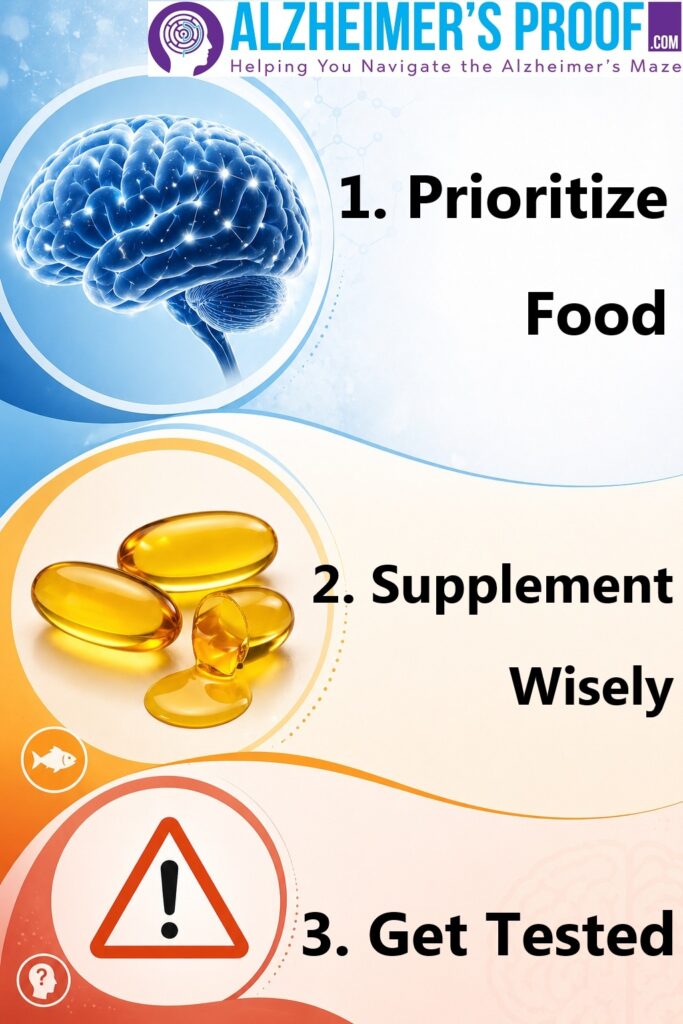
First: prioritize food. Fatty fish like sardines, mackerel, and salmon provide Omega-3s in a more stable, nutrient-rich form.

Second: if you do supplement, be picky. Fish oil is fragile — and quality matters. Choose third-party tested products. Look for labels like the dedicated, so-called “International Fish Oil Standards” program, or “IFOS” (/EYE-fohs/). And… If it smells off, don’t use it.

And third: know your numbers. The Omega-3 Index can tell you whether you’re actually in an meaningful range — or just guessing.

Because in the end, brain health isn’t about one supplement. It’s about maintaining the integrity of your brain over decades.

Fish oil may be one tool — but it’s not the whole toolbox.

If you found this helpful, consider subscribing for future breakdowns like this. And feel free to share it with someone who might benefit.

And, as always, we wish you all the best with your Alzheimer’s-proofing journey. Thanks for watching.

Sources:

[1]: https://pubmed.ncbi.nlm.nih.gov/28986068/ “Effectiveness of omega-3 fatty acid supplementation in patients with Alzheimer disease: A systematic review and meta-analysis – PubMed”

[2]: https://pubmed.ncbi.nlm.nih.gov/19523795/ “Omega-3 fatty acids and dementia – PubMed”

[3]: https://pubmed.ncbi.nlm.nih.gov/30084334/ “A Recent Update on the Effects of Omega-3 Fatty Acids in Alzheimer’s Disease – PubMed”

[4]: https://pmc.ncbi.nlm.nih.gov/articles/PMC9761771/ “The omega-3 index in Alzheimer’s disease: Ready for prime time? – PMC”

[5]: https://scitechdaily.com/scientists-uncover-potential-brain-risks-of-popular-fish-oil-supplements/

CBD, Brain Inflammation, and a New Alzheimer’s Model

CBD and Dementia Inflammation

For decades, Alzheimer’s research has chased the same target — plaques and tangles.

And despite billions of dollars… results have been limited and often disappointing.

But… what if we’ve been aiming at the wrong problem entirely?

A new study suggests the real driver may be something more fundamental: inflammation.

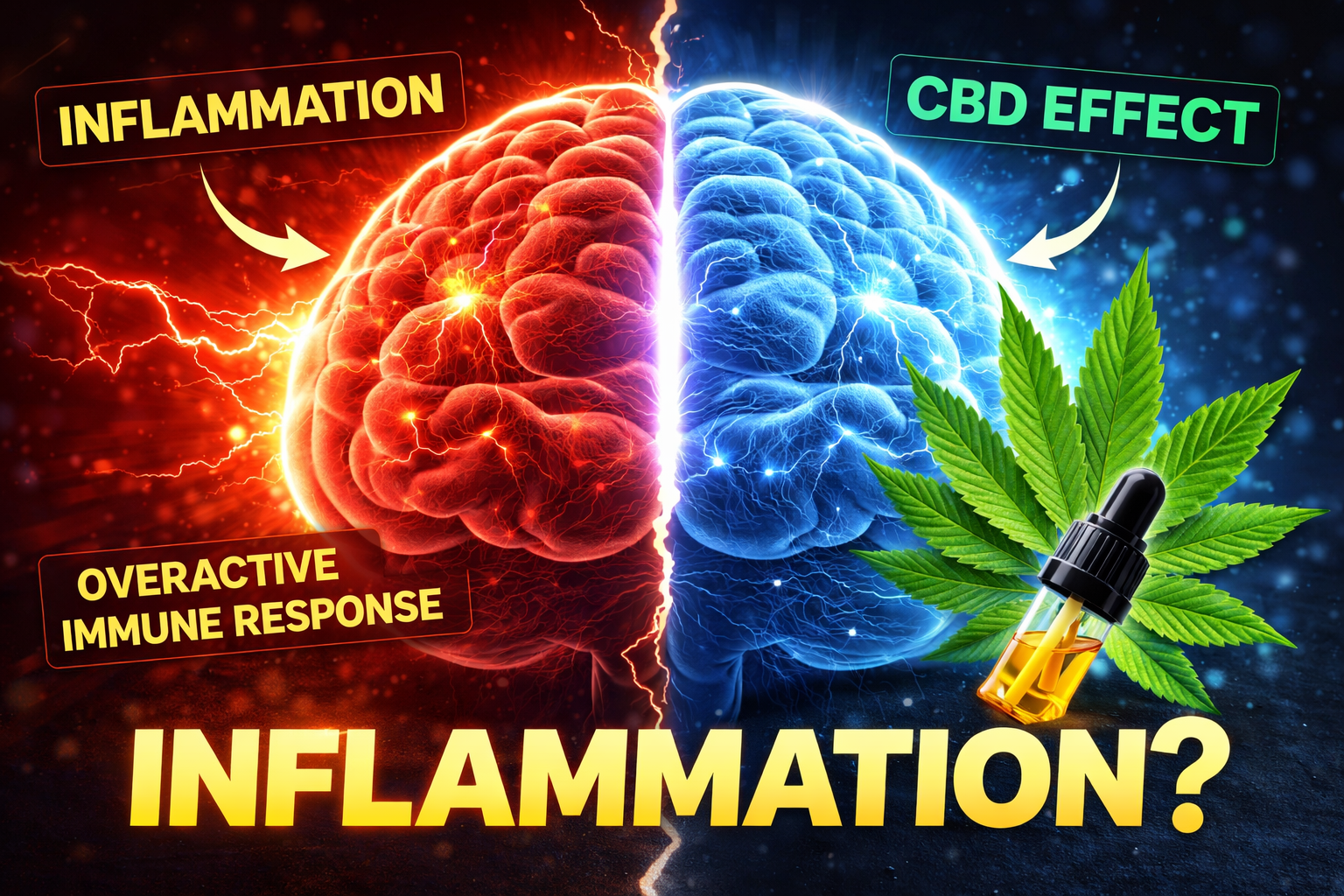
And a compound called CBD might be able to dial it down.

Context: ‘Autoinflammatory’ Theory

To understand this breakthrough, we have to look at the “autoinflammatory” view of Alzheimer’s.

Traditionally, inflammation has been looked at as if it were a symptom of Alzheimer’s. But… researchers at Augusta University are arguing that chronic neuroinflammation is actually a core driver of the disease (along with other factors).

Translating that into dicey but everyday language, they’re starting to come around to the idea that inflammation is more of a contributing cause, not an effect.

Recall that, in general, “inflammation” is one of the body’s responses to illness or injury. In parts of our bodies we can see – an elbow, for instance (or…almost see!) – inflammation is what causes the hurt area to feel hot and painful, look red, swell in size, and so on.

Inflammation is often associated with loss of function. If your elbow is injured or inflamed, you can’t expect to be playing racquetball anytime soon.

Well… In Alzheimer’s disease, inflammation has to do with the brain’s immune system becoming chronically overactive. The brain gets stuck in a state of chronic immune activation. Yes, your brain can get inflamed, too.

This can also start a chemical chain reaction where usually functional neuronal “signals” begin to cause damage to nerve cells, instead of protecting them.

As a technical point, though, we don’t want to confuse inflammation (in the sense of haywire immune signaling and cellular activation) with what doctors call edema (i.e., large-scale fluid accumulation that increases pressure within the skull).

Think of it like this.

Your brain has a specialized immune system.

When it senses trouble, it sends out “first responders” like microglia and astrocytes.

In a healthy brain, these get to the scene of the accident, bandage the wounded, clean up, and go home.

But in Alzheimer’s, these cells get stuck in the “on” position. The emergency situation just goes on and on.

They stay “agitated,” and end up releasing toxic chemicals that (accidentally) kill the very neurons they were summoned to protect.

And this is where CBD enters the picture.

Science: IDO and cGAS

The study in question was led by Dr. Babak Baban. He and his team set out to see if cannabidiol, abbreviated “CBD,” could (so to speak) step into this mess as a peacekeeper.

CBD is already well known for its anti-inflammatory properties.

The researchers used a mouse model specially designed to mimic Alzheimer’s in humans.

They had these mice inhale CBD daily for four weeks. What they found wasn’t just “general” improvement. They identified two specific molecular “switches” that CBD was able to flip.

Two Molecular Switches

The first is an enzyme called IDO. It’s involved in how the brain processes tryptophan. You know, the essential amino acid that’s found in poultry – like your Thanksgiving turkey – which, by the way, has a largely undeserved “bad rep” for supposedly causing the “turkey coma” after you indulge. But that’s another story.

When overactive, IDO can shift tryptophan metabolism toward compounds that promote inflammation and neurotoxicity.

The second switch is a sensor called cGAS. This is basically a DNA-sensing pathway that can trigger powerful innate immune responses when activated.

In the Alzheimer’s-affected brains, both of these pathways were screaming at full volume.

But after the CBD treatment, the expression of IDO and cGAS dropped significantly.

Specifically, it quiets down the brain inflammation including in regions like the entorhinal cortex — a region critical for memory formation, and one of the first areas affected in Alzheimer’s.

By calming these two pathways, the CBD essentially told the brain’s immune system to “stand down.”

Results: Memory and Behavior

So, the biology changed, but did the behavior change? The symptoms?

Those are the “big” questions.

And the answer was… yes.

Remember, this is so far only demonstrated in animal studies. But…

The mice treated with CBD performed significantly better on recognition memory tests. And they showed more “exploratory behavior” than the untreated group. They weren’t just neurologically “calmer”; which researchers interpreted as improved cognitive function.

But here’s why this study is particularly exciting for the future of human medicine.

CBD appears to be a “multi-target” intervention.

While this specific study focused on inflammation, Dr. Baban’s team noted that their earlier work showed CBD may also influence plaque and tangle pathology through different mechanisms.

This is to say that, instead of a drug that only does one thing, we’re looking at a compound that might clear the trash, quiet the alarms, and protect the neurons all at the same time.

And notably, it’s derived from a plant.

Conclusion: The Road Ahead

Now. We have to be realistic.

This was only one study.

On mice.

While mouse models are essential for understanding these brain “switches” in a generic sense, humans — and our brains — are much more complex.

We still need rigorous human clinical trials to see if these results translate, what the right dosage is, and if long-term use is safe for seniors.

But…

If this line of research holds up, it changes the entire strategy.

Not just clearing damage — but preventing it at the source.

Not a single target — but an entire system reset.

And that raises a bigger question: Have we been looking for a silver bullet… when Alzheimer’s is really a systems-level failure?

If so, the future of treatment may not look like a drug that does one thing — but a therapy that brings the brain back into balance.

The question is: are we ready to rethink everything?

Including that an answer to one of our most complex diseases might be found in the chemistry of one of our most misunderstood plants.

What are your thoughts? Do you think the future of Alzheimer’s treatment lies in CBD, or are you still skeptical of cannabis-based medicine? Or are you more skeptical of pharmaceutical treatments? I’d love to read your comments.

By the way, if you’re interested in this idea of multi-target therapies, we’ve explored it before. In one video, we break down how CBD and THC interact with the brain.

And in another, we look at the controversial research into Lysergic acid diethylamide (or “LSD” and dementia — where, interestingly, a similar “systems-level” approach has been proposed. So if this direction intrigues you, those are worth watching next.

Alzheimer’s Isn’t Just Plaques — Brain ‘Cleanup’ May Be FAILING

Introduction: The Mechanism of Amyloid Clearance

AT A GLANCE: Amyloid‑β plaques = a hallmark of Alzheimer’s disease; Most drugs target plaques directly

Alzheimer’s may involve a failure of brain “cleanup,” not just toxic buildup.

What if Alzheimer’s isn’t just caused by toxic buildup in the brain — but by the brain’s own cleanup crews being quietly dismantled from the inside?

If you’ve been around the block, when it comes to Alzheimer’s, you probably realize that a primary “pathological hallmark” is the accumulation of – what are called – “amyloid-beta plaques” within the brain.

  • AT A GLANCE: What if the problem is impaired clearance—not just plaque formation?

For over a century — since Alzheimer’s was first described in 1906 — drug development has largely focused on stopping plaque formation or clearing plaques after they appear.

And a critical area of this investigation involves taking a close look at the brain’s innate ability to clear these toxic proteins.

Recent research from the Indiana University School of Medicine has identified a specific enzyme that, when it is present, appears to be a factor when someone’s brain-clearing mechanisms go haywire.

And, in this video, we’ll look at a CliffsNotes’ version of the results.

https://www.youtube.com/embed/t0G-diPs2yU?si=lXQ5cl1JulI-IZmt

  • AT A GLANCE: IDOL = Inducible Degrader of the LDL receptor controls how many LDL receptors remain on brain cells

The enzyme is abbreviated I‑D‑O‑L, or “IDOL,” short for “Inducible Degrader of the LDL receptor.” That expression (a mouthful, for sure) designates a protein that controls how many LDL receptors survive on the surface of brain cells.

But… what the heck is it? And, more importantly, how would its inhibition (quote, unquote) represent a promising shift in doctors might approach Alzheimer’s treatments?

The Molecular Rôle of “IDOL”

  • AT A GLANCE: Receptors = cellular “locks” that trigger actions

To even begin to understand this discovery — and to be perfectly honest, that’s about the most ambitious goal I can realistically aim for — we need to talk about something called a low‑density lipoprotein, or “LDL,” receptor.

First, in the relevant context, a “receptor” is a protein on a cell — or in a cell — that acts like a lock. When the right chemical “key” comes along, that lock opens and tells the cell to do… something.

  • AT A GLANCE: LDL receptors pull material into cells for use or disposal

An LDL receptor is one of these locks. Its job is to grab so‑called “bad” cholesterol — LDL — and pull it into cells so it can be used or gotten-rid-of.

Think of it like a trash‑pickup claw that grabs garbage from the streets of the body and pulls it inside for disposal.

  • AT A GLANCE: In the brain, LDL receptors help manage APOE and amyloid‑β

In the central nervous system, LDL receptors also play a crucial role in regulating APOE, a protein involved in the transport and clearance of amyloid‑beta.

So far, so good?

  • AT A GLANCE: IDOL tags LDL receptors for destruction

Now for this IDOL business.

IDOL is not a receptor itself. It’s a protein that comes along and “tags” LDL receptors for destruction — that’s the “inducible degrader” part of its full name.

  • AT A GLANCE: Overactive IDOL à fewer LDL receptors; (-) Amyloid clearance à (+) plaque buildup

It’s like removing the trash‑pickup claws and throwing them away instead of the “bad” cholesterol. Reducing the number of LDL receptors on cell surfaces is a bit like getting rid of trash trucks in the heart of a crowded city. It’s not good.

When IDOL becomes overactive, too many LDL receptors are destroyed, weakening the brain’s ability to clear APOE and toxic amyloid‑beta proteins. This allows plaques to accumulate and neurodegeneration to accelerate.

In effect, an overactive cellular “shutdown switch” disables the brain’s cleanup crews at precisely the moment they’re needed most.

Receptor Inhibitors — and Why IDOL Is Different

  • AT A GLANCE: IDOL inhibitors protect receptors; They stop destruction — not signaling

At this point, it helps to understand what scientists mean by a “receptor inhibitor.” Usually, a receptor inhibitor blocks a lock so that even when the correct key shows up, the cell can’t respond. But that’s not quite what’s happening here.

An IDOL inhibitor doesn’t block the lock — it stops the demolition crew from tearing the lock off the door. In other words, inhibiting IDOL prevents LDL receptors from being destroyed, allowing the brain’s cleanup machinery to stay in place and keep doing its job.

IDOL Proteins Aren’t the Problem in and of Themselves

Let’s register a couple caveats.

Number one, it’s important to understand that IDOL proteins aren’t “bad” in and of themselves. They’re normal control mechanisms within the complex anatomy-biology of the body.

And they don’t come from “outside.” Your own cells make IDOL proteins automatically.

  • AT A GLANCE: IDOL is a normal control mechanism; Problems arise when it shuts things down too aggressively

Think of their part in in the trash-removal process as akin to that of a “thermostat” that off the air conditioner or furnace when the desired temperature is reached.  When a cell thinks it’s cleaned up enough LDL cholesterol, these IDOL proteins shut down the whole process.

In the context of Alzheimer’s Disease, overactive IDOL proteins lead to a depletion of these trash-removal receptors. In turn, this loss diminishes the brain’s capacity to clear amyloid-beta. And that, researchers, suspect, leads to – or makes worse – the formation of the plaques that lead to neurodegeneration.

Whew!

  • AT A GLANCE: Evidence so far: animal + cellular studies

It’s also important to note that this entire IDOL–LDL receptor mechanism has been demonstrated primarily in animal and cellular studies. While the evidence strongly implicates IDOL in Alzheimer’s pathology, human treatments are still in-process.

Research Findings

Neuronal vs. Microglial IDOL

AT A GLANCE: Microglial IDOL removal à little effect; Neuronal IDOL removal à major plaque reduction]

The study in question was led by Dr. Hande Karahan and Dr. Jungsu Kim, who sought to determine which cell types were most responsible for IDOL-mediated damage. Historically, the scientific community focused on microglia — the brain’s immune cells — as the primary drivers of plaque-clearance.

However, using a series of “knockout models,” the Indiana University team found that removing IDOL from microglia had a negligible effect on plaque levels.

  • AT A GLANCE: “Knockout” = a gene deliberately switched off to study its function

A “knockout model” is a genetically engineered animal — usually a mouse — in which a gene like IDOL is “switched off” so scientists can see how the brain behaves without it.

They take out a gene to see what breaks — or improves — when it’s gone.

When IDOL was “deleted” specifically from neurons, the results were deemed significant. The researchers observed a substantial reduction in amyloid-beta deposition.

  • AT A GLANCE: Lower APOE4 levels observed; APOE4 = strongest genetic risk factor for late‑onset Alzheimer’s

Additionally, the deletion of neuronal IDOL led to a decrease in APOE4 levels. As APOE4 is the most significant genetic risk factor for late-onset Alzheimer’s, this suggests that targeting IDOL could directly mitigate the risks associated with this specific genotype.

Clinical Implications and Synaptic Health

  • AT A GLANCE: IDOL inhibition linked to improved ‘synaptic plasticity’; Healthier connections = better learning & memory support

What distinguishes this research from current treatments — such as antibodies that target existing plaques — is its focus on enhancing the brain’s internal environment.

The researchers also observed a second effect – beyond reducing toxic amyloid-beta. This is to say that inhibiting IDOL was also associated with improvements in synaptic plasticity — the brain’s ability to adjust and strengthen connections involved in learning and memory.

It refers to how the brain “rewires” itself.

Conclusion: The Path to Small-Molecule Therapeutics

  • AT A GLANCE: Targeting IDOL may improve the brain’s internal environment

From a pharmaceutical perspective, the IDOL enzyme is a highly viable (read: commercially promising) target.

So, the upshot is that drug-researchers believe they may be able to engineer an oral medication capable of inhibiting the trash-removal inhibition!

  • AT A GLANCE: Goal: oral drugs that cross the blood‑brain barrier; Less invasive than antibody infusions

From a cost-per-treatment standpoint, this would an advancement over the current method, which requires expensive – and invasive – intravenous infusions required to deliver antibody treatments to try to dissolve plaques.

The Indiana University School of Medicine team is still a “preclinical” phase. Its focus is on screening for “small molecules” that can effectively cross the blood-brain barrier to inhibit IDOL. While further trials are obviously necessary, this research provides a roadmap for a new generation of Alzheimer’s therapies.

For those you still here, thank you for sticking with it! I know it was heavy-going.

If you’d like to dig deeper, here’s a link to the original study — because this is one of those cases where the data itself really is the story.

https://alz-journals.onlinelibrary.wiley.com/doi/10.1002/alz.70949
https://medicine.iu.edu/news/2026/02/alzheimers-drug-discovery-pathway-2026